EnergyX has signed a binding $2 billion lithium supply agreement with commodities trader Trafigura, providing a major commercial test for technology designed to extract lithium more efficiently from underground brines.
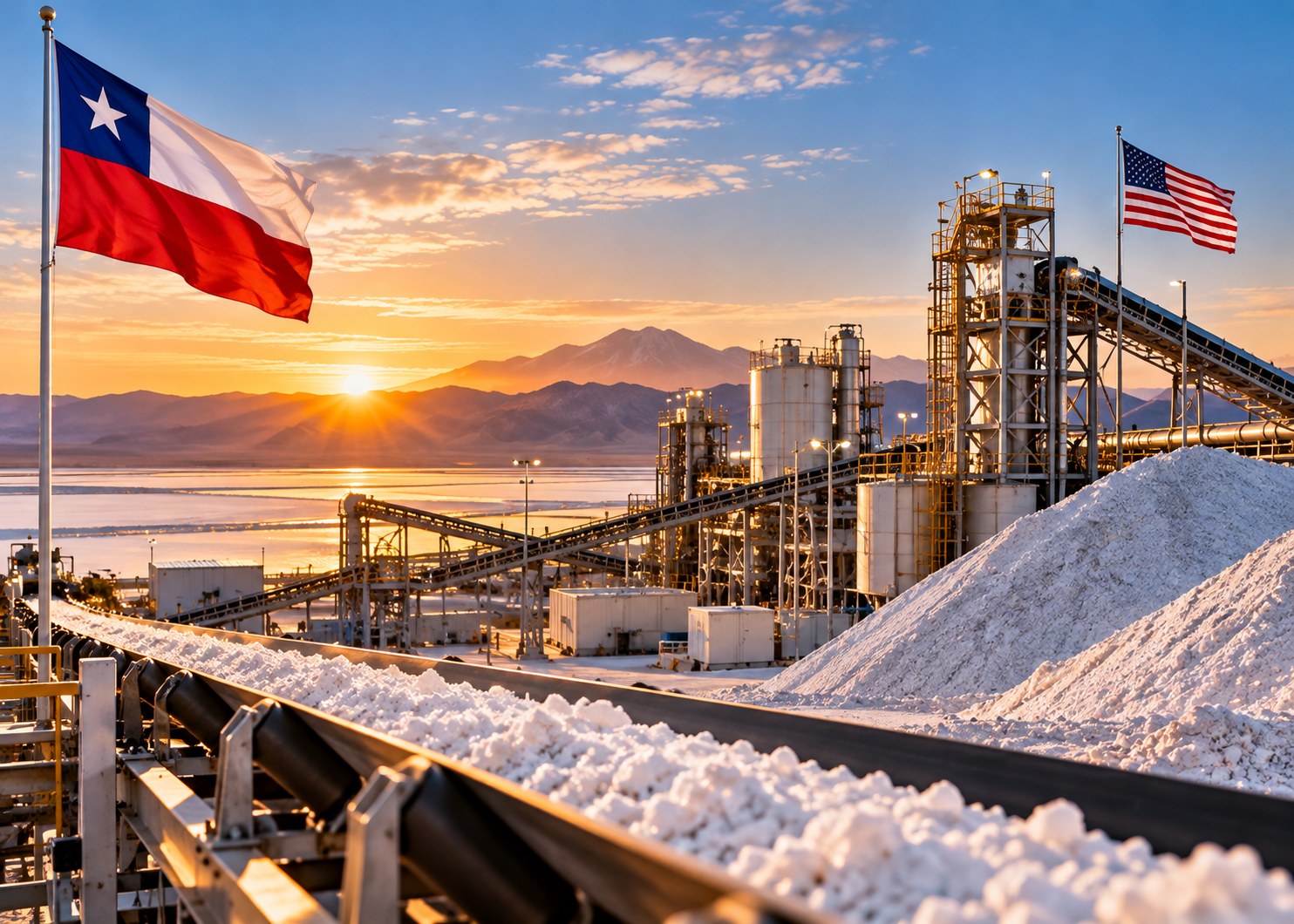
The 10-year agreement covers 100,000 metric tons of lithium produced from EnergyX projects in Chile and the United States.
EnergyX plans to supply approximately 5,000 metric tons of lithium hydroxide and 5,000 metric tons of lithium carbonate annually under the agreement.
Production is expected to begin in Chile in 2028 and at EnergyX’s Texas operation in 2029.
Trafigura initially expects to market much of the lithium into China, currently the dominant center for battery-material processing and manufacturing.
The trader ultimately wants to increase sales into the United States as domestic battery manufacturing capacity expands.
The transaction is significant because EnergyX uses direct lithium extraction, or DLE.
Conventional lithium-brine production often depends on large evaporation ponds that can require lengthy processing periods. DLE technologies instead attempt to selectively remove lithium from brine using filtration and other processes.
The industry has attracted substantial investment, but large-scale commercial deployment remains relatively limited.
EnergyX is backed by General Motors and Italian energy group Eni.
The Trafigura contract could also strengthen EnergyX’s effort to obtain a proposed $690 million loan from the U.S. Export-Import Bank.
Battery demand remains the fundamental driver.
Electric-vehicle growth has been uneven, but grid-scale battery storage is creating another large source of lithium demand as electricity systems add renewable generation and data centers increase power requirements.
EnergyX is also evaluating an expansion into uranium, potentially extending its critical-minerals strategy into the nuclear-energy supply chain.
For investors, the central test is execution.
A binding offtake agreement creates a buyer for future output, but EnergyX must still bring its Chilean and Texas projects into commercial production at the expected scale and cost.