Wall Street’s record-breaking advance is concealing a substantially weaker market beneath the headline indexes.
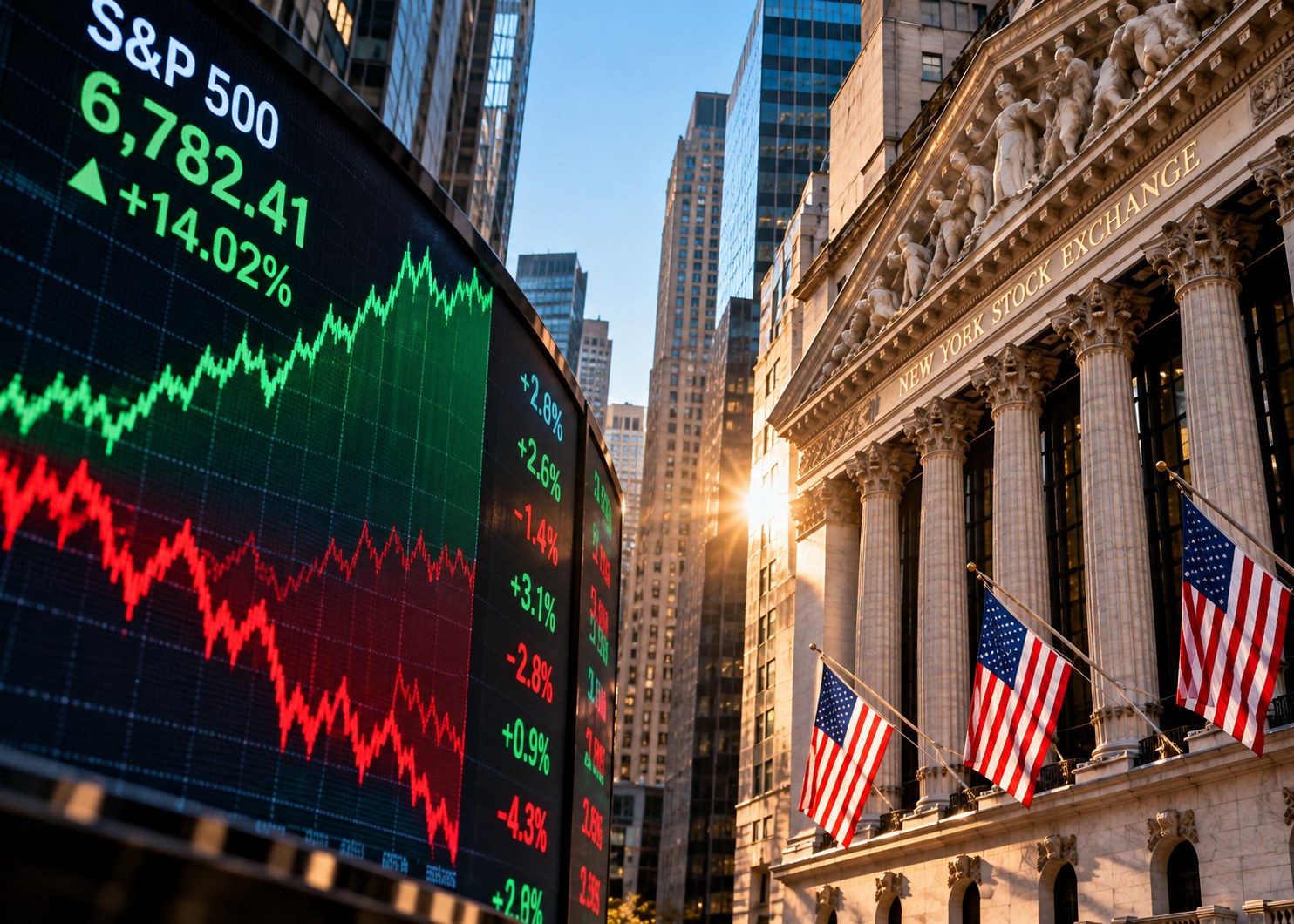
The S&P 500 has gained approximately 14% during 2026 and recently reached record highs, but more than 40% of its constituent stocks are down for the year.
Roughly one-quarter have fallen more than 11%.
The median S&P 500 stock has gained only about 4%, illustrating the gap between the index’s performance and that of the typical company inside it.
Artificial-intelligence and semiconductor stocks are responsible for a disproportionate amount of the advance.
Companies including Nvidia, Micron and Sandisk have helped drive the technology sector higher as investors continue to concentrate capital in businesses benefiting directly from AI infrastructure spending.
Energy has also performed strongly, helped by elevated oil prices.
But technology’s much larger weighting inside the S&P 500 means a relatively small number of large companies can exert substantial influence over the overall index.
Market breadth indicators reinforce the divergence.
Fewer than half of S&P 500 companies are trading above their 200-day moving averages.
That does not automatically imply that the broader market must fall.
Concentrated rallies can persist when earnings growth among the largest companies remains strong enough to support their valuations.
But weak breadth increases the market’s dependence on a smaller group of companies.
That creates vulnerability if earnings expectations for AI leaders weaken or if higher interest rates reduce the valuations investors are willing to pay for long-duration technology growth.
The divergence is also visible outside large-cap indexes.
The Russell 2000 recently came within a fraction of entering correction territory after falling nearly 10% from its August record before rebounding from technical support.
For investors, the next test comes from third-quarter earnings.
A broad improvement in corporate profits could allow more sectors to participate in the rally.
If earnings strength remains concentrated in AI and technology while most companies struggle with high borrowing and energy costs, the gap between headline index performance and the broader market could widen further.