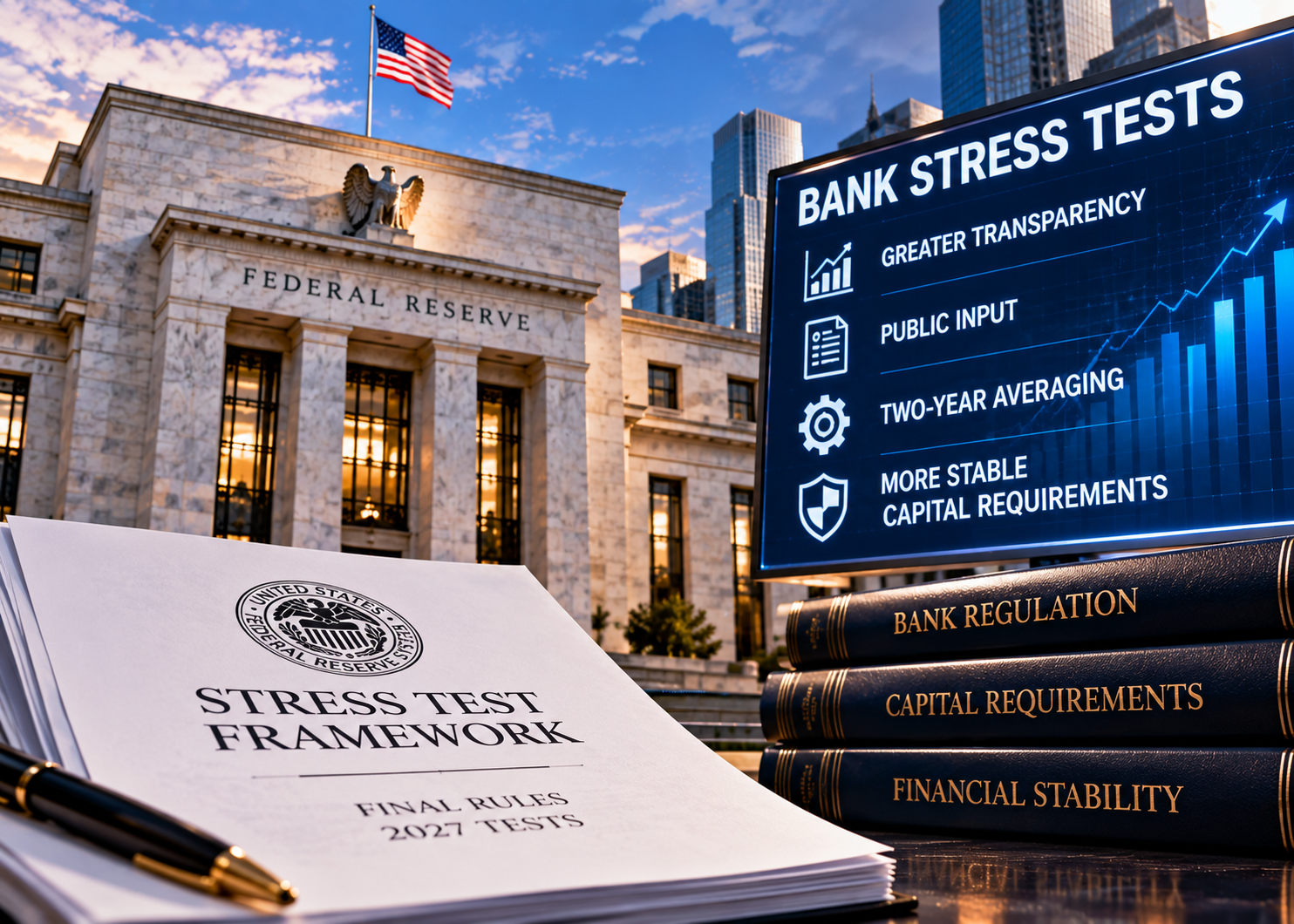
The Federal Reserve finalized significant changes to its annual stress-testing framework Wednesday, altering how the largest U.S. banks are evaluated and how stress-test results feed into their capital requirements.
Under the first final rule, the Fed will seek public input each year on its hypothetical stress scenarios and material changes to the models used to estimate bank losses. The framework also changes the stress-test calendar and adopts models that will be used for the 2027 test.
Banks with large trading operations will face two global-market-shock components each year. The Fed will use whichever scenario produces the largest losses for each institution when calculating that bank’s stress-test results.
A second rule changes the calculation of the stress capital buffer.
Instead of relying solely on the latest annual test, the Fed will average results from the two most recent supervisory stress tests for banks subject to testing in both years.
That averaging will begin in 2028 so that the calculation uses models that have gone through the new public-input process.
The Fed estimates the changes will reduce year-to-year volatility in capital requirements by approximately 50% while not materially changing aggregate capital requirements across the banking system.
That is important for major banks because unpredictable changes in required capital can affect balance-sheet planning, lending, dividends and share repurchases.
The central bank is also requesting comment on a proposed change to its noninterest-income model intended to better capture differences among banks’ business models and fee-income generation. Comments are due 60 days after publication in the Federal Register.
The overhaul follows years of criticism from the banking industry that important aspects of the stress-testing process were insufficiently transparent.
The Fed maintains that the tests remain essential to ensuring large banks can continue lending to households and businesses during a severe recession.
For bank investors, the immediate significance is greater predictability rather than a broad reduction in required capital. The Fed explicitly said it does not expect the final rules to materially change aggregate capital requirements.
Markets should watch implementation of the 2027 models, the industry response to the finalized rules and the separate proposal covering noninterest income.