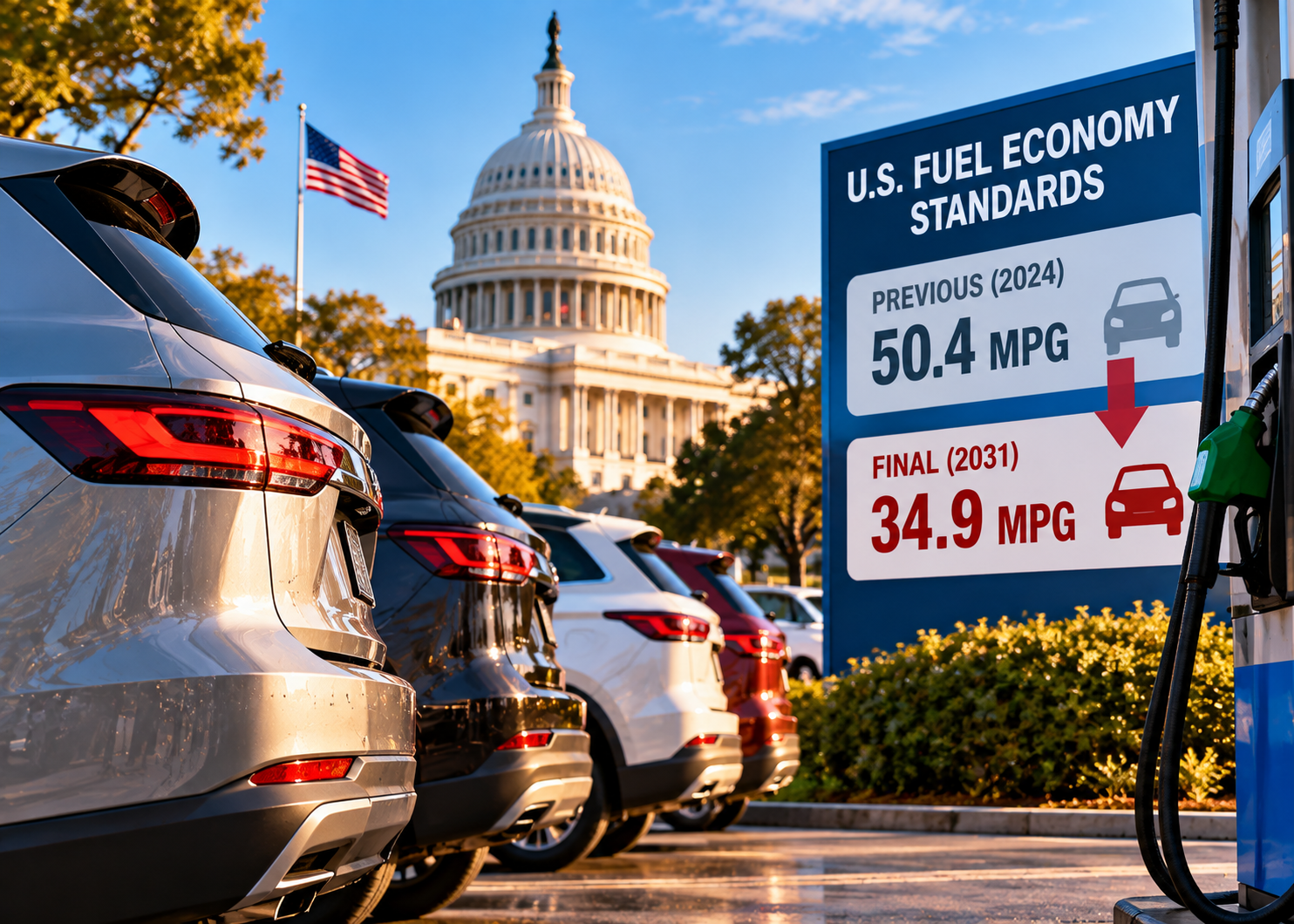
The U.S. Transportation Department has finalized substantially lower vehicle fuel-economy requirements, setting a fleetwide average target of 34.9 miles per gallon by model year 2031 in a major reversal of the previous federal auto-efficiency policy.
The prior rules finalized in 2024 targeted approximately 50.4 mpg by 2031.
The Transportation Department estimates the new standards will reduce manufacturers’ average compliance cost by approximately $1,289 per vehicle.
The tradeoff is higher fuel use. The department estimates consumers will spend more than $1,600 extra on fuel over the life of affected vehicles and that U.S. gasoline consumption will be approximately 4.6% higher through 2050 than under the previous standards.
The rules will also end the trading of fuel-economy compliance credits among automakers in 2028.
That change is particularly relevant to electric-vehicle manufacturers such as Tesla and Rivian, which have historically generated revenue from selling regulatory credits to other automakers.
The Alliance for Automotive Innovation, representing manufacturers including General Motors, Toyota, Volkswagen, Hyundai and Ford, welcomed the revision, arguing that the standards better reflect current consumer demand and market conditions.
Environmental groups oppose the rollback. The Sierra Club said it plans to fight the standards, arguing that they will increase pollution and consumers’ fuel expenses.
The policy change arrives while U.S. motorists are already facing elevated fuel prices connected to the Middle East conflict, making the long-term shift toward greater gasoline consumption particularly consequential for energy markets.
For automakers, the new rules reduce the regulatory pressure to achieve the previous fuel-efficiency trajectory and could alter investment decisions across gasoline, hybrid and electric vehicle portfolios.
Markets should watch for legal challenges, automaker production-plan changes and the financial impact of ending the inter-manufacturer credit market in 2028.