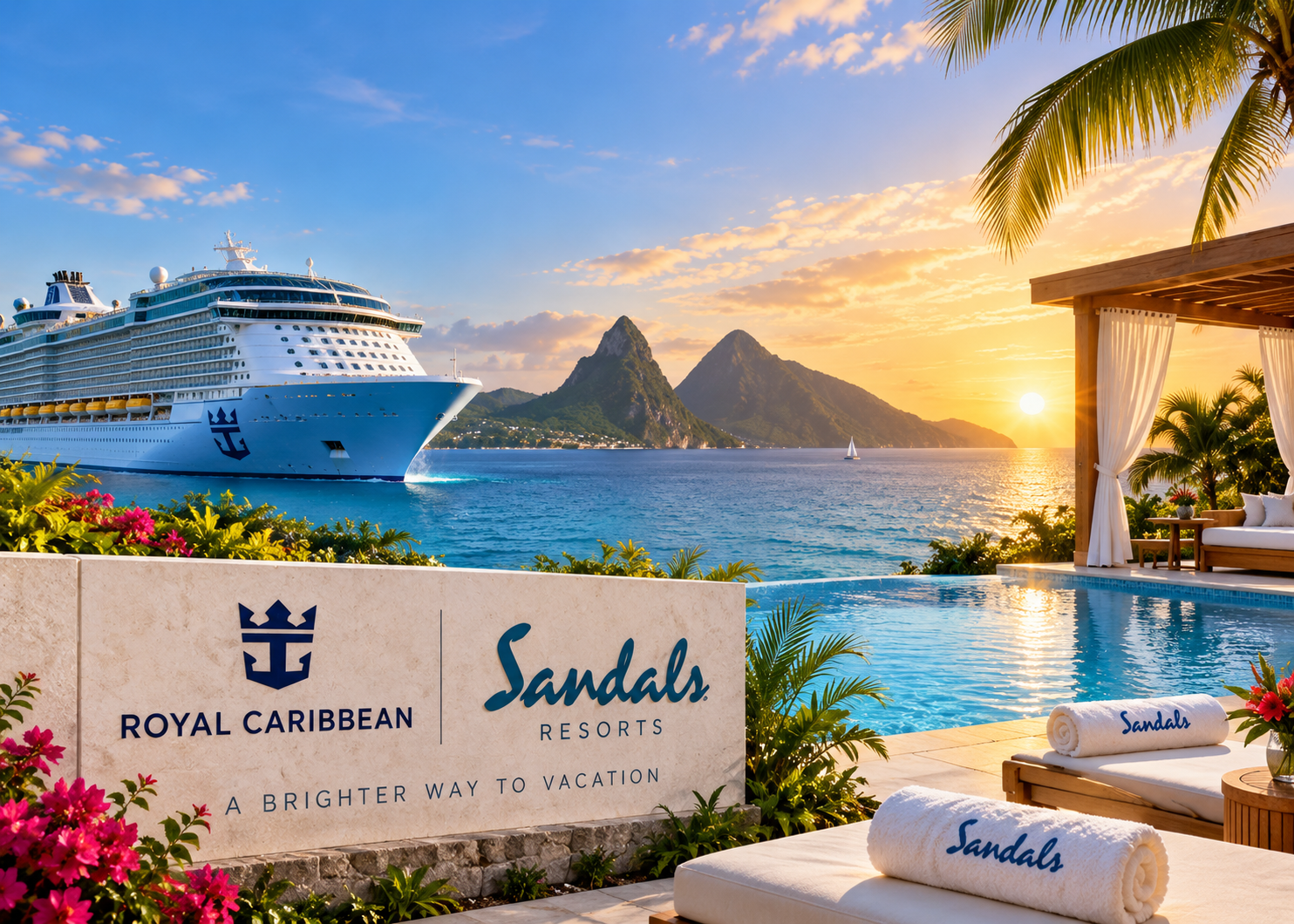
Royal Caribbean Group has agreed to acquire a 50% stake in Sandals and Beaches Resorts for approximately $3 billion, pushing one of the world’s largest cruise operators deeper into the land-based vacation market.
The transaction will create a joint venture combining Royal Caribbean’s global vacation platform with Sandals’ Caribbean all-inclusive resort network.
Royal Caribbean said the transaction is expected to close in early 2027, subject to customary approvals and closing conditions.
The company has secured committed debt financing from Morgan Stanley to fund the investment.
Sandals and Beaches operate resorts across major Caribbean destinations, giving Royal Caribbean immediate exposure to a different segment of the vacation market: travelers choosing multi-day all-inclusive resort stays rather than cruises.
Royal Caribbean has already been expanding beyond its ships through private destinations and other vacation offerings.
The Sandals transaction significantly accelerates that strategy.
The joint venture will be governed by a board under the shared leadership of Royal Caribbean Chairman and Chief Executive Jason Liberty and Sandals Executive Chairman Adam Stewart.
Stewart will remain executive chairman of Sandals and Beaches Resorts and continue participating in the company’s long-term strategy.
Existing reservations, loyalty programs and resort operations are expected to continue.
The strategic significance extends beyond adding another travel brand.
Cruise operators traditionally control the ship-based portion of a customer’s vacation while airlines, hotels and resorts capture other parts of travel spending.
Royal Caribbean’s investment moves the company further toward a broader vacation-platform model in which cruise ships, private destinations and resorts can operate within the same corporate ecosystem.
If completed, the partnership will give Royal Caribbean a major position in Caribbean all-inclusive resorts without requiring the company to acquire the entire business.
Royal Caribbean says the transaction is expected to be accretive to earnings next year. That remains a company forecast rather than a realized financial result.