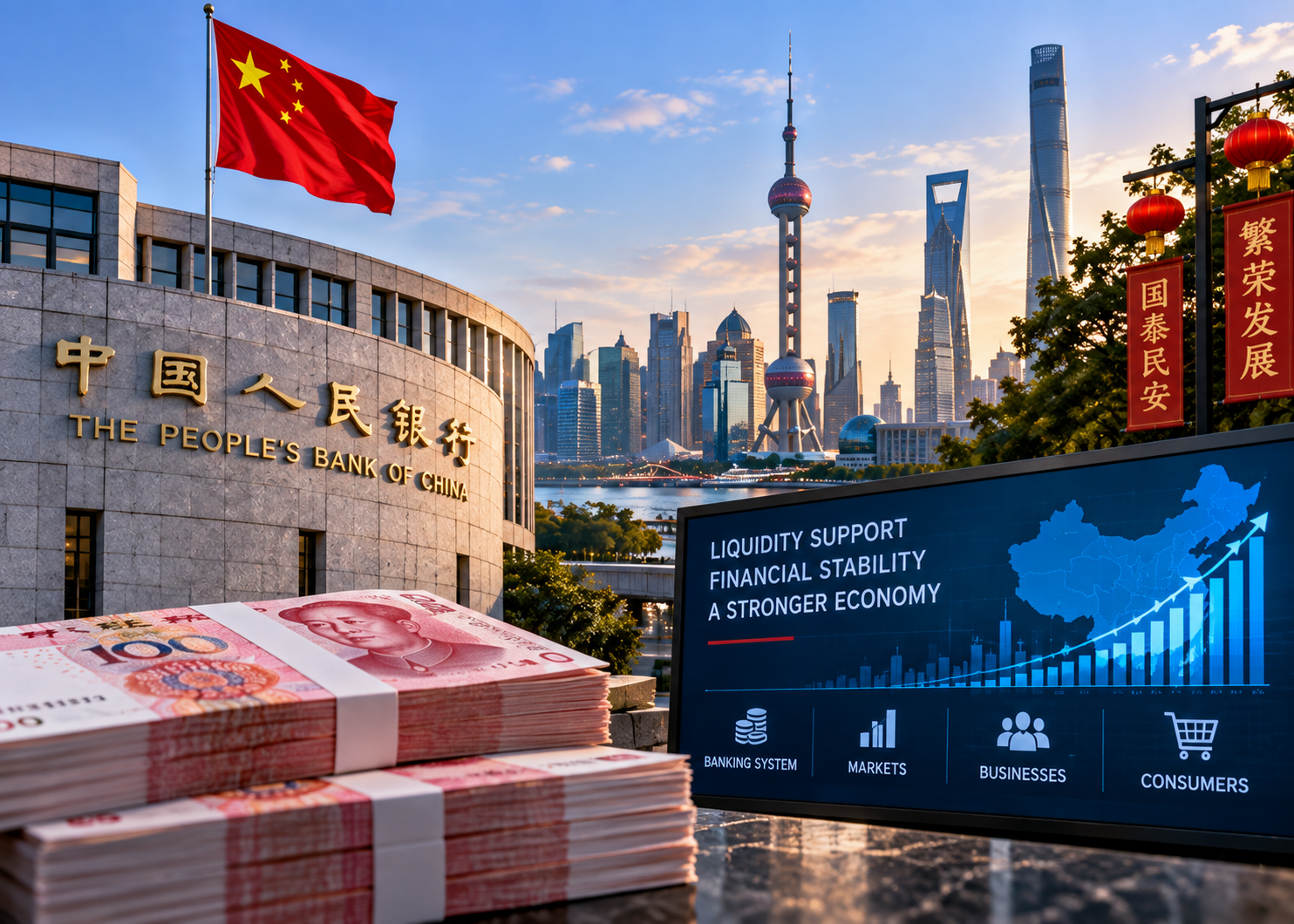
The People’s Bank of China will make up to 1 trillion yuan, approximately $149 billion, per day available through short-term liquidity operations as China’s financial system prepares for an extended holiday period.
The central bank said it will conduct overnight reverse-repurchase operations between September 28 and October 8 to meet short-term liquidity requirements in the banking system.
The announcement does not mean the PBOC will necessarily inject 1 trillion yuan every day.
The figure represents the maximum daily amount available through the operations. The central bank did not specify which individual days it will conduct them or disclose the borrowing cost.
That distinction is important because the measure is primarily a liquidity-management facility rather than an announced multiday economic stimulus program.
Demand for short-term cash typically increases around major Chinese holidays as banks, companies and households adjust their funding positions.
China’s interbank bond market will close during portions of the upcoming holiday period, while the country’s stock market will also close for Golden Week and resume trading October 8.
The temporary operations illustrate the distinction between broad monetary easing and liquidity management.
Beijing can provide banks with short-term funding to reduce holiday-related market pressure without cutting benchmark lending rates or committing to a broader monetary stimulus program.
For markets, the immediate objective is therefore financial-system liquidity rather than a fundamental change in China’s monetary-policy stance.
Investors will watch the actual operation sizes once the facility begins September 28 to determine how much liquidity banks ultimately demand.
Until then, the 1 trillion-yuan figure should be understood as available daily capacity rather than guaranteed daily injections.