Commodities trader Mercuria has committed $500 million to a U.S. strategic critical-minerals reserve designed to protect American manufacturers against disruptions in supplies of materials increasingly important to industrial production and national security.
The commitment was announced Wednesday as part of Project Vault, now known as VaultCo.
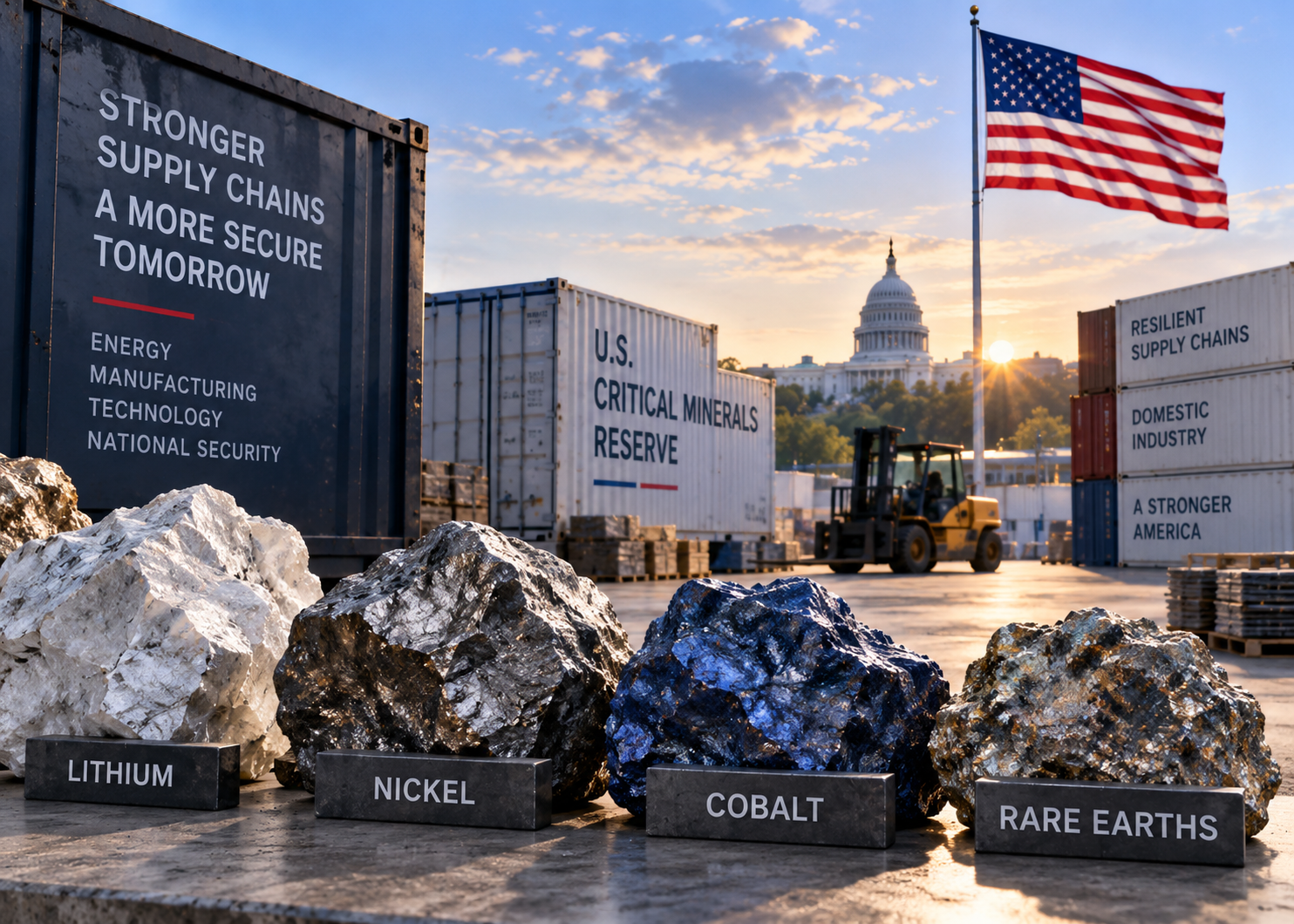
The initiative was designed with support from the Export-Import Bank of the United States and is intended to maintain inventories of strategically important minerals on American soil.
Mercuria said its $500 million commitment will support access to critical materials during periods of supply disruption or severe market dislocation.
The company brings a substantial physical commodities operation to the project, including experience in storage, logistics and commodity risk management.
The initiative reflects a broader reassessment of concentrated global mineral supply chains.
China holds a dominant position across important portions of rare-earth mining, processing and magnet production, creating strategic exposure for industries ranging from automobiles and electronics to energy infrastructure and defense.
Mercuria’s announcement also comes as other major commodity companies become involved in the U.S. reserve initiative.
The development demonstrates how critical-mineral security is moving beyond mining policy.
Storage, physical inventories, logistics and financing are increasingly becoming part of the infrastructure governments and companies use to protect supply chains.
For commodity markets, VaultCo could create an additional source of structured demand for selected minerals while increasing the strategic importance of companies capable of sourcing and physically managing those materials.
For manufacturers, the objective is maintaining access when conventional international supply chains become unreliable.
The reserve does not eliminate U.S. dependence on overseas mineral production. Instead, it is designed to create a buffer between supply disruptions and the American industries that rely on those materials.
Mercuria’s $500 million commitment gives that strategy another substantial private-sector participant.