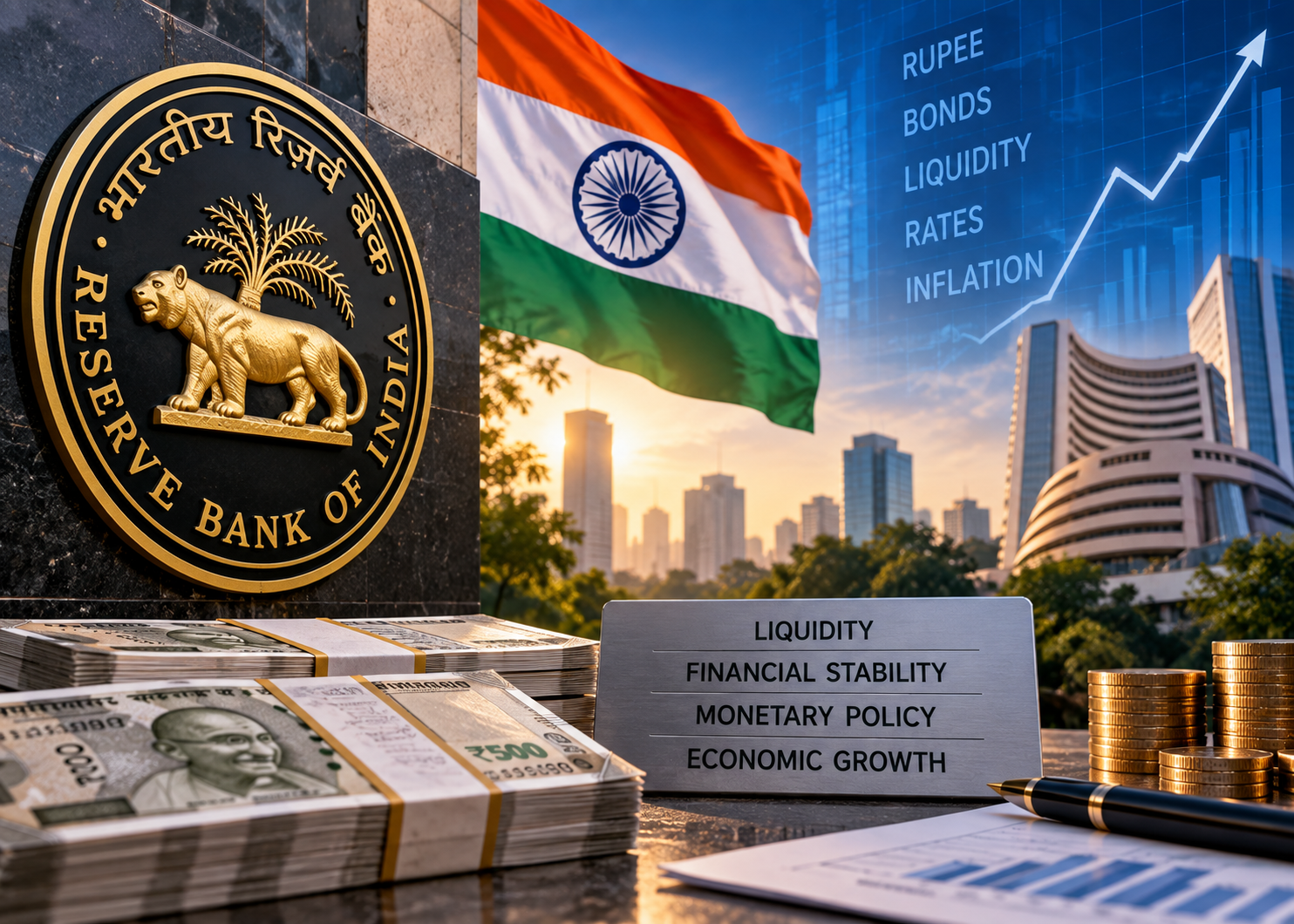
India’s banking-system cash surplus has fallen by more than half in roughly two weeks as the Reserve Bank of India uses bond sales and foreign-exchange operations to absorb excess liquidity.
Surplus banking-system liquidity fell to approximately 4.92 trillion rupees, or about $51 billion, from a record 11.16 trillion rupees around two weeks earlier—a decline of roughly 55%.
India’s banking system accumulated the unusually large cash position after lenders raised about $133 billion through an RBI diaspora deposit program.
The central bank has since intensified efforts to remove some of that excess liquidity.
The RBI sold 750 billion rupees of bonds during the previous week and planned an additional 250 billion rupees of sales. Banks have also parked approximately 3.4 trillion rupees with the central bank through reverse-repurchase operations.
Foreign-exchange swaps, operations supporting the rupee and corporate tax payments have contributed to the reduction in available banking-system cash.
The liquidity shift matters because excessive cash in the financial system can weaken the transmission of tighter monetary policy.
It can also contribute to inflationary pressure at a time when India is confronting elevated energy costs and currency pressures.
The tightening in liquidity conditions comes as financial markets reassess the outlook for Indian interest rates. Expectations for future policy tightening have increased, although any future rate decision remains dependent on incoming economic and inflation data.
The RBI therefore faces a balancing act.
Removing too little liquidity could weaken monetary-policy transmission and leave inflation pressures more difficult to contain. Removing liquidity too aggressively could unnecessarily tighten short-term funding conditions.
Investors will be watching banking-system liquidity, government-bond yields, inflation and the rupee for indications of how aggressively the RBI intends to manage financial conditions ahead of its coming policy decisions.