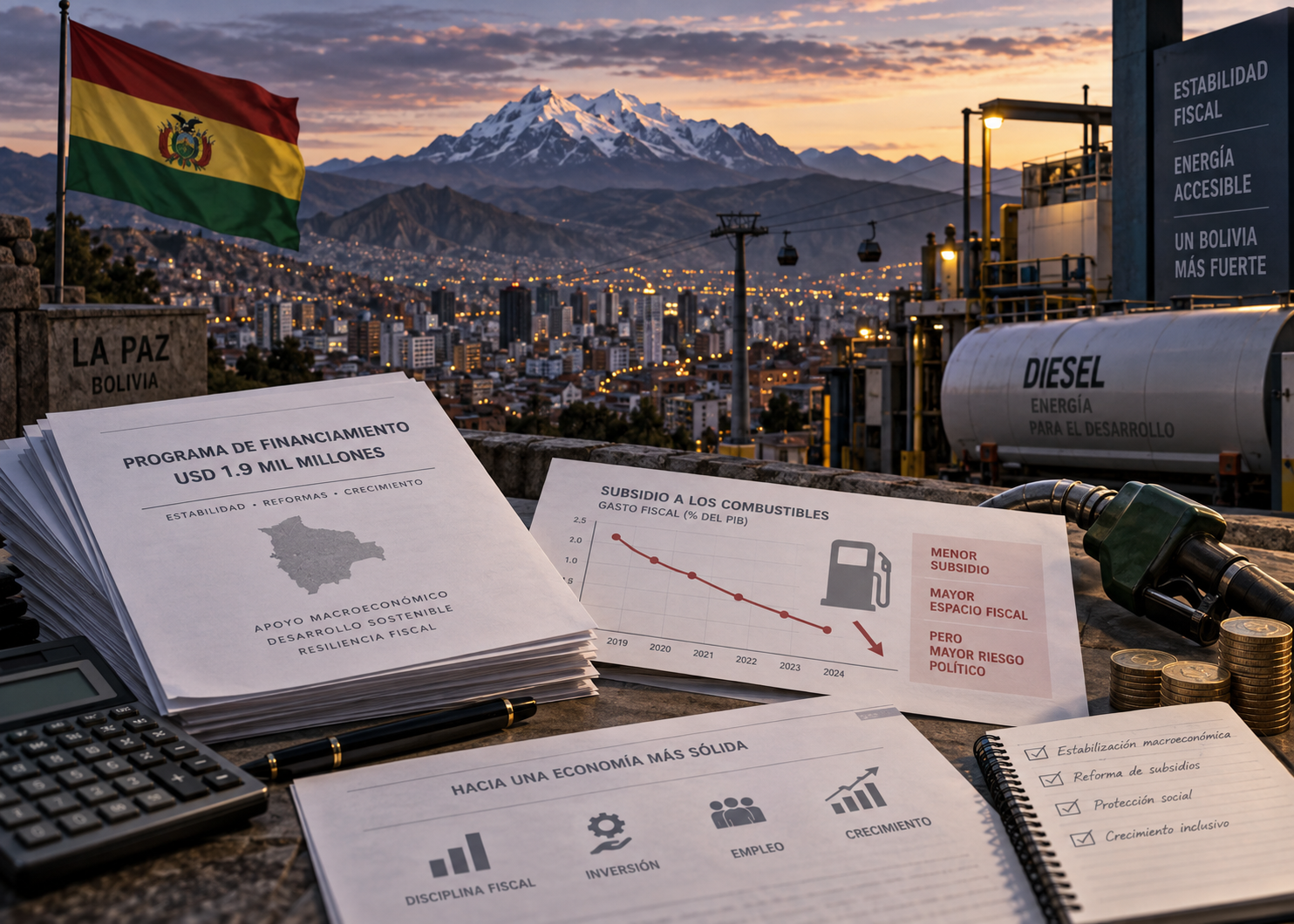
Bolivia has moved closer to securing a $1.9 billion International Monetary Fund program, giving President Rodrigo Paz’s government a potential financial lifeline as it confronts shrinking reserves, fiscal pressure and persistent inflation.
Bolivian lawmakers approved the financing agreement on September 18, clearing a major domestic hurdle for the proposed program.
The arrangement originated in a staff-level agreement reached between Bolivia and the IMF in July.
Under that agreement, Bolivia would receive approximately $1.9 billion over 36 months through the IMF’s Extended Fund Facility. The program could help mobilize a broader financing package of more than $5 billion from institutions including the World Bank and Inter-American Development Bank.
One important qualification remains: congressional approval does not itself complete the IMF financing.
The arrangement remains subject to approval by the IMF’s Executive Board and implementation of agreed prior actions.
Fuel reform has become one of the politically sensitive parts of the adjustment.
The government has moved to reduce diesel subsidies as it attempts to repair public finances and address distortions in the domestic fuel market. Labor groups have warned that subsidy reductions and spending restraint could increase living costs and provoke further protests.
Bolivia’s underlying problems extend beyond fuel prices. Persistent fiscal deficits, declining hydrocarbon production, falling international reserves, high inflation and distortions in foreign-exchange and product markets remain among the country’s major economic challenges.
For investors, the immediate question is whether the government can implement the program’s required reforms without triggering political instability severe enough to undermine the stabilization effort.