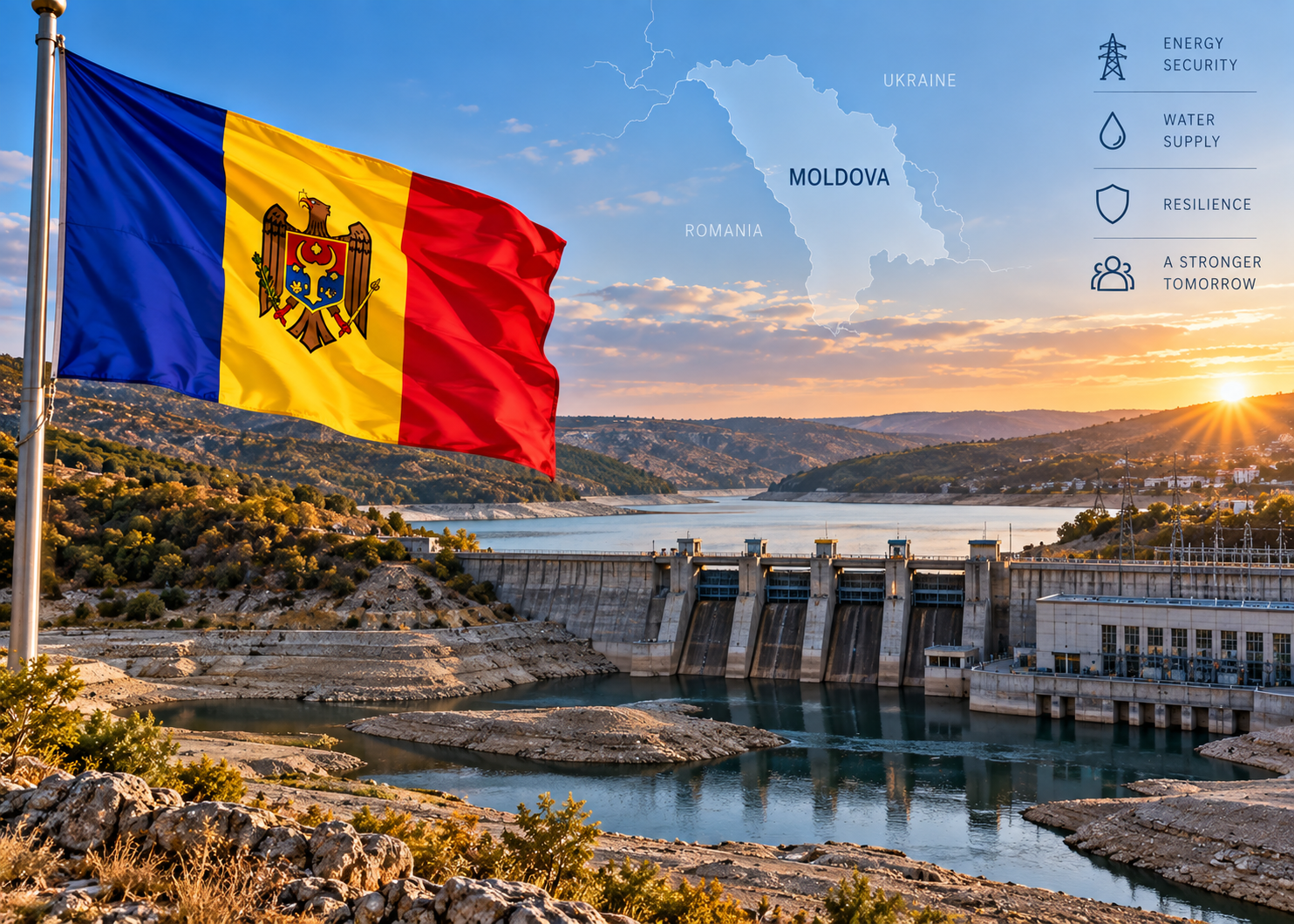
Moldova has approved a 60-day state of emergency covering energy and water supplies as the country prepares for winter under pressure from high energy costs, drought and regional infrastructure risks.
Parliament approved the measure, which gives the government additional authority to respond rapidly to disruptions involving natural gas, electricity, fuel and water.
Moldova had already been operating under an alert covering its energy and hydrological sectors, but officials concluded that additional powers were necessary to address the combination of risks confronting the country.
Water availability is a major component of the problem.
Low flows in the Dniester and Prut river systems have created a severe hydrological deficit, threatening drinking-water supplies and other essential uses.
Moldova also remains heavily dependent on imported energy, leaving the country exposed to regional supply disruptions and elevated international prices.
The government has characterized the emergency powers as preventative rather than evidence that energy or water systems have already failed.
Measures available to authorities are intended to preserve continuity of electricity, natural gas, heating and fuel supplies, protect critical water infrastructure and limit the economic impact on vulnerable households during autumn and winter.
Moldova’s geographic position adds to those vulnerabilities.
The country sits between Ukraine and Romania and has repeatedly faced energy-security challenges connected with regional conflict, changing supply routes and infrastructure disruptions.
The emergency framework is scheduled to remain in place for 60 days, although the measures ultimately used will depend on supply conditions.
For European energy markets, Moldova represents a relatively small share of overall consumption.
Its situation nevertheless illustrates the disproportionate pressure that high energy costs, infrastructure vulnerabilities and extreme weather can place on smaller import-dependent economies at Europe’s eastern edge.