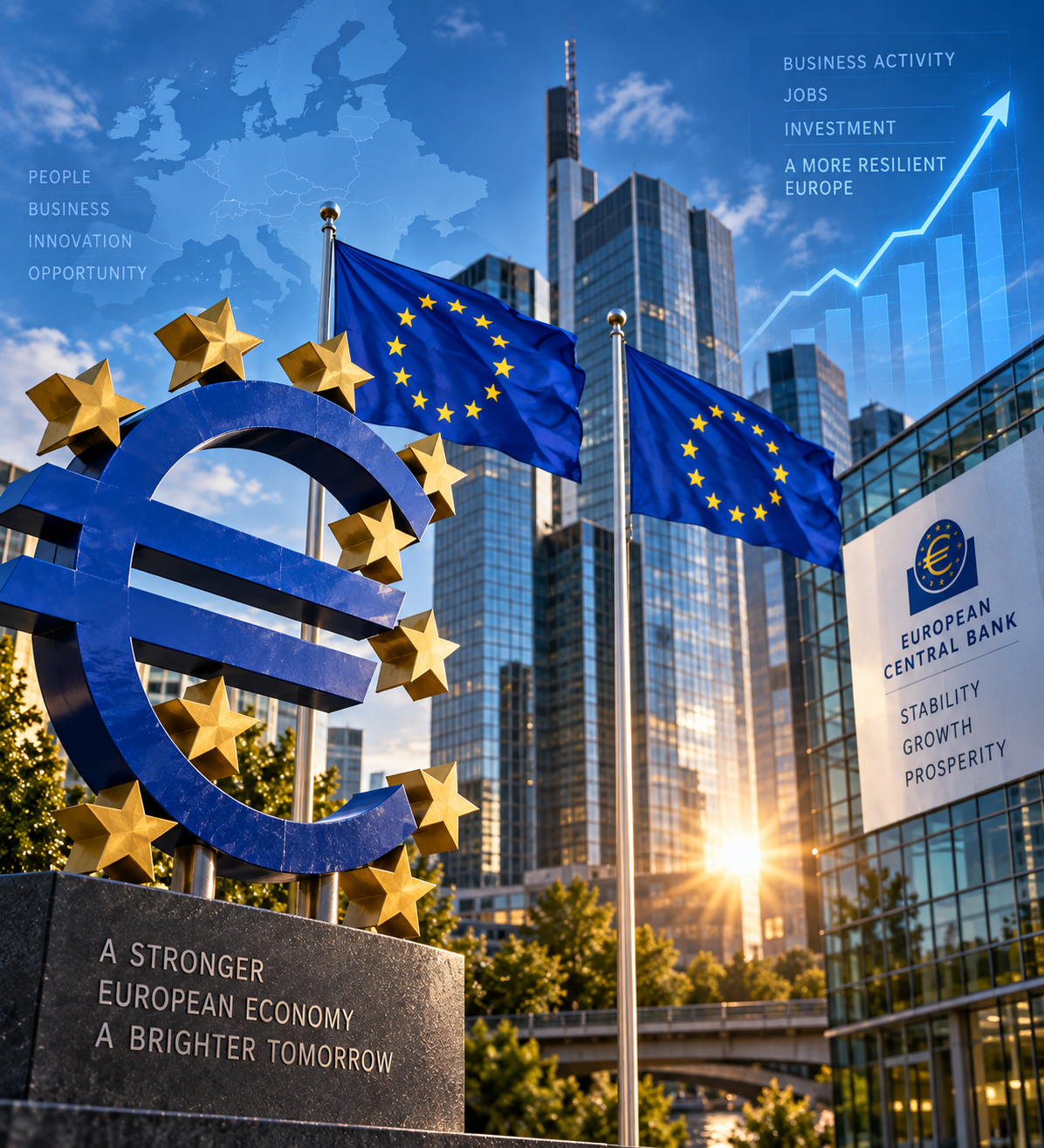
The eurozone economy entered the final stretch of the third quarter with considerably more momentum than economists expected, as business activity accelerated despite elevated energy costs and geopolitical pressure.
Preliminary purchasing managers’ data showed the eurozone composite PMI rising to 53.1 in September from 52.0 in August, its highest level since April 2023. A reading above 50 signals expansion.
The result was substantially stronger than the 51.7 level expected by economists and marked a third consecutive month of expansion across the currency bloc.
The improvement was broad rather than concentrated in one industry.
Services activity increased while manufacturing output strengthened, providing evidence that the recovery was spreading across important parts of the economy.
Germany recorded its strongest expansion in almost a year, while France returned to growth. New business also improved, reinforcing indications that economic momentum strengthened during September.
That resilience is significant because European businesses are simultaneously absorbing higher energy costs associated with geopolitical instability and supply disruptions.
Those pressures are beginning to appear in company pricing, creating a potential complication for monetary policy.
A stronger economy gives the European Central Bank greater room to concentrate on inflation rather than providing additional support for growth. At the same time, persistent energy-driven price pressures could make it more difficult for policymakers to ease financial conditions.
The September PMI does not guarantee that official economic growth will accelerate at the same pace. Purchasing managers’ surveys are early indicators rather than measurements of gross domestic product.
But the figures provide evidence that the eurozone entered the final weeks of the third quarter in stronger condition than economists had anticipated.
For markets, the September data therefore carry two messages.
Europe’s economy appears more resilient than expected, reducing immediate concerns about economic stagnation. But stronger demand combined with higher energy costs could also sustain inflationary pressure and keep European interest rates restrictive for longer.