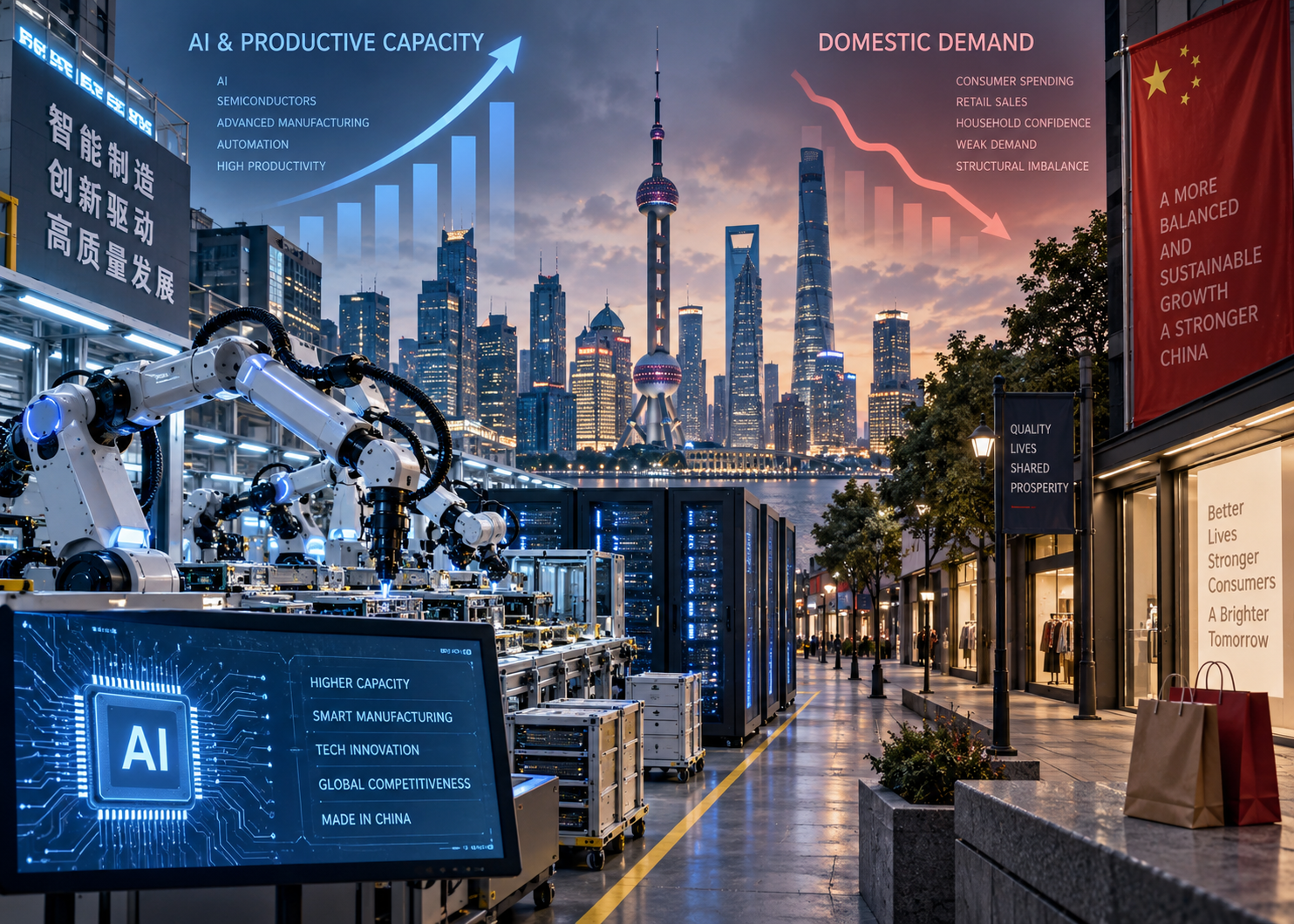
China’s artificial-intelligence expansion could intensify one of the economy’s central structural problems if productive capacity grows faster than domestic demand, according to a member of the People’s Bank of China’s monetary-policy committee.
Huang Yiping warned that AI could deepen the imbalance between supply and demand even as the technology supports productivity and export competitiveness.
He argued that stronger household consumption and healthier balance sheets across local governments, financial institutions and companies are needed to create a more durable growth model.
The warning highlights a different side of China’s AI boom. Technology investment has supported manufacturing and exports, but weak domestic demand, property-sector stress and constrained local-government finances continue to weigh on the economy.
That creates a policy challenge: additional productive capacity can improve competitiveness, but without stronger consumption it can also intensify excess supply and increase dependence on foreign demand.
For markets, the issue is whether Beijing increasingly directs fiscal and structural policy toward household income and consumption rather than relying primarily on industrial investment and credit expansion.