
For a young family trying to buy its first home, the most important number in America is not the stock market or the jobless rate. It is the 30-year mortgage rate, and right now it is working against them.
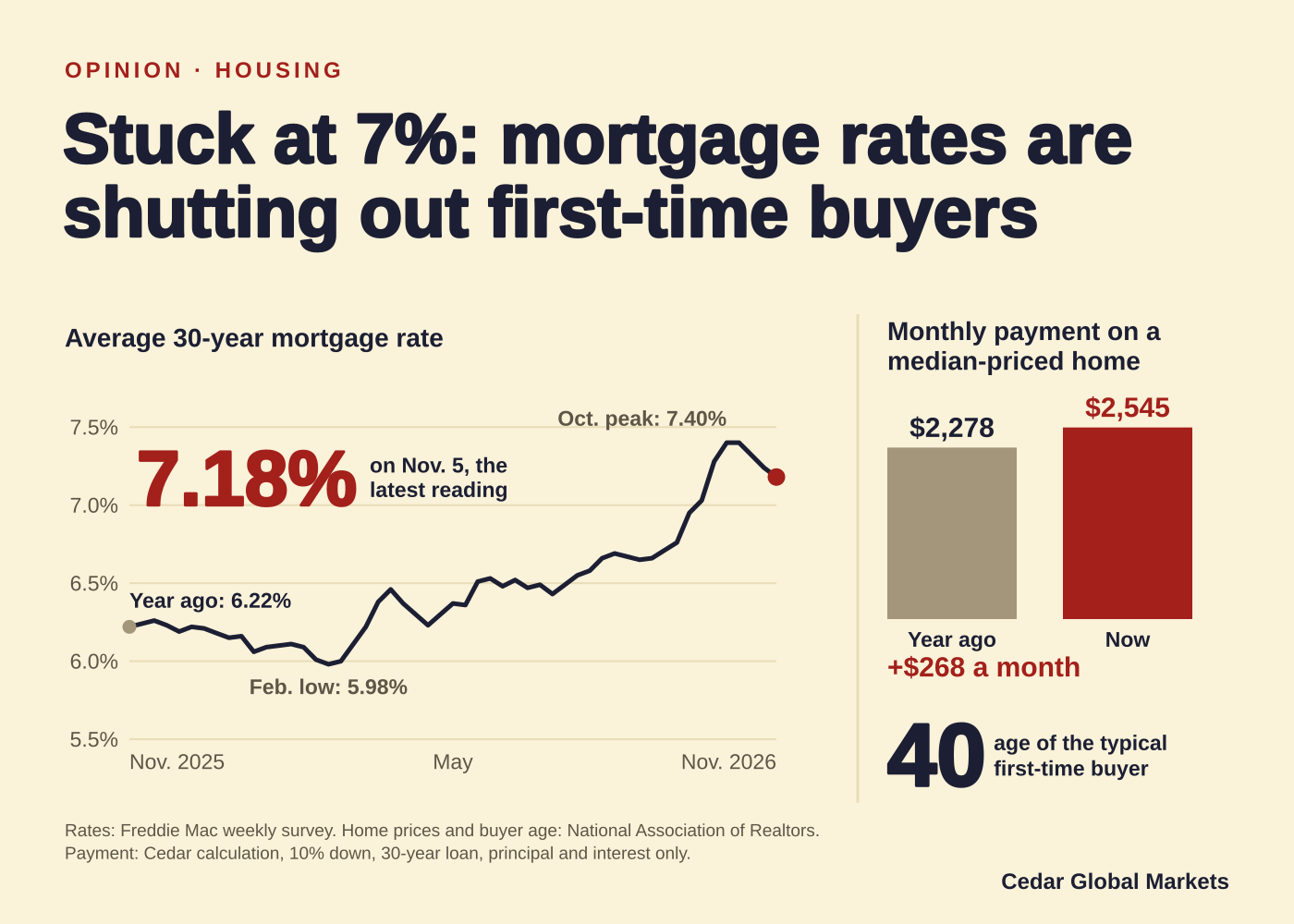
Freddie Mac’s weekly survey put the average 30-year fixed rate at 7.18% on Nov. 5. That is down from 7.40% in October, the highest in almost three years, but the rate has been above 7% in every weekly reading since late September, and it is still about a full point above the 6.22% average of a year earlier. In late February the rate was as low as 5.98%.
A point sounds small. It is not. Take the median price of an existing home in September, $417,500, according to the National Association of Realtors. A buyer who puts 10% down and borrows the rest at 7.18% for 30 years pays about $2,545 a month in principal and interest, before taxes and insurance. A year ago, with the median price at $412,300 and the rate at 6.22%, the same kind of loan cost about $2,278. That is roughly $268 more every month, or more than $3,200 a year, for a house that costs almost the same.
Families who already own a home with a low rate can wait this out. First-time buyers cannot. They have no house to sell, no equity to roll over and often little savings left after paying rent. The rate is the whole game for them.
The results show up in the numbers. In the Realtors’ 2026 survey of buyers and sellers, released Nov. 5, first-time buyers made up 22% of all purchases, up only slightly from 21% a year earlier, the lowest on record. The typical first-time buyer was 40 years old, matching last year’s all-time high. Many are now waiting until middle age to buy. And 10% of first-time buyers paid all cash, a record. That is not a sign that young families are doing fine. It suggests the people getting in are often the ones with family money behind them.
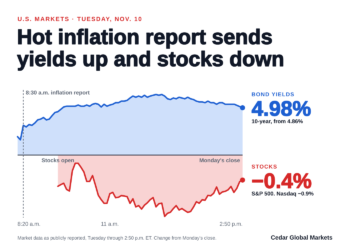
Tuesday’s news did not help. The Labor Department said consumer prices rose 0.4% in October, more than the 0.3% economists had expected, and core prices, which leave out food and energy, rose 0.3% against a 0.2% forecast. Bond yields jumped after the report. The 10-year Treasury yield, which mortgage rates tend to follow, rose to about 5%. The Federal Reserve already raised its benchmark rate in September, to a range of 3.75% to 4%. Hours before the report, Fed Governor Christopher Waller said a half-point increase should be considered at the December meeting if core inflation came in at about 0.3% or higher. It did.
Washington cannot simply order mortgage rates down, and it should not try to by ignoring inflation. Higher prices for food, rent and gasoline hurt the same young families. But there are steps that would help without making inflation worse. Cities and states can make it easier to build starter homes by easing zoning rules that require large lots and limit small houses and townhomes. More supply is the surest lasting way to bring prices within reach. Down-payment help aimed at true first-time buyers, rather than tax breaks for people who already own, would also put help where it is needed.
Homeownership is still one of the main ways American families build wealth. When the typical first-time buyer is 40, that ladder has been pulled up for millions of people in their 20s and 30s. Rates may ease again. Until they do, policymakers should treat housing supply as an emergency, because for a generation of would-be buyers it already is.