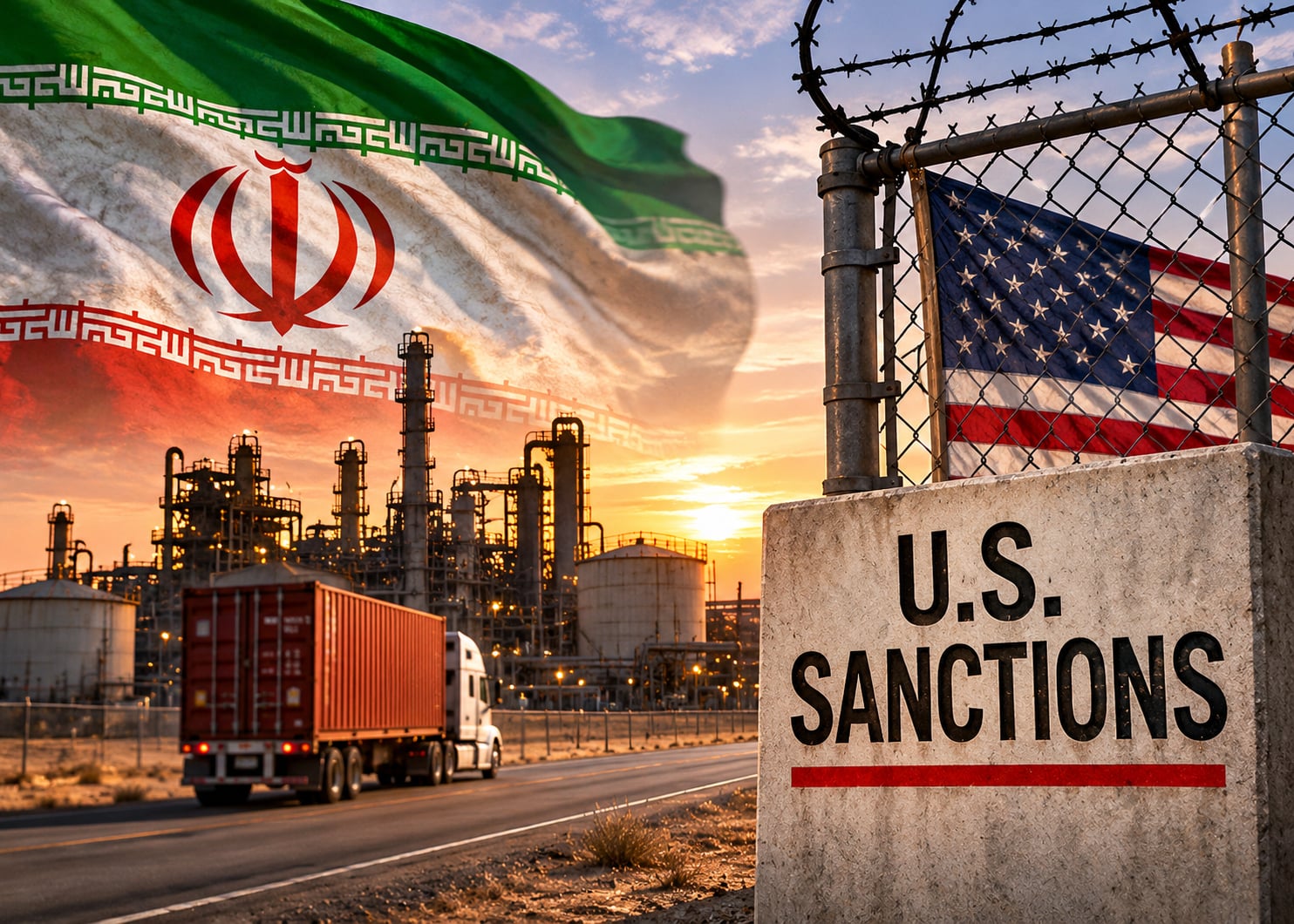
The United States has established a new military-led task force designed to restrict Iran’s access to sanctioned goods, advanced weapons components and illicit revenue through land routes and the Caspian Sea.
The initiative, named Task Force Iron Gate, expands American enforcement efforts beyond the existing naval blockade of Iranian maritime trade.
The task force will operate from Tampa, Florida, and coordinate with multiple federal agencies, including the Treasury, State and Justice departments.
The initiative targets networks that move dual-use technology, military equipment and restricted goods into Iran through neighboring countries and alternative transport routes.
U.S. Central Command says its naval blockade has prevented more than $25 billion in Iranian crude exports. That figure is a U.S. military estimate rather than an independently audited measure of lost Iranian revenue.
Despite the blockade, at least $2 billion in military-related equipment reportedly entered Iran since January 2025 through networks involving shipping, overland transport and cargo aircraft.
The new enforcement strategy could increase compliance pressure on freight operators, financial intermediaries and businesses involved in regional trade.
For energy markets, the development introduces another source of uncertainty. Restrictions on Iranian commerce could affect regional supply chains even as diplomatic efforts seek to reduce tensions.
The task force’s practical impact will depend on enforcement cooperation, the ability to identify sanctioned networks and whether neighboring countries change their trade practices.
Markets will monitor further sanctions announcements, Iranian responses and developments in negotiations over regional security and maritime access.