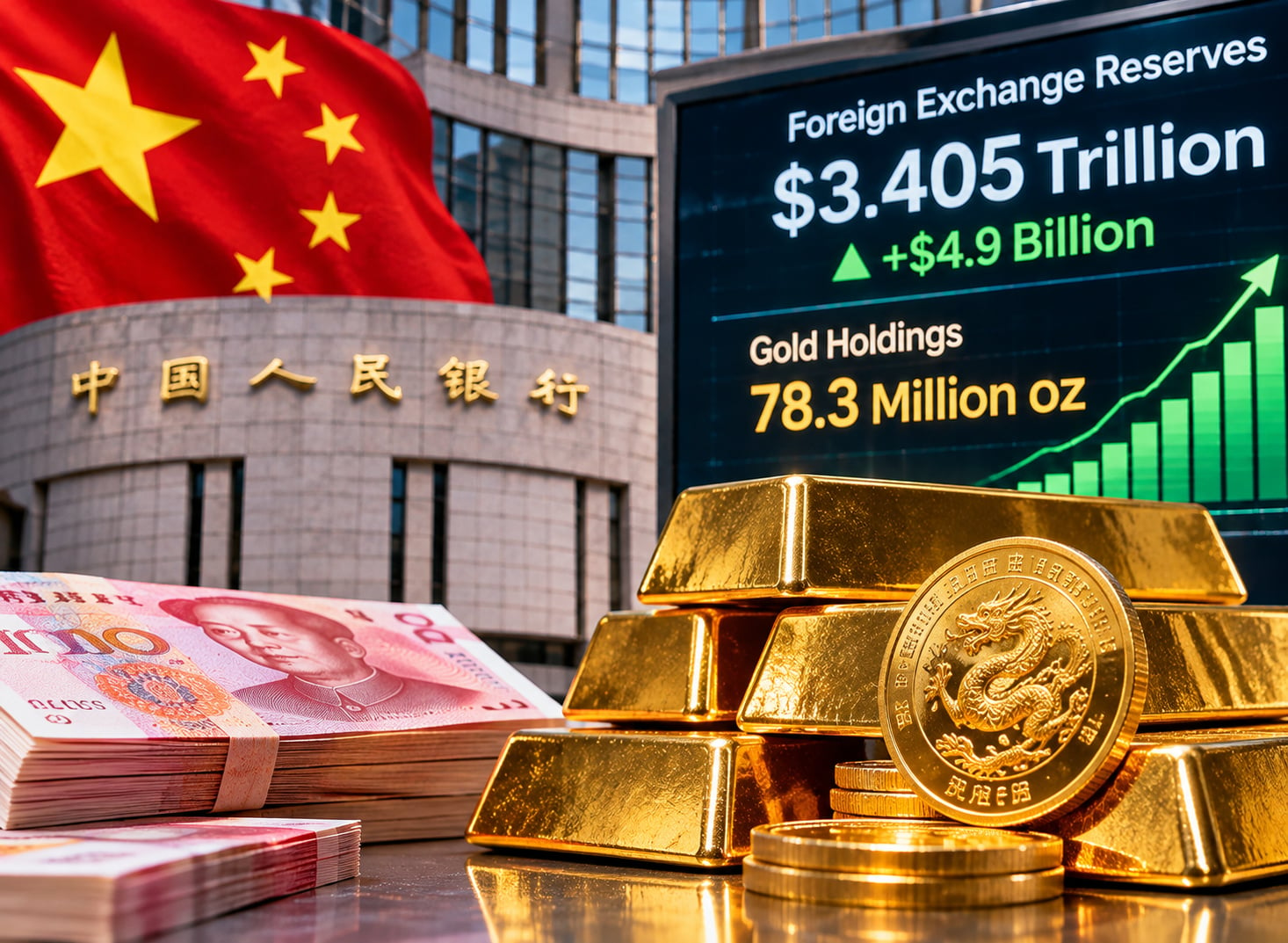
China’s foreign exchange reserves increased to approximately $3.405 trillion at the end of October, according to figures released Saturday by the State Administration of Foreign Exchange.
The country’s reserves rose by approximately $4.9 billion, or 0.14%, from September’s $3.400 trillion level.
Chinese authorities attributed the change partly to currency translation effects and movements in global financial asset prices.
The modest increase followed a substantial decline in September, when reserves fell by approximately $38.1 billion.
Separately, the People’s Bank of China extended its gold-purchasing streak to 24 consecutive months.
Official gold holdings increased to approximately 78.3 million troy ounces from 77.47 million ounces in September.
The continued accumulation reflects China’s sustained interest in maintaining gold within its international reserve portfolio.
The data arrive as Chinese authorities manage a stronger yuan, which has benefited from substantial export earnings and foreign-currency inflows.
Earlier in November, the central bank announced an increase in the foreign-currency deposit reserve requirement for financial institutions from 4% to 6%, effective November 15.
That measure is intended to absorb foreign-currency liquidity and moderate the pace of yuan appreciation.
A stronger yuan can reduce imported costs but may also affect the competitiveness of Chinese exporters.
Changes in reserve valuations should not automatically be interpreted as direct foreign-exchange intervention, because exchange-rate movements and asset-price changes can affect reported totals.
The next indicators to monitor are November reserve figures, gold holdings, trade flows and the yuan’s response to the higher foreign-currency reserve requirement.