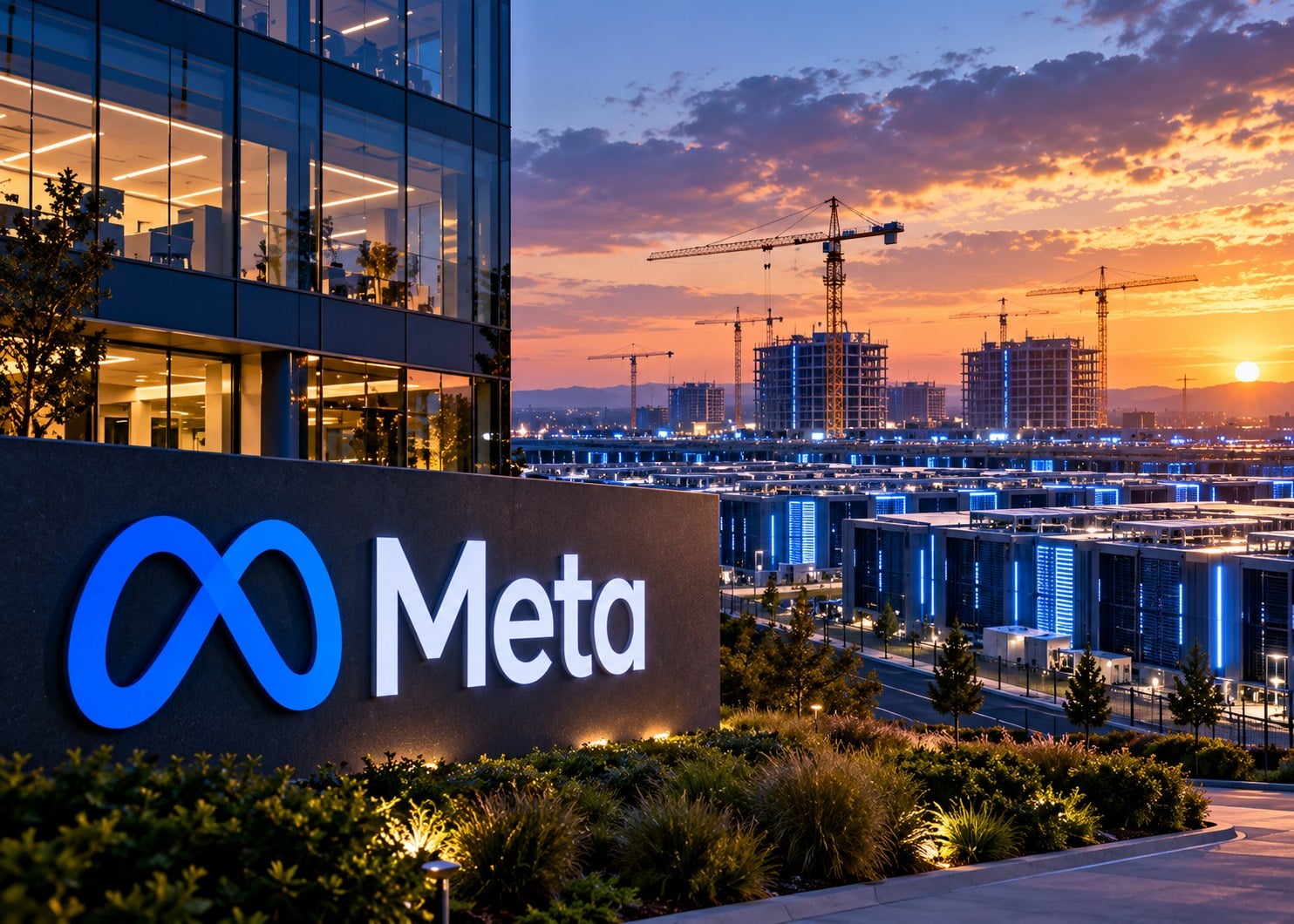
Meta Platforms is preparing to raise as much as $95 billion through equity markets as the technology company searches for additional capital to finance its enormous artificial-intelligence infrastructure expansion.
The plan includes approximately $35 billion of common and preferred equity offerings and a separate at-the-market program of as much as $60 billion involving Meta’s new non-voting Class C shares.
The scale is significant even by the standards of the current AI investment cycle.
Meta expects 2026 capital expenditures of approximately $135 billion to $145 billion as it builds data centers, purchases computing equipment and expands the infrastructure supporting its artificial-intelligence products.
The financing therefore provides another indication that AI competition is moving beyond corporate earnings into capital markets.
Meta reported negative free cash flow of approximately $2.12 billion in the third quarter, compared with positive free cash flow of $10.63 billion a year earlier.
The company nevertheless remains financially stronger than many smaller AI infrastructure operators because it can combine operating cash generation with access to public equity and debt markets.
That distinction is becoming increasingly important.
Investors have recently scrutinized leverage throughout the AI ecosystem as data-center developers and specialized cloud companies borrow heavily to finance processors, buildings and electricity infrastructure before receiving the associated revenue.
Meta’s proposed equity financing shifts more of that funding burden toward shareholders rather than relying entirely on additional borrowing.
Nvidia, AMD and Broadcom have expressed interest in purchasing up to $5 billion collectively of Meta’s Class A common stock in the offering.
The transaction also follows Meta’s creation of non-voting Class C shares, allowing the company to issue additional equity without proportionately diluting existing voting control.
For investors, the critical issue is no longer simply whether Meta can finance its AI expansion.
The harder question is whether the economic returns generated by artificial intelligence ultimately justify the extraordinary amount of capital being committed to infrastructure.