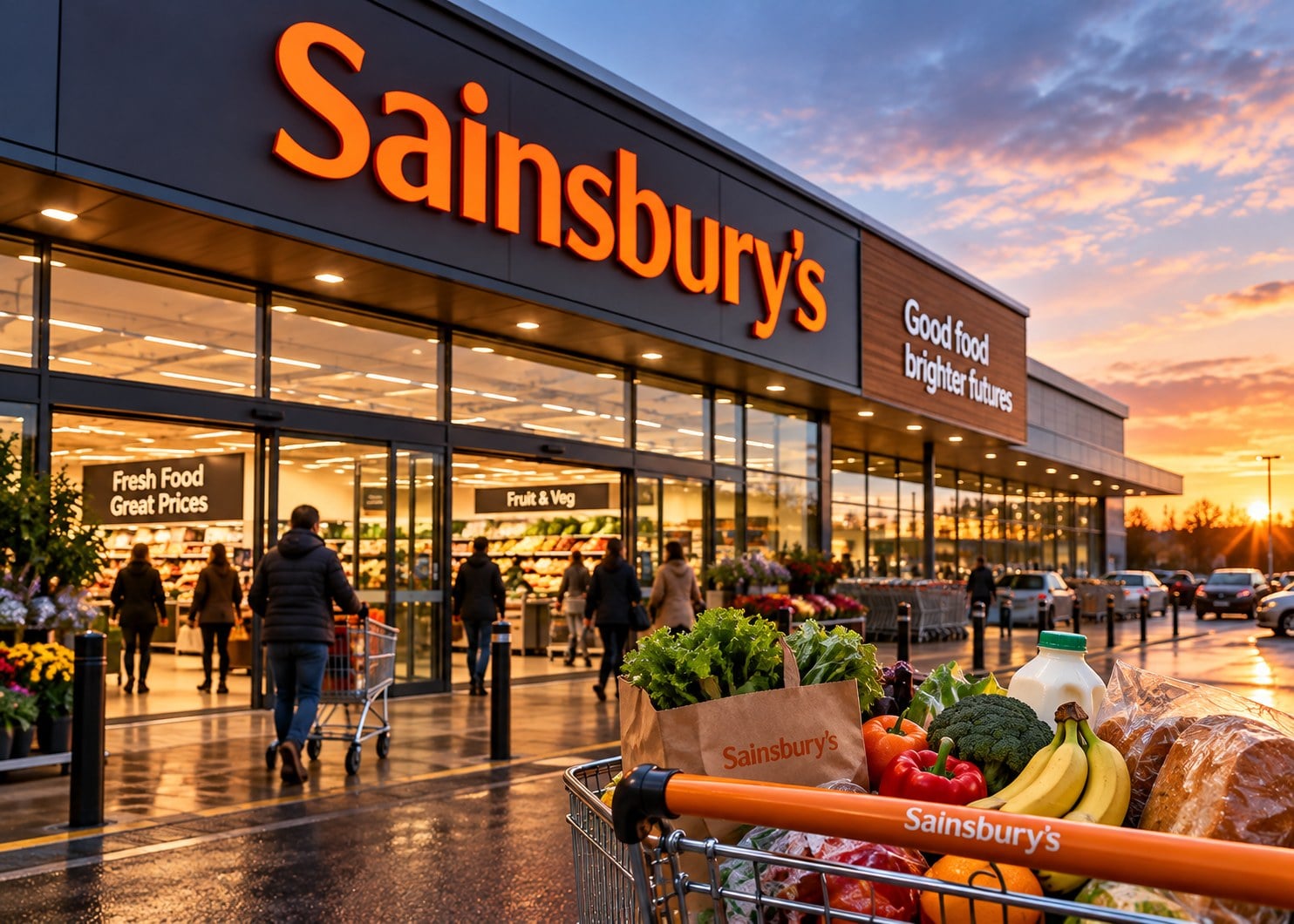
Sainsbury’s raised the lower end of its full-year profit forecast, but slowing sales growth pushed shares of Britain’s second-largest supermarket group down about 4%.
Like-for-like sales excluding fuel increased 1.2% during the second quarter through September 12.
That was below analysts’ average forecast of 1.9% and represented a slowdown from 2.3% growth during the previous quarter.
The weaker sales performance overshadowed an improvement in the company’s earnings outlook.
Sainsbury’s now expects underlying operating profit for the financial year ending February 2027 of between £1.025 billion and £1.065 billion.
Its previous guidance, adjusted for the disposal of Argos, ranged from £965 million to £1.065 billion.
First-half continuing underlying operating profit increased 3.6% to £525 million, supported by food-volume growth and cost savings.
The mixed results illustrate the challenge facing British retailers.
Consumers continue buying essential goods, but higher energy and household costs are putting pressure on discretionary spending.
Competition among supermarkets also remains intense, limiting how aggressively retailers can raise prices or protect margins.
Sainsbury’s controls approximately 15.2% of the British grocery market, making its performance an important indicator of consumer conditions in the United Kingdom.
The company is entering the crucial Christmas trading period with stronger profit expectations but slower underlying sales momentum.
That creates a clear test for management.
Cost savings can support earnings for a period, but sustained profit growth eventually requires stronger sales or improved margins.
Investors will now focus on Christmas demand and the effect of Britain’s upcoming budget on household finances and consumer confidence.