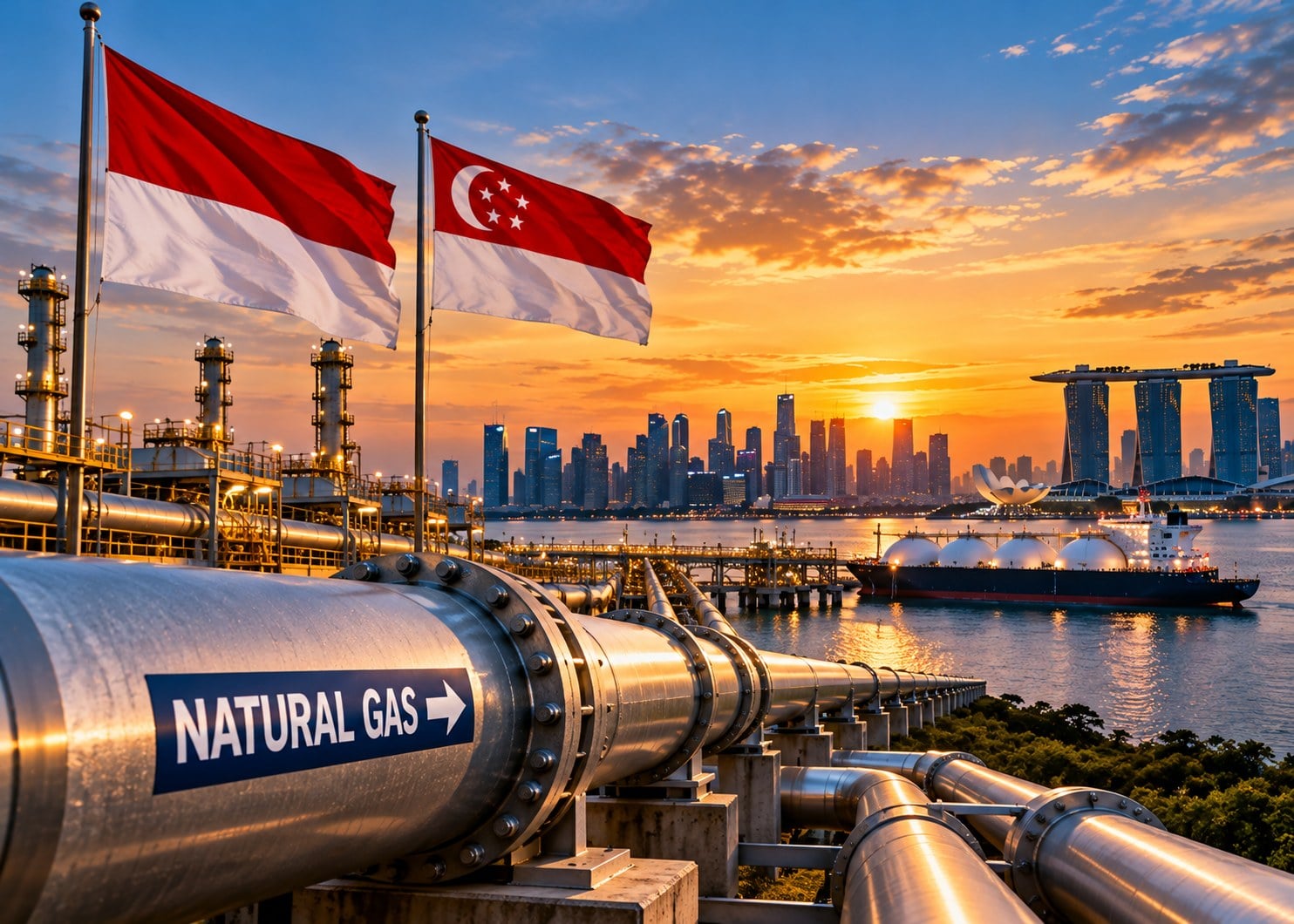
Indonesia began reducing pipeline natural-gas exports to Singapore as the government redirects more fuel toward its domestic electricity sector.
The reduction totals 31 million standard cubic feet per day, according to Indonesian upstream oil and gas regulator SKK Migas.
That represents roughly 9% of Indonesia’s pipeline gas exports to Singapore.
The reduction includes supply originating from both Natuna and Sumatra.
SKK Migas said approximately 15 billion British thermal units per day would be redirected from Natuna supplies and another 16 billion Btu per day from Sumatra.
Officials said other export destinations would not be affected.
The decision matters because Singapore has limited domestic energy resources and relies heavily on imported natural gas and liquefied natural gas to generate electricity.
Pipeline gas from neighboring producers has historically formed an important part of that supply structure.
For Indonesia, the decision reflects a competing priority.
Rapid electricity demand and industrial development require additional domestic gas, increasing pressure on policymakers to retain more locally produced energy rather than export it.
The immediate reduction is relatively modest, but the policy direction matters.
If Indonesia continues prioritizing domestic consumption as electricity requirements expand, Singapore may need to rely increasingly on LNG and alternative supply arrangements.
That could increase its exposure to international gas prices and shipping markets compared with contracted pipeline supply.
The next issue to watch is whether the reduction remains limited to 31 million cubic feet per day or becomes part of a broader restructuring of Indonesia’s regional gas exports.