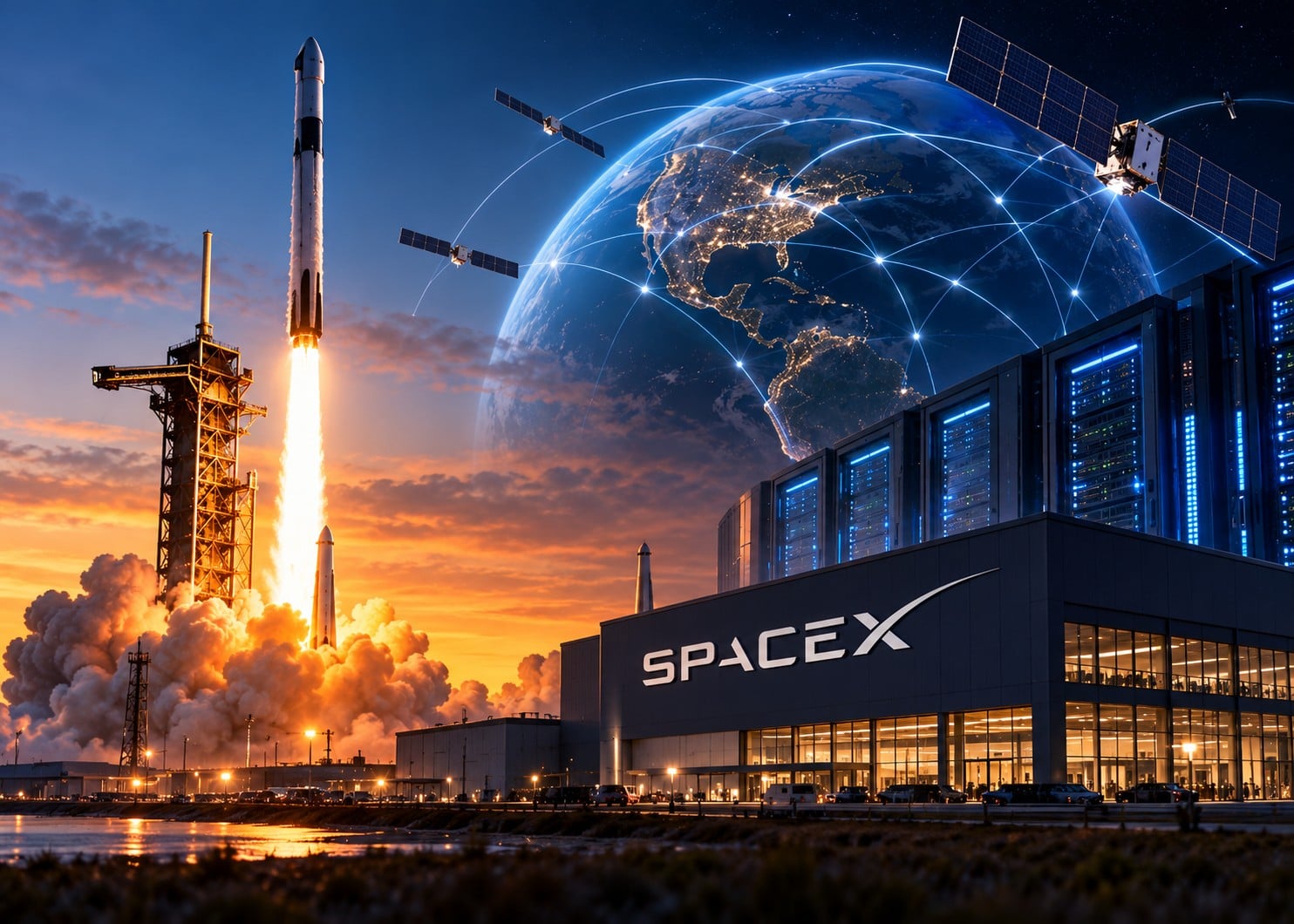
SpaceX reported a dramatic expansion of its artificial-intelligence business Tuesday, with third-quarter revenue jumping 161% from a year earlier to $14.58 billion.
AI revenue surged more than ninefold to approximately $7.6 billion, making it the company’s largest revenue source. Much of that business comes from renting data-center computing capacity to AI developers rather than from SpaceX’s own AI models.
SpaceX reported net income of $4.4 billion, reversing a $1.1 billion loss a year earlier and substantially exceeding analysts’ expectations.
Starlink remained a major contributor. Subscribers reached 13.6 million, above analyst expectations of 12.19 million, although average monthly revenue per subscriber has declined as SpaceX expands into international markets with lower-priced plans.
The growth comes with enormous investment requirements.
Capital expenditures nearly tripled to $19.6 billion during the quarter, with approximately $16.4 billion directed toward AI infrastructure.
That spending illustrates how dramatically SpaceX is changing. The company is no longer dependent primarily on launches and satellite connectivity for growth. AI computing infrastructure has become a major commercial operation of its own.
Investors are also watching speculation surrounding a possible future combination between SpaceX and Tesla, although no transaction has been formally agreed.
For markets, the earnings provide unusually clear evidence that SpaceX is evolving beyond rockets and satellite connectivity into a large-scale AI infrastructure provider.
The next question is whether rapid AI revenue growth can justify the extraordinary capital required to build the computing capacity behind it.