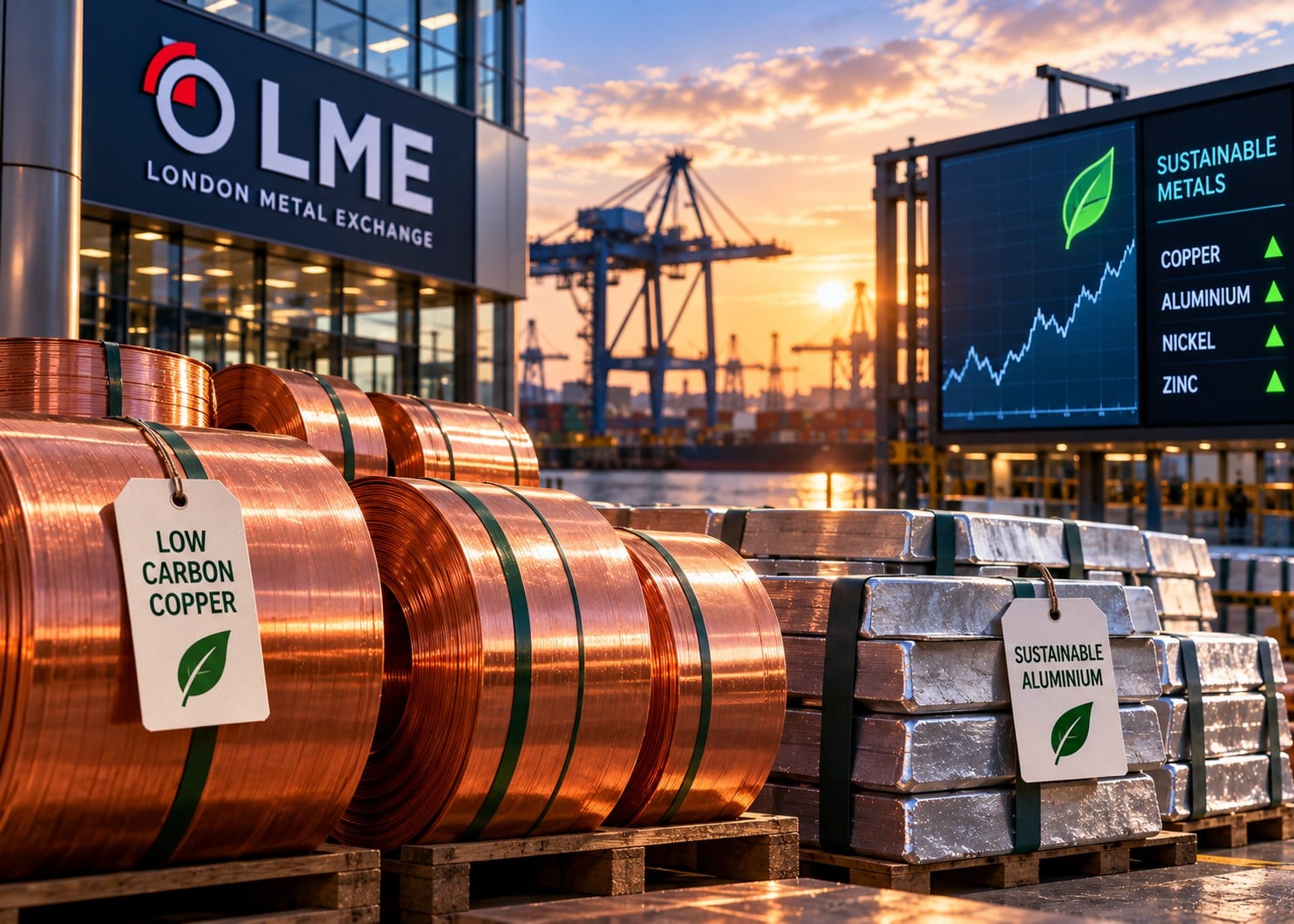
An effort linked to the London Metal Exchange to create transparent prices for sustainable metals is running into a basic market problem: participants are reluctant to disclose the transactions needed to establish reliable premiums.
Commodity Pricing and Analysis Ltd recently began publishing assessments for sustainable aluminium and copper.
The original plan was to incorporate actual trades supplied through approved trading platforms into the pricing process. The LME’s methodology specifically provides for executed transactions and bilateral transaction reporting alongside broader market intelligence.
Metalshub has not yet provided the expected transaction data because customer permission is required before the information can be disclosed, Reuters reported.
As a result, CPAL’s initial assessments relied on discussions with market participants rather than the transaction dataset originally envisioned.
The issue has already produced controversy in copper.
CPAL’s initial assessment concluded that sustainable copper carried no additional premium over the conventional physical premium for LME Grade A copper in Rotterdam.
Some European producers argue that the methodology defines sustainable copper too broadly.
The LME framework defines sustainable copper as having a carbon footprint of four metric tons of carbon-dioxide equivalent per ton of copper or less, together with third-party sustainability assurance.
Austrian producer Montanwerke Brixlegg, by comparison, has offered substantially lower-carbon copper at a significant premium, illustrating the disagreement over how environmental improvements should be valued.
The debate matters because metals producers are investing heavily in lower-emission production, recycling and renewable electricity.
Those investments become harder to justify if markets cannot reliably determine whether customers will pay more for cleaner material.
The larger question is whether commodity markets can develop sufficiently liquid and transparent benchmarks to place a credible price on lower-carbon production.