
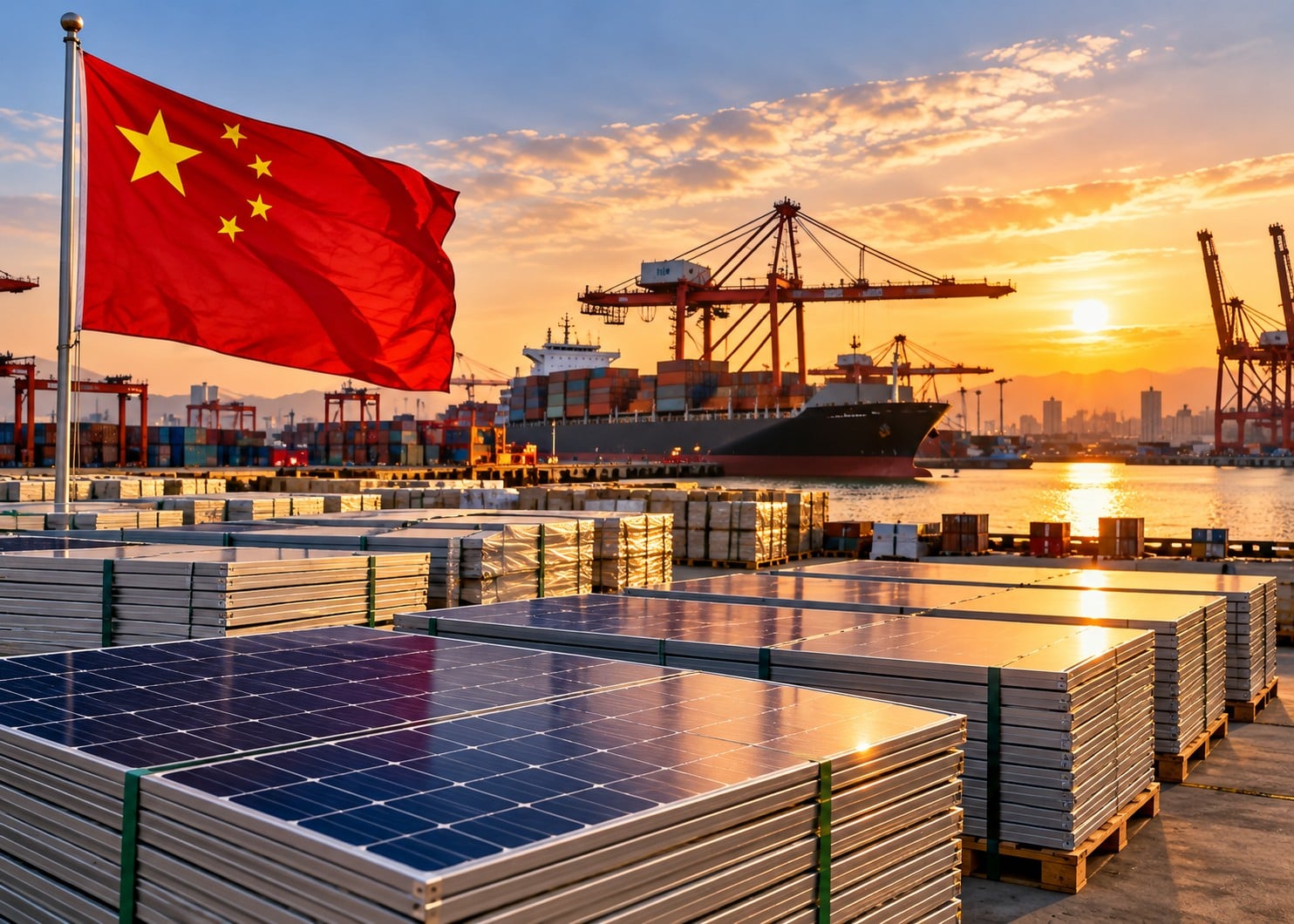
China’s solar-power equipment exports declined 6.4% in September from a year earlier, extending weakness in overseas shipments from the world’s dominant photovoltaic manufacturing industry.
The figures add another data point to an increasingly complicated outlook for China’s solar industry.
Chinese manufacturers have built enormous capacity across the photovoltaic supply chain, including polysilicon, wafers, cells and finished modules.
That scale helped drive down global solar-equipment costs and accelerate renewable-energy deployment, but it also created severe price competition and growing trade tensions.
The export decline comes as Beijing separately considers tighter controls on the overseas transfer of advanced solar-manufacturing technology.
China’s Ministry of Commerce has proposed controls covering 12 solar-manufacturing technologies, including technology used in thin wafers, perovskite and tandem solar cells and fluidized-bed polysilicon production.
Those proposed controls concern the export of manufacturing technology, not shipments of finished solar equipment, making them separate developments.
For manufacturers, the central issue is whether weaker exports reflect temporary fluctuations or a more durable slowdown as overseas markets develop domestic manufacturing capacity and impose trade restrictions.
For global renewable-energy markets, China remains enormously important because changes in Chinese production and exports can influence equipment prices and project economics worldwide.
Investors should watch subsequent export data, Chinese solar-manufacturer margins and whether Beijing’s proposed technology controls change overseas expansion strategies.