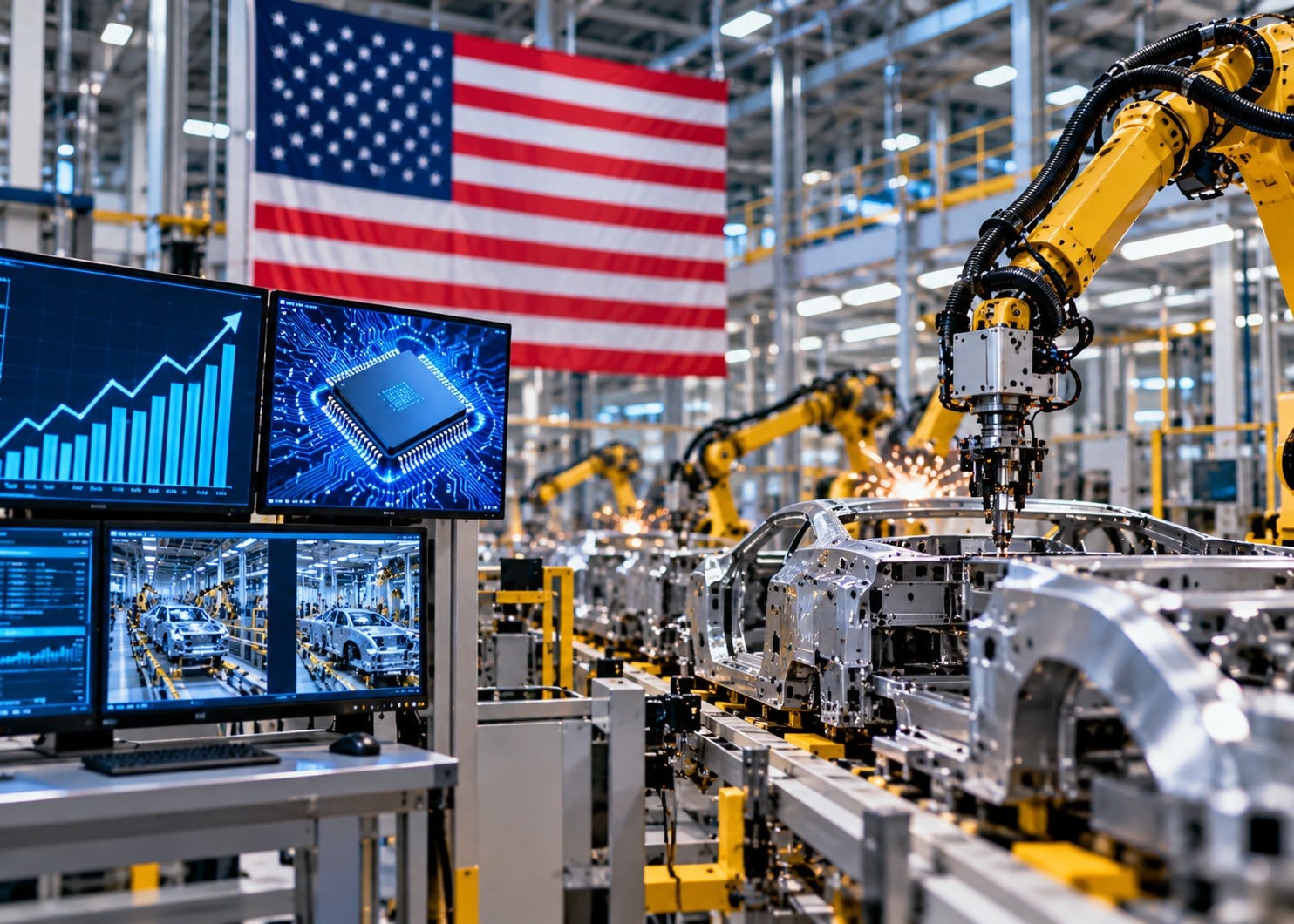
U.S. industrial production increased more strongly than expected in September, with manufacturing returning to growth as artificial-intelligence investment continued to support parts of the American factory sector.
Industrial production rose 0.7% in September after increasing 0.1% in August, according to the Federal Reserve. Manufacturing output advanced 0.3% following a revised 0.2% decline the previous month.
Factory production was 1.1% higher than a year earlier.
The headline improvement, however, masks a slowdown in manufacturing momentum.
Factory output expanded at an annualized rate of just 0.7% during the third quarter after growing at a 5.6% pace during the second quarter. Manufacturing accounts for roughly 9.4% of the U.S. economy.
Artificial-intelligence infrastructure remains an important source of support.
Production of semiconductors and related electronic components surged at a 28.4% annualized rate during the third quarter as companies continued investing heavily in computing infrastructure.
Other areas were weaker. Motor-vehicle and parts production fell 3% in September.
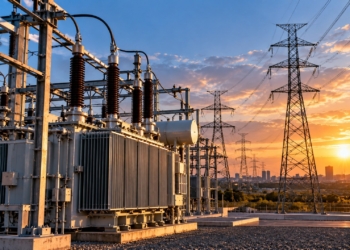
Mining output increased 0.2%, while utilities production jumped 3.5%, helping lift overall industrial production.
Capacity utilization across the industrial sector increased to 76.9% from 76.4% in August, although it remained below its long-term average.
The data present the Federal Reserve with another mixed signal.
American industry continues to expand, supported partly by the AI investment cycle and resilient domestic demand. At the same time, higher energy costs, elevated borrowing rates and supply-chain disruptions create growing pressure on manufacturers.
For investors, the question is whether AI-related capital spending can continue offsetting weakness elsewhere in manufacturing as financing and energy costs remain high.