U.S. inflation accelerated sharply in September as higher gasoline costs pushed consumer prices higher and complicated the Federal Reserve’s decision over whether to raise interest rates again this month.
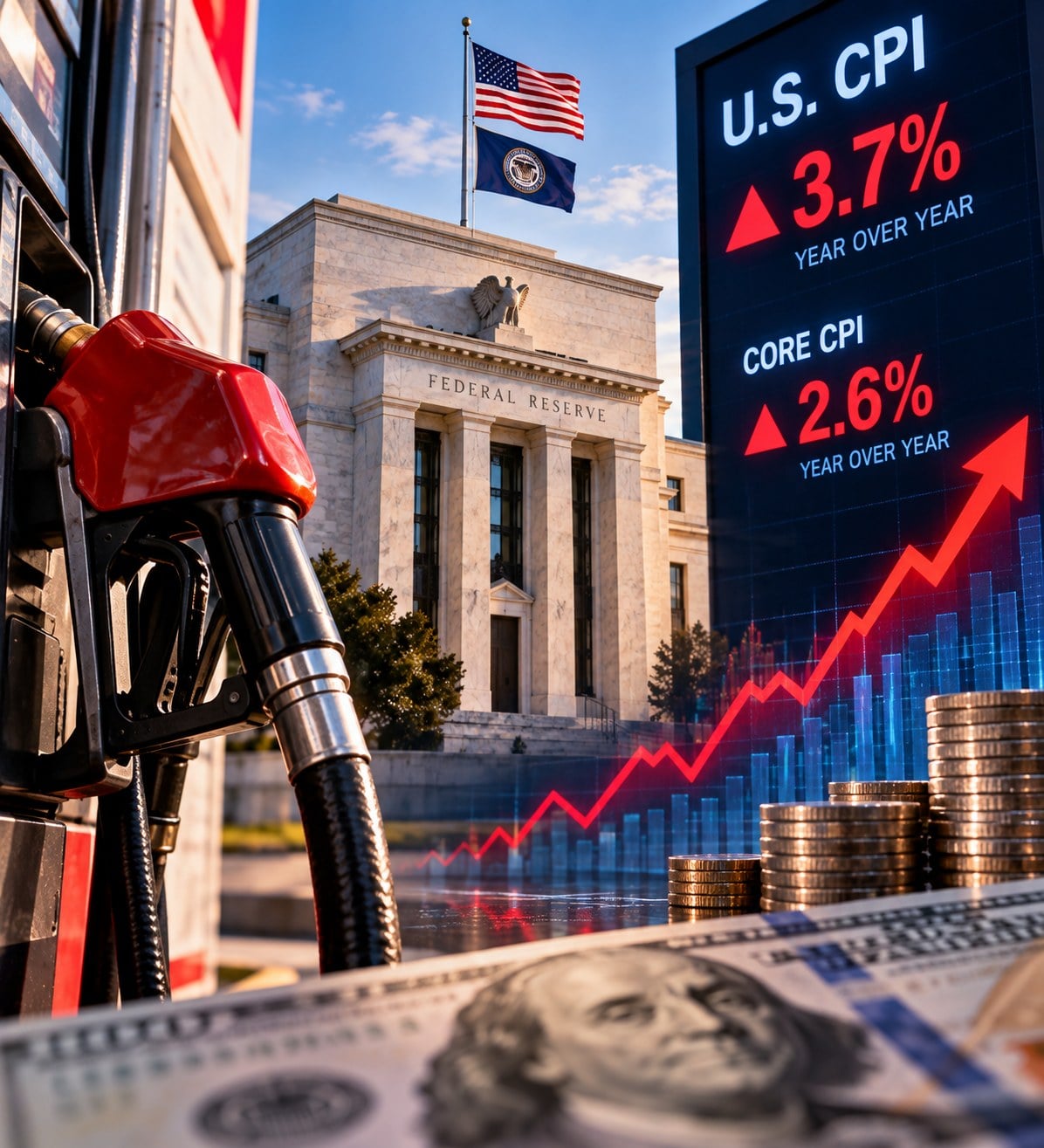
The Consumer Price Index increased 0.6% from August and 3.7% from a year earlier, according to the Bureau of Labor Statistics. Annual inflation accelerated from 3.4% in August.
Energy was a major driver. Gasoline prices surged 9.1% during September and accounted for more than half of the monthly increase in overall consumer prices. The broader energy index climbed 5.2%.
Underlying inflation also strengthened.
Excluding food and energy, core CPI increased 0.3% for the month and 2.6% from a year earlier. Shelter costs increased 0.4% in September and 3.2% over the past 12 months.
The report arrives at a sensitive point for monetary policy.
The Federal Reserve raised interest rates in September, while softer employment growth and earlier inflation readings had reduced expectations that policymakers would need to move aggressively again.
September’s CPI report makes that calculation more difficult.
Headline inflation is moving further above the Fed’s 2% objective, while underlying inflation is showing renewed pressure. Energy costs can be volatile, but sustained increases can eventually spread into transportation, manufacturing and consumer prices.
The inflation surprise therefore puts renewed attention on the Federal Reserve’s October policy decision.
Markets will focus on changes in Treasury yields, the dollar and expectations for interest rates, along with incoming employment and consumer-spending data.
For investors, the central question has shifted from whether September’s energy shock lifted inflation to whether those pressures are beginning to spread deeply enough through the economy to require another near-term Federal Reserve rate increase.