Massive investment in artificial-intelligence infrastructure is helping keep the world economy growing at roughly 3% despite the drag from elevated energy costs, according to International Monetary Fund Managing Director Kristalina Georgieva.
Speaking during the IMF and World Bank annual meetings in Bangkok, Georgieva described the AI investment boom as both a demand and investment shock that is supporting economic activity while the global energy crisis pulls growth in the opposite direction.
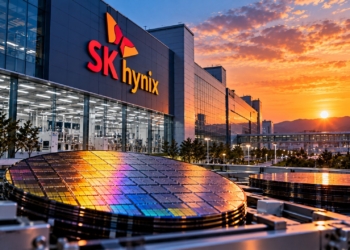
The benefits are particularly concentrated in economies supplying the hardware behind AI expansion.
The IMF estimates that advanced Asian economies could receive a growth boost of roughly 0.5 to 1 percentage point from the AI investment cycle. Emerging Asian economies could gain approximately 0.2 to 0.8 percentage point.
That reflects enormous spending on semiconductors, memory, data centers, networking equipment and other infrastructure required to train and operate increasingly powerful AI systems.
But the economic benefits come with significant disruption.
Georgieva said artificial intelligence could affect approximately 40% of jobs globally, through a combination of augmentation, downgrading and elimination.
Those effects will not necessarily mean outright job losses in every case. AI could increase productivity in some occupations while reducing wages, eliminating tasks or replacing positions in others.
The shift also creates a fiscal challenge.
Governments rely heavily on taxes on labor income. An economy in which a larger share of value is generated by capital-intensive AI infrastructure could eventually force policymakers to reconsider how tax systems fund public services.
The IMF’s assessment adds an important dimension to the current global outlook.
Energy prices and elevated borrowing costs are creating substantial headwinds, but the extraordinary capital expenditure associated with AI is simultaneously supporting investment, manufacturing and trade.
The benefits are not evenly distributed.
Countries involved in producing advanced chips, servers and other AI infrastructure are positioned to capture a disproportionate share of the investment boom, while economies without those industries could face technological and productivity gaps.
For markets, the central question is whether AI spending can continue expanding fast enough to offset weakness elsewhere in the global economy.
The next signals will come from corporate AI capital-expenditure plans, semiconductor demand, data-center construction and the IMF’s updated global economic projections.