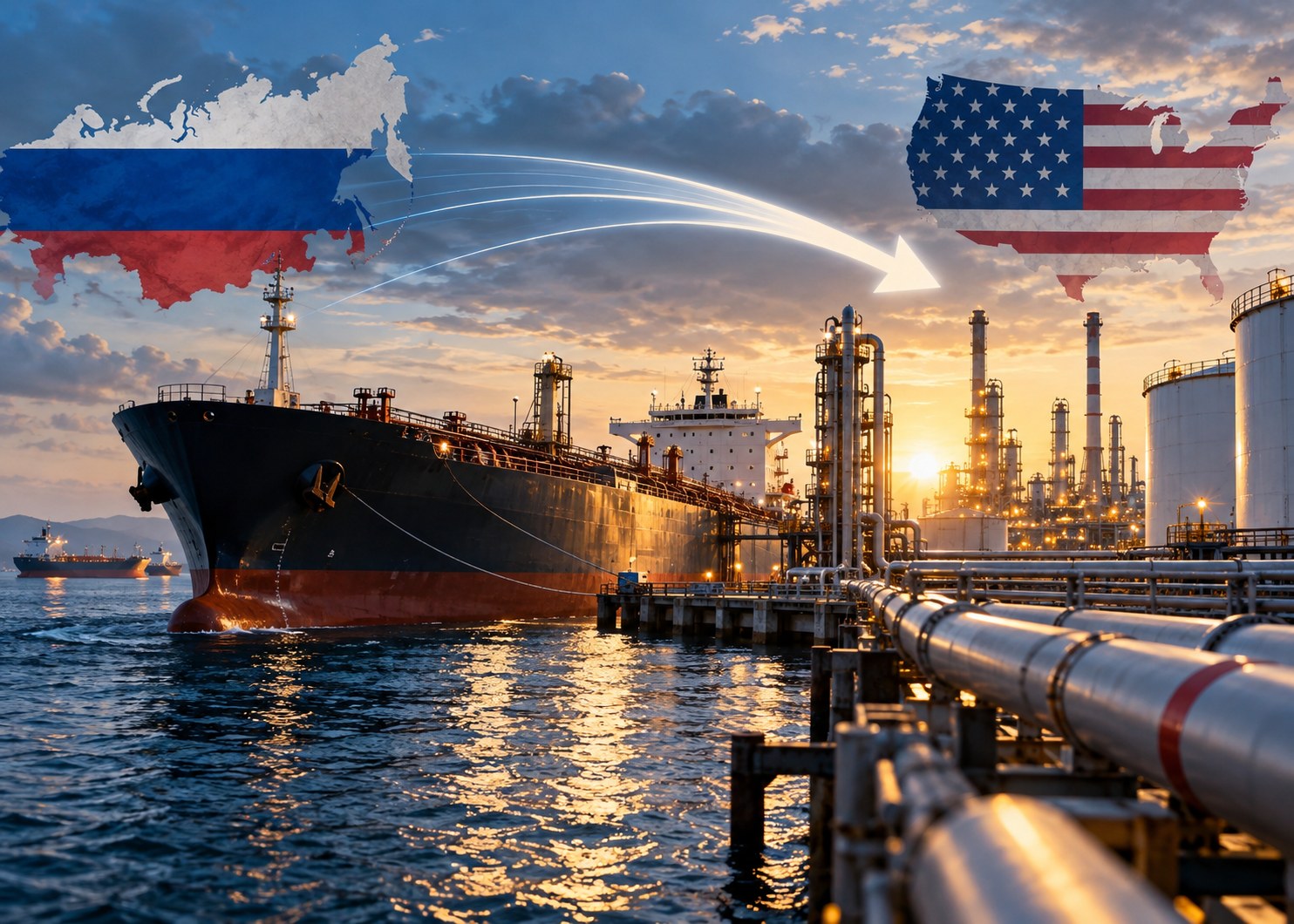
The United States has authorized transactions involving Russian-origin diesel after President Donald Trump said Russia agreed to return additional fuel to U.S. and global markets, marking a significant shift in Washington’s energy sanctions policy.
The Treasury Department’s Office of Foreign Assets Control issued Russia-related General License 135, authorizing certain transactions connected to the sale, delivery, offloading and importation of Russian diesel.
Trump said the agreement followed discussions with Russian President Vladimir Putin and would result in more than 300,000 metric tons of diesel being supplied to U.S. and international markets.
The decision comes as diesel prices remain under pressure from tight global refining capacity, geopolitical disruptions and elevated energy costs. Diesel is particularly important to the broader economy because it is heavily used in trucking, agriculture, construction and industrial transportation.
Oil and refined-product markets are closely watching whether additional Russian supply will materially ease prices. Analysts cited by Reuters questioned whether the announced volume would be large enough by itself to produce a sustained decline in diesel prices.
The policy change also carries geopolitical implications. U.S. restrictions on Russian energy have been used as part of Washington’s broader effort to limit revenue flowing to Moscow during the war in Ukraine. Ukrainian officials and some U.S. lawmakers criticized the decision, arguing that renewed Russian fuel sales could provide Moscow with additional revenue.
For markets, however, the immediate focus is on physical supply. Additional diesel entering international trade could help relieve some pressure in a fuel market that has become increasingly sensitive to refinery disruptions and geopolitical risks.
The size, timing and duration of Russian shipments will determine whether the authorization creates lasting relief or only a temporary increase in available supply.