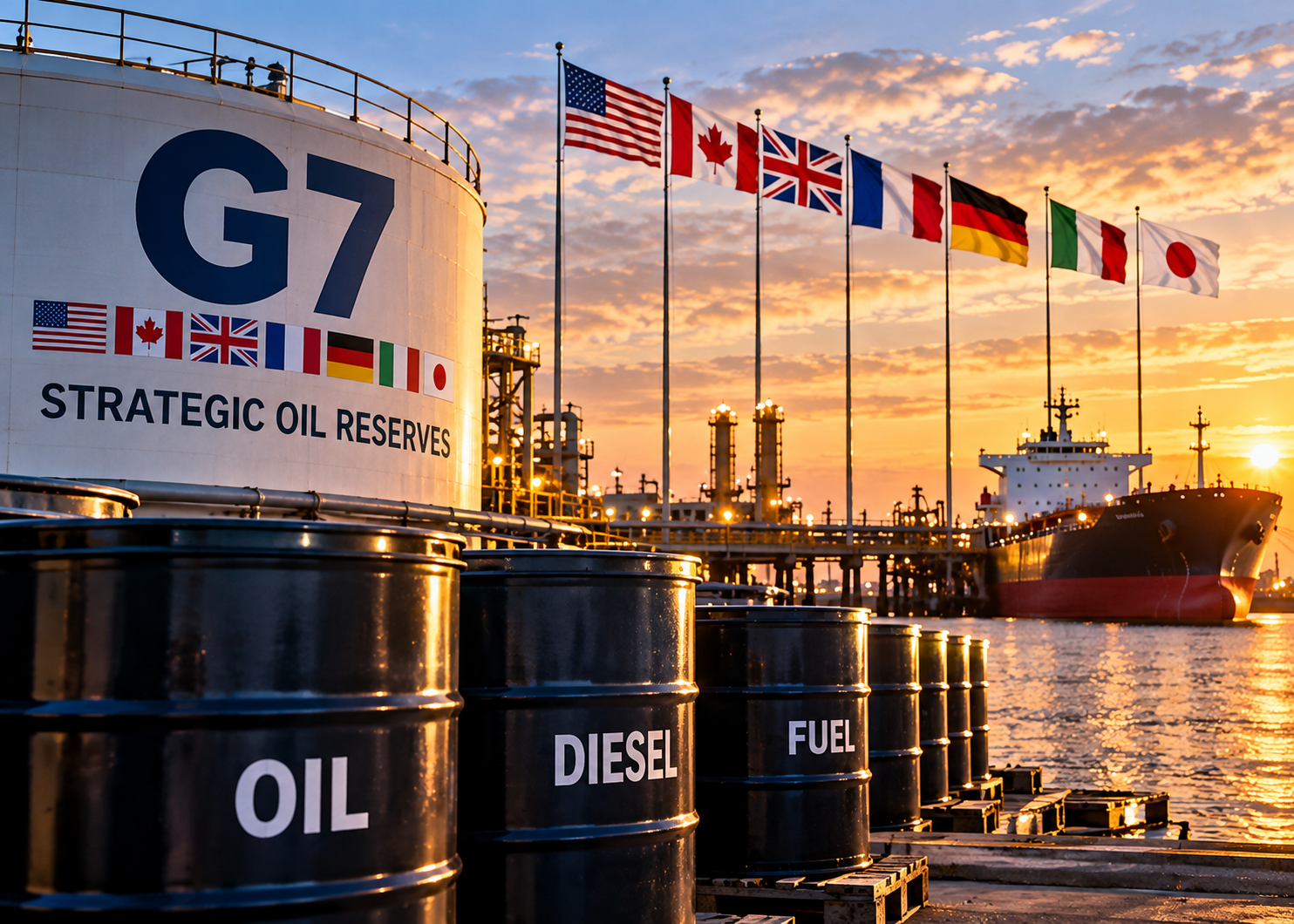
Group of Seven governments have agreed to release 100 million barrels of diesel, crude oil and other emergency energy stocks, converting weeks of discussions over another intervention into coordinated action.
The release will be implemented through the International Energy Agency, begin immediately and run for four months. A substantial portion of the diesel component is expected to be released within the first 20 days by G7 countries and participating partners.
The agreement does not yet specify exactly how the 100 million barrels will be divided between diesel, crude oil and other products or how much each country will contribute.
That distinction matters because refined fuels — particularly diesel — have been under greater pressure than crude itself.
European governments had separately discussed a French proposal involving roughly 50 million barrels of diesel, alongside another 50 million barrels of crude from IEA members. A 50-million-barrel European diesel release would equal roughly 17% of EU emergency diesel and gasoil inventories.
Markets reacted quickly.
U.S. diesel futures fell more than 4% during the discussions, while European diesel futures dropped by more than $90 per metric ton. Oil prices also declined as traders incorporated the prospect of additional government supply.
The G7 additionally said members would refrain from imposing energy-product export restrictions on one another, an important commitment because restrictions could further fragment already stressed fuel markets.
The latest intervention follows the 400-million-barrel emergency release coordinated by the IEA in March after the Middle East conflict severely disrupted regional energy flows.
The new action is smaller, but its composition could make it particularly important for refined-product markets.
For investors and consumers, the central question is whether emergency inventories can suppress fuel prices long enough for commercial supply chains and refinery output to normalize.
If diesel prices fall materially, the effect could extend beyond transportation. Diesel feeds directly into freight, agriculture, construction and industrial supply chains, making it an important channel through which energy shocks reach broader inflation.
Markets should now watch the actual country-by-country release schedule, diesel inventories, refining margins and whether the IEA concludes that additional emergency barrels are necessary.