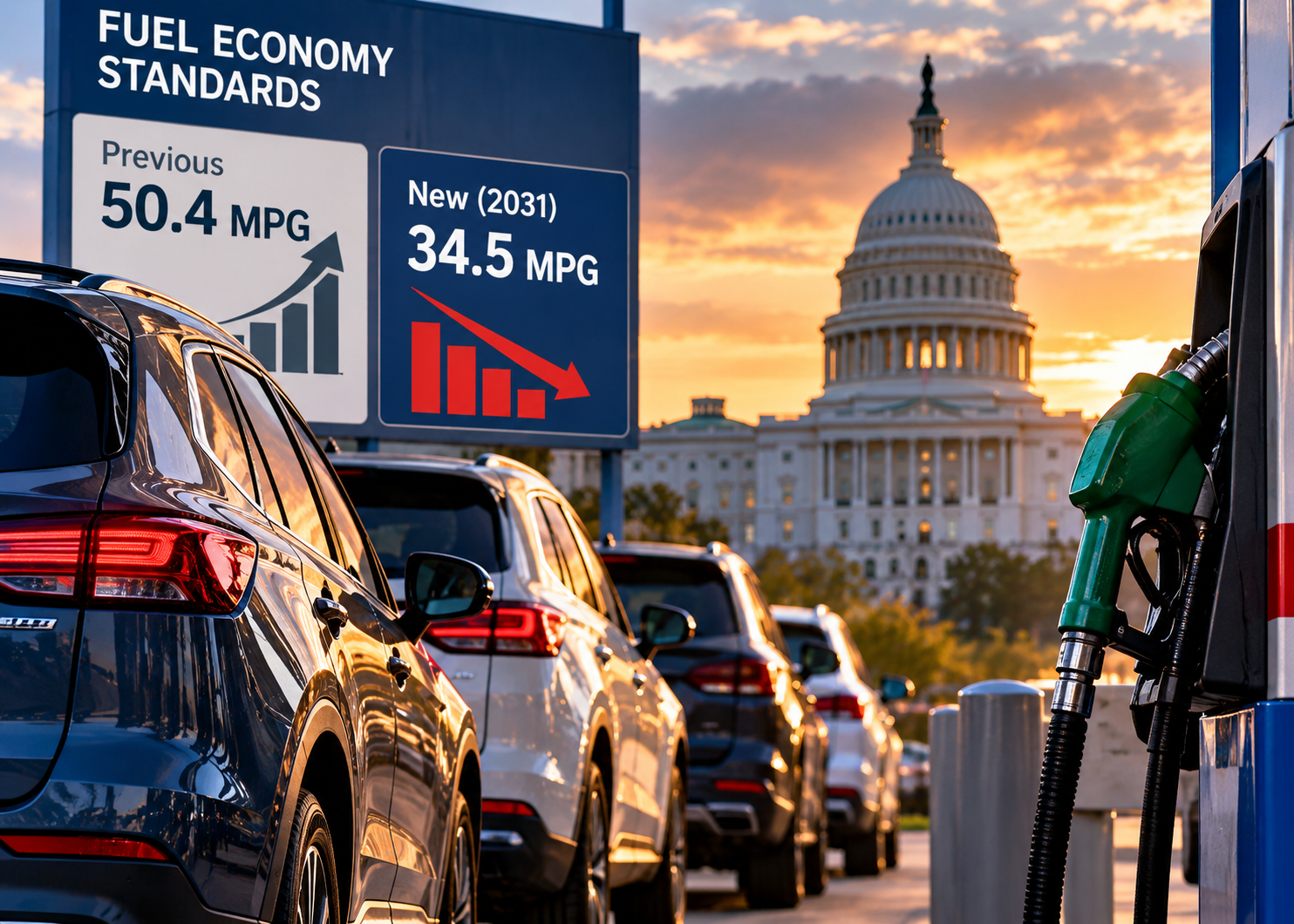
The U.S. Transportation Department is preparing to finalize substantially lower fuel-economy standards for cars and trucks through 2031, marking another major change in federal policy toward the auto industry and electric vehicles.
Transportation Secretary Sean Duffy said the new standards will be unveiled Monday.
The proposed framework would target an average fleet efficiency of approximately 34.5 miles per gallon by 2031, compared with 50.4 mpg under the previous framework.
The Transportation Department estimates that the change would reduce the average cost of a new vehicle by approximately $930.
That benefit comes with a significant trade-off.
The department estimates the lower standards would increase U.S. fuel consumption by roughly 100 billion gallons through 2050, raise consumer fuel spending by approximately $185 billion and increase carbon-dioxide emissions by around 5%.
The previous standards called for efficiency requirements for passenger vehicles to increase by 8% annually for model years 2024 and 2025, 10% for 2026 and 2% annually from 2027 through 2031.
The new approach would make it easier for automakers to meet federal requirements while continuing to sell larger numbers of gasoline-powered vehicles.
For the auto industry, the change could alter product planning, electric-vehicle investment and the economics of compliance.
Manufacturers have invested billions of dollars in battery plants, electric-vehicle platforms and supply chains partly in anticipation of progressively stricter emissions and fuel-efficiency requirements.
Lower standards could reduce near-term compliance pressure but also complicate long-term capital planning for companies already balancing gasoline, hybrid and fully electric product lines.
The policy shift comes as U.S. consumers face elevated fuel costs linked to Middle East supply disruptions.
That makes the economics unusually complex: consumers could pay less upfront for vehicles while potentially consuming more fuel over the life of those vehicles.
Markets should watch the final Transportation Department rule Monday, automaker responses and any subsequent legal challenges.