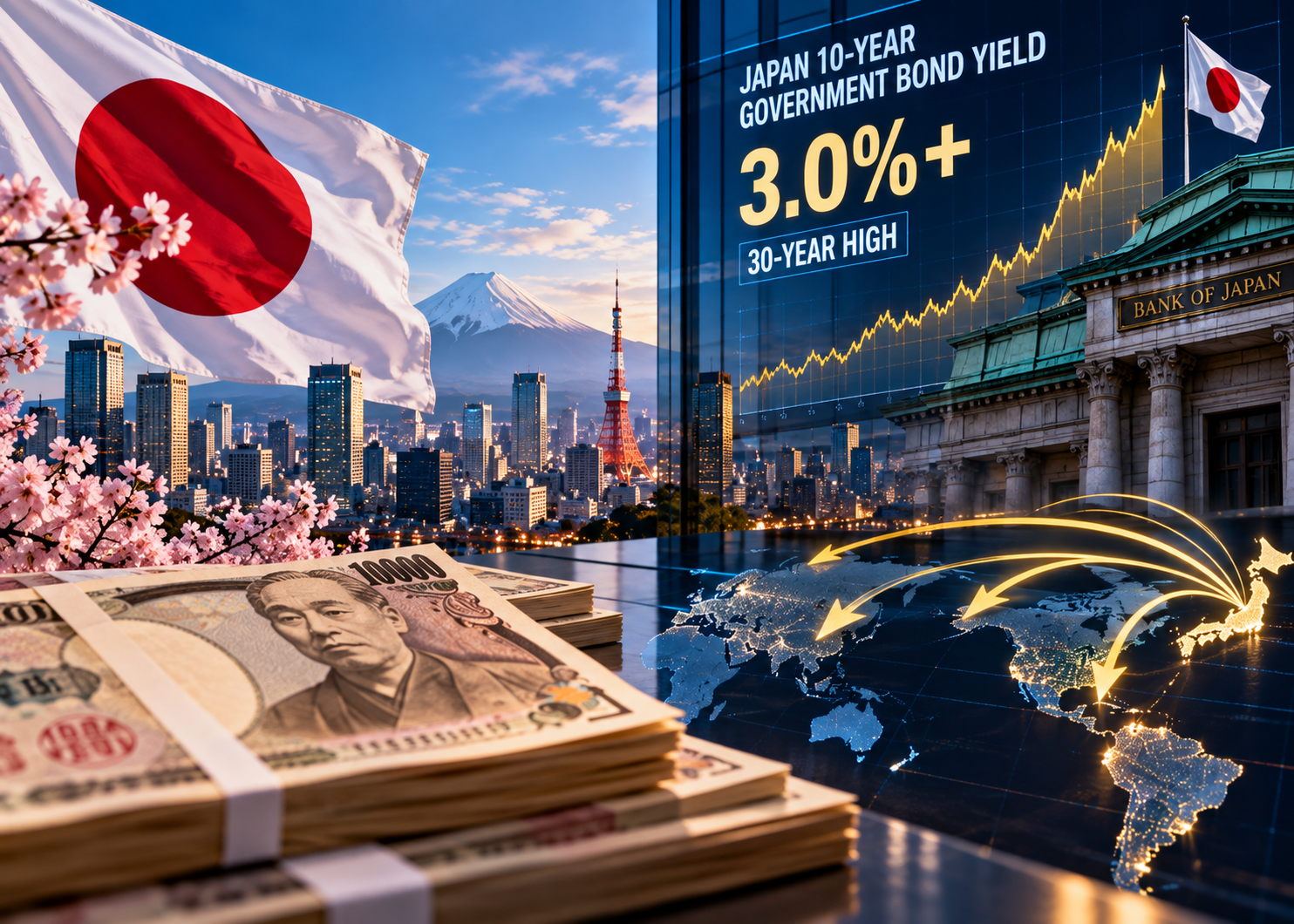
Japan’s rapidly rising government-bond yields are beginning to alter global capital flows, but uncertainty about where domestic rates will peak is preventing the country’s largest investors from aggressively bringing overseas assets home.
The Bank of Japan raised interest rates last week and has signaled a stronger focus on inflation, helping discourage speculative bets against the yen. Yet major banks, insurers, pension funds and other institutional investors remain cautious about committing heavily to Japanese bonds while yields are still rising.
Benchmark 10-year Japanese government bond yields have risen roughly two percentage points in less than two years to a 30-year high above 3%.
That change is altering the relative economics of foreign investment. After accounting for currency-hedging costs, U.S. Treasury holdings can now produce lower returns for Japanese investors than domestic bonds.
Japanese investors bought 4.8 trillion yen of sovereign debt last month, the largest net purchase in three months, according to Barclays analysis.
Meanwhile, HSBC estimates Japanese banks have sold roughly $70 billion of foreign bonds this year, compared with about $35 billion of purchases last year.
The potential scale matters globally because Japan controls one of the world’s largest pools of overseas investment capital. A sustained shift toward domestic bonds could affect demand for government debt in the United States, Europe and Australia.
The yen was trading near 159 per dollar Friday after surrendering much of its early-September advance. Speculative positioning has nevertheless shifted dramatically, with investors moving from a large net short position to a net long position during the first two weeks of September.
Markets will be watching the Bank of Japan’s next policy signals, the direction of Japanese government bond yields and changes in institutional portfolio allocations for evidence that gradual repatriation is developing into a larger structural capital-flow shift.