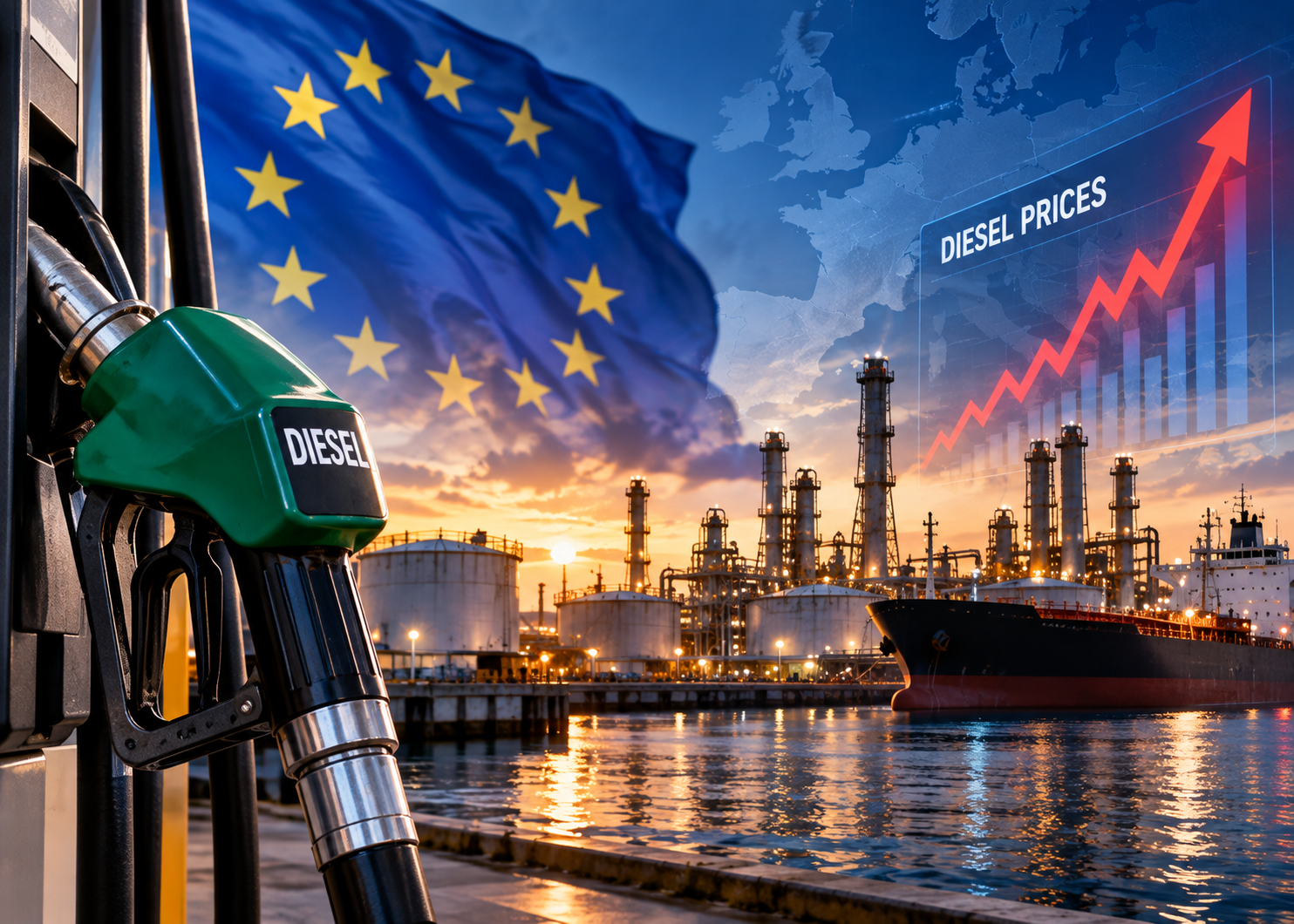
European Central Bank Vice President Boris Vujcic warned that elevated diesel prices could persist and feed broader inflation across the euro zone as global refining capacity tightens and geopolitical disruptions constrain supply.
Diesel prices have risen sharply amid disruptions associated with conflicts in the Middle East and Ukraine, creating another inflation challenge for an economy heavily dependent on imported energy.
Vujcic said diesel costs could remain high because the fuel is embedded throughout transportation and production chains, allowing higher energy expenses to migrate into the prices of other goods and services.
Several supply pressures are converging.
Drone attacks have reduced Russian refining output, disruptions around the Strait of Hormuz have affected energy flows, and Chinese refiners appear to be directing more production toward domestic demand rather than exports.
The diesel market also experienced renewed uncertainty after U.S. President Donald Trump expressed support for a possible restriction on U.S. diesel exports, although the administration subsequently sought to reduce concerns that such a measure was imminent.
The warning matters for monetary policy because persistent energy inflation can complicate the ECB’s attempt to distinguish temporary supply shocks from price pressures capable of spreading through wages and broader consumer prices.
Recent euro-zone business data have shown economic activity holding up better than expected despite elevated energy costs. That resilience gives policymakers more room to focus on inflation but also raises the risk that businesses can continue passing higher costs through to customers.
Markets will now watch European inflation data, diesel and crude prices, refinery availability and ECB communications for evidence that the energy shock is becoming more persistent.