President Donald Trump’s agreement to temporarily reopen the U.S. market to Russian diesel is facing a new challenge from within his own party, adding legal and political uncertainty to an arrangement intended to ease historically high fuel costs.
Republican Senator Thom Tillis said Sunday there is a legitimate argument that the administration is not complying with U.S. law by temporarily lifting restrictions on Russian fuel.
Trump announced Friday that Russia would supply more than 300,000 metric tons of diesel, equivalent to roughly 2.25 million barrels, to U.S. and global markets.
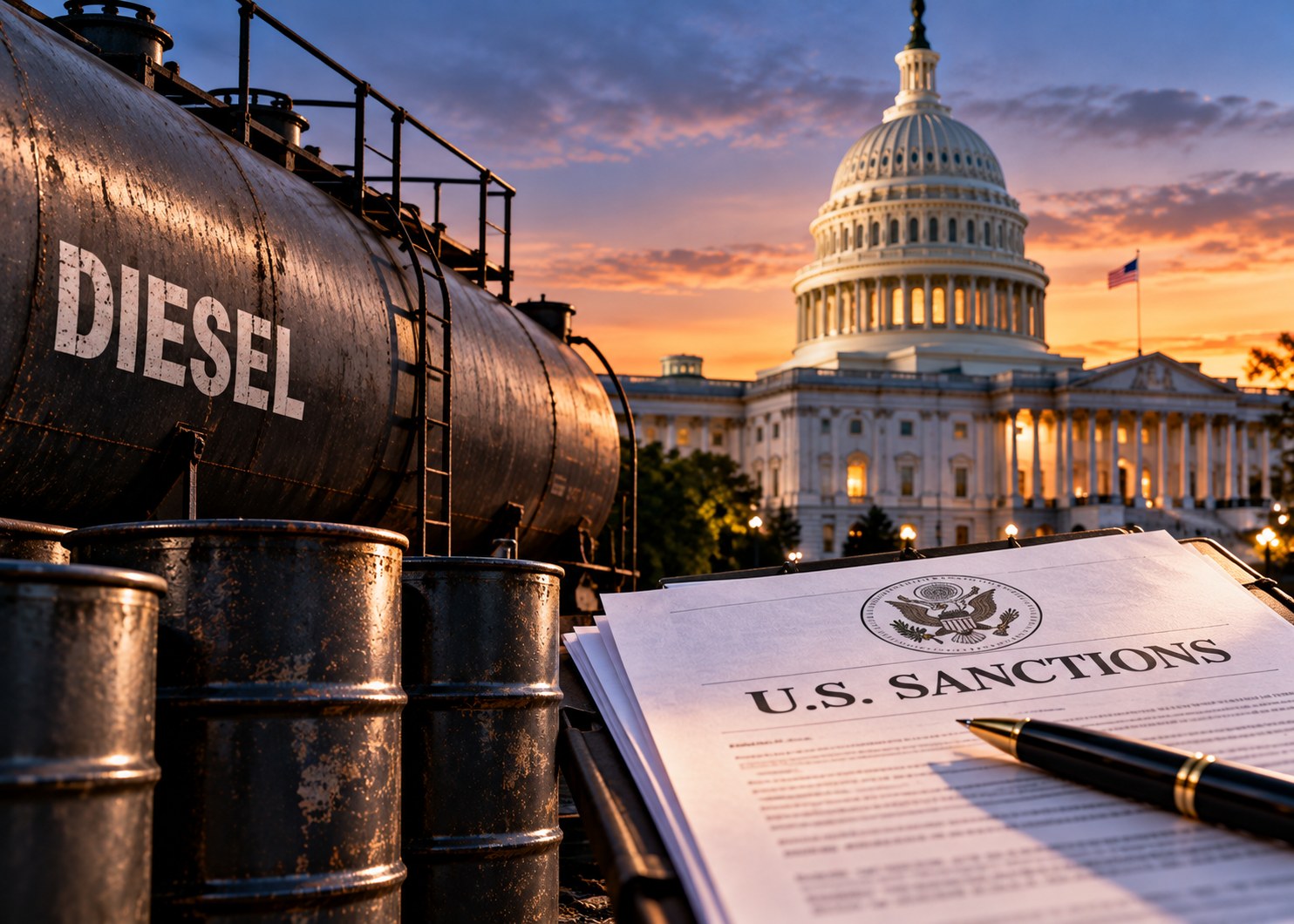
The administration subsequently authorized Russian diesel imports despite sanctions intended to restrict Moscow’s energy revenue.
The dispute centers partly on legislation Trump signed last month imposing sweeping sanctions on Russia and Iran.
Tillis argues that the diesel arrangement conflicts with congressional intent.
Treasury Secretary Scott Bessent rejected that interpretation Sunday, saying the administration has existing legal authority to proceed with the agreement.
The disagreement matters because the fuel arrangement was designed as an economic response to extraordinarily high diesel prices.
Diesel affects trucking, agriculture, construction and heating, giving sustained price increases a direct path into broader inflation.
But analysts have questioned whether the Russian volumes announced so far are large enough to produce a sustained decline in prices.
The United States normally exports approximately 1.5 million barrels of diesel each day, meaning the initial Russian commitment represents only around a day and a half of current U.S. export volumes.
The policy has also created a broader strategic contradiction for Washington.
The United States has attempted to restrict Russian energy revenue while simultaneously seeking additional Russian fuel to alleviate domestic price pressure.
Markets should now watch whether Congress attempts to challenge the sanctions waiver, whether additional Russian shipments are authorized and whether the arrangement produces a measurable decline in diesel prices.