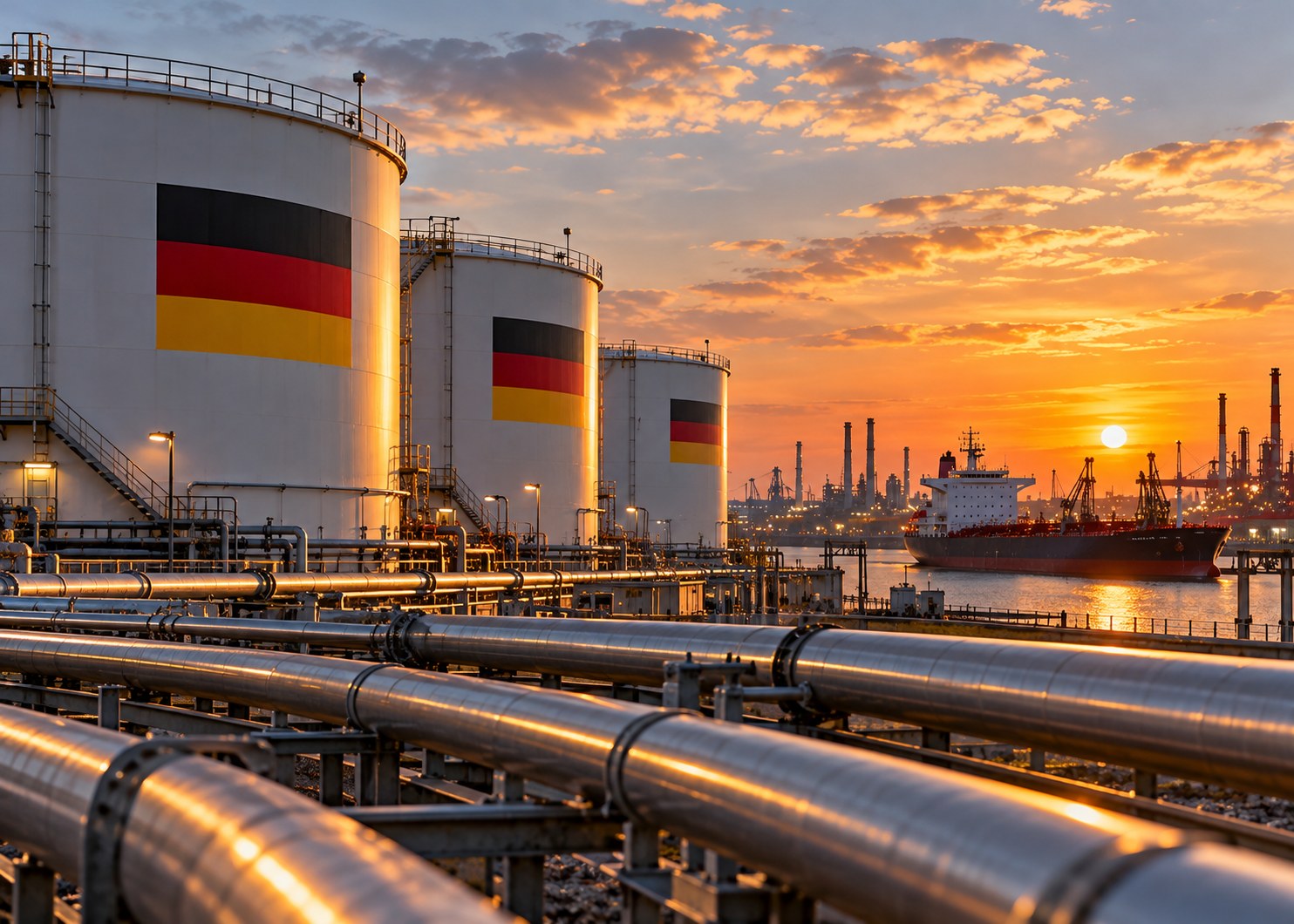
Germany plans to release up to 15 million barrels of diesel, heating oil and crude from emergency reserves as governments intensify efforts to relieve persistent pressure in global fuel markets.
Economy Minister Katherina Reiche said diesel and heating oil will be released first, followed by crude.
Germany intends to fully implement the coordinated G7 effort aimed at improving fuel availability as refinery and shipping disruptions keep refined-product markets tight.
The composition of the release is important.
A shortage of crude oil and a shortage of refined products are not the same problem.
Additional crude must pass through refineries before becoming diesel, gasoline or jet fuel. Releasing finished diesel and heating oil can therefore reach stressed product markets more directly.
Germany’s contribution is the largest announced European component of the current coordinated effort.
The International Energy Agency has been accelerating emergency stock releases as policymakers attempt to cushion the effect of Middle East disruptions and damage to Russian refining capacity. About 100 million barrels remained to be released under the existing coordinated commitment when the IEA accelerated the program.
The intervention comes after governments faced growing pressure to act as high diesel costs moved into transportation, agriculture and industrial supply chains.
For Germany, the issue has particular economic significance because manufacturing and freight-intensive industries remain sensitive to energy costs.
Emergency inventories can provide temporary relief but cannot permanently replace disrupted refining capacity or shipping flows.
That limits how much governments can accomplish through stock releases alone.
The next indicators will be the timing and product composition of Germany’s releases, European diesel inventories and whether wholesale refined-fuel prices respond as additional barrels reach the market.