U.S. consumer sentiment deteriorated for a third consecutive month in preliminary October data as households reported growing frustration with living costs and the broader economic outlook.
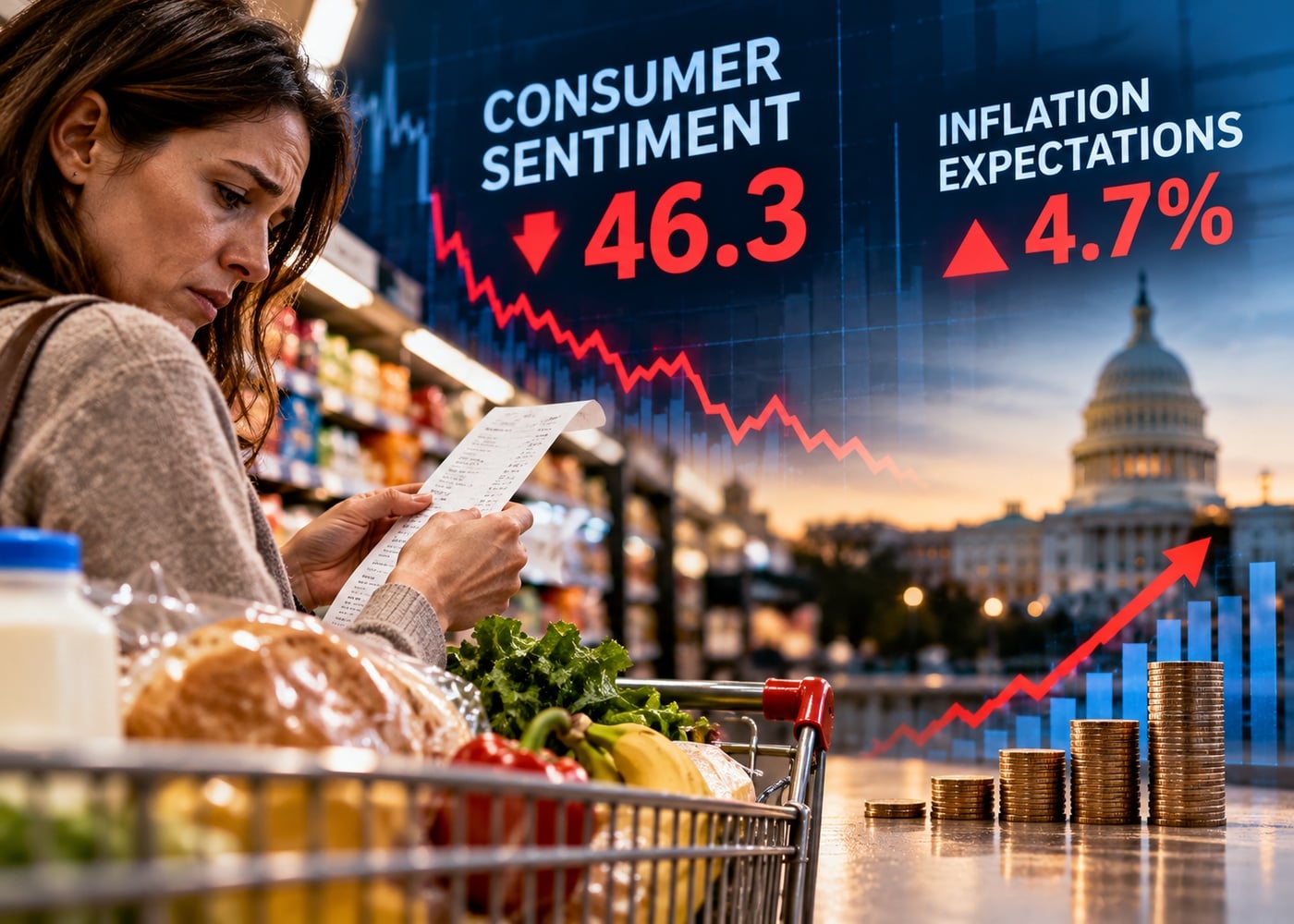
The University of Michigan’s Consumer Sentiment Index fell to 46.3 from 48.1 in September, pushing the measure close to its historic low.
The survey’s current-economic-conditions component dropped sharply to 44.7 from 50.9, reaching a record low. Reuters
Inflation expectations also moved higher.
Consumers expect prices to rise 4.7% over the coming year, compared with 4.6% in September. Longer-term inflation expectations increased to 3.5% from 3.4%.
The combination matters for the Federal Reserve because inflation expectations can influence wage demands, spending behavior and businesses’ ability to pass through price increases.
Household confidence and actual spending, however, are telling somewhat different stories.
Consumer spending has remained comparatively resilient, helped particularly by higher-income households benefiting from strong financial markets. Sentiment has deteriorated more sharply among lower-income consumers and households with smaller stock portfolios. Reuters
That divergence creates an important question for the economic outlook: whether weak confidence eventually produces weaker consumption or household spending continues to withstand elevated prices.
The Federal Reserve increased its benchmark interest rate by 25 basis points in September to a 3.75%-4.00% range, its first increase in three years.
Markets will now watch incoming inflation, retail-sales and labor-market data for evidence that deteriorating confidence is beginning to affect actual economic activity.