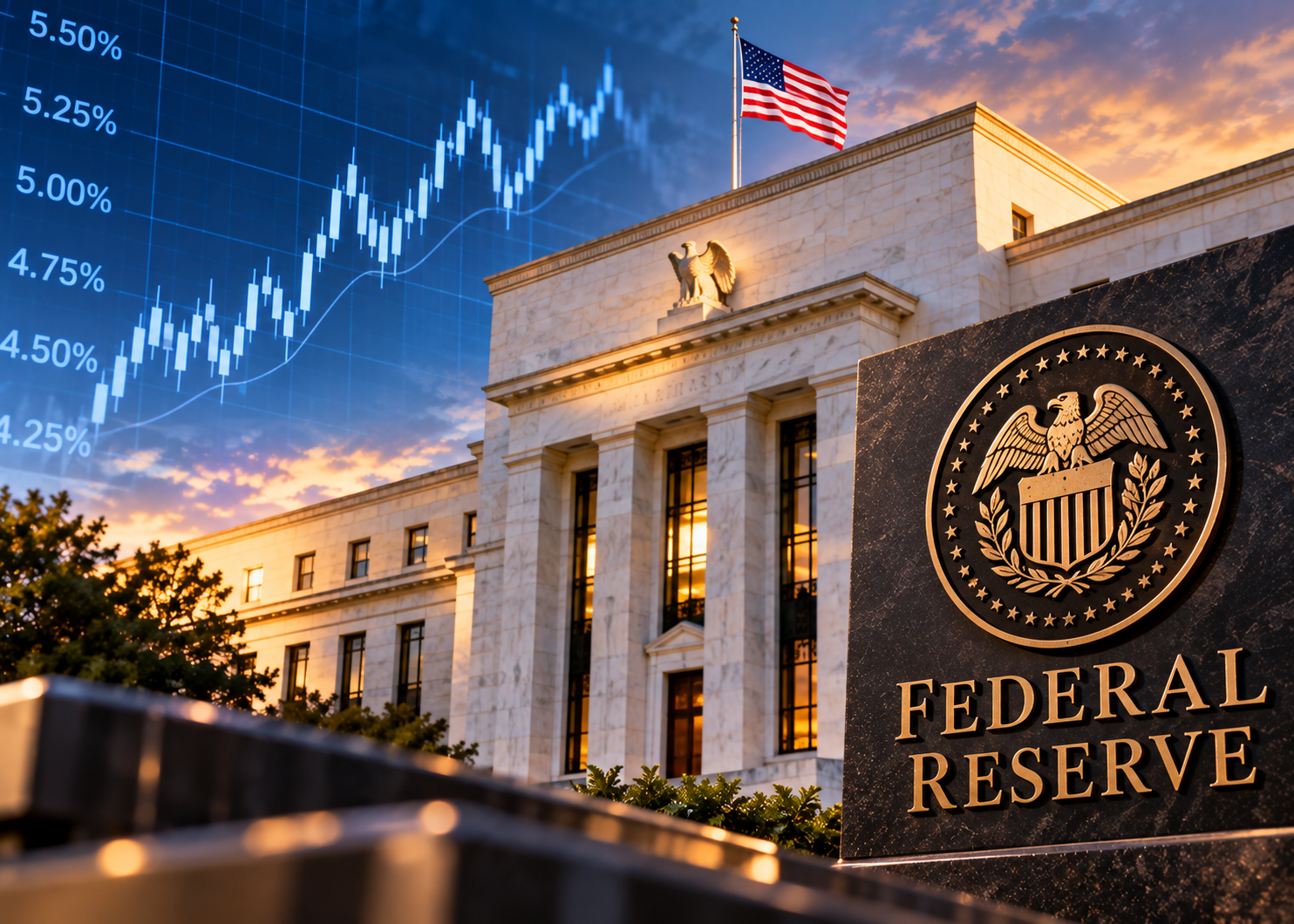
Federal Reserve Governor Christopher Waller said additional interest-rate increases will probably be needed to return U.S. inflation to the central bank’s 2% target, while signaling that policymakers have flexibility over when those increases occur.
The message strengthens the possibility that the Federal Reserve could leave rates unchanged at its October meeting without declaring the tightening cycle complete.
Waller said that if economic conditions develop broadly as expected, further monetary tightening would support a faster return of inflation toward target.
But he also emphasized that rate increases do not necessarily need to occur at consecutive meetings.
That distinction matters after the Fed raised its benchmark target range by 25 basis points in September to 3.75%–4.00%, its first increase in more than three years.
Markets are attempting to determine whether September marked the beginning of a rapid tightening sequence or a more gradual series of increases.
Waller’s position favors the latter.
The broader market environment is making that decision increasingly complicated.
Oil prices jumped sharply Thursday while the 10-year Treasury yield climbed to approximately 5.33%, increasing financial pressure independently of any additional Federal Reserve action.
Higher long-term yields can tighten borrowing conditions for households and companies even when the Fed leaves its policy rate unchanged.
At the same time, another surge in energy prices risks reinforcing inflation and potentially forcing policymakers to maintain restrictive monetary policy for longer.
Traders currently expect the Federal Reserve to hold rates steady at the October meeting, although another increase later in the year remains possible.
For investors, the policy question is therefore shifting away from whether the tightening cycle has necessarily ended and toward its timing.
An October pause would not automatically mean U.S. interest rates have peaked if inflation remains persistent.