The artificial-intelligence infrastructure boom is entering a new phase as some of the technology industry’s largest players turn to enormous debt and private-credit packages to finance the chips required for the next generation of AI computing.
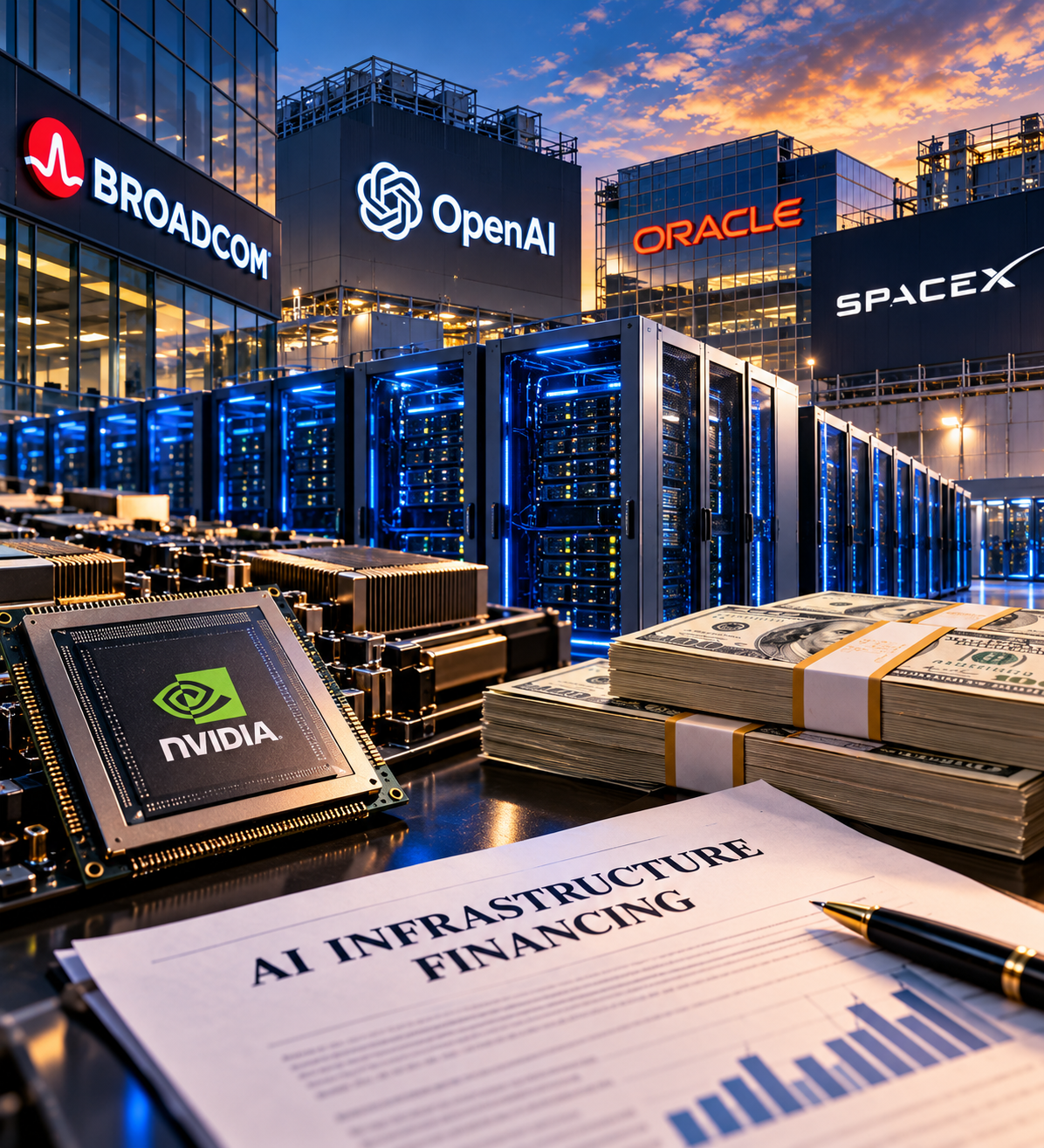
Broadcom is working to arrange more than $50 billion in financing connected to custom artificial-intelligence chips being developed with OpenAI, according to reports cited by Reuters. Apollo Global Management and Blackstone are among the potential financing participants approached in connection with the plan. The discussions remain preliminary and the ultimate size and structure could change.
The financing would support several gigawatts of computing capacity using custom accelerators being developed for OpenAI.
But Broadcom is not alone.
Oracle is also discussing financing for large purchases of AI chips, while SpaceX is seeking approximately $40 billion to acquire Nvidia hardware — roughly $30 billion through investment-grade bonds and another $10 billion through bank loans.
Together, the transactions illustrate how the AI investment cycle is moving beyond the balance sheets of technology companies and directly into global credit markets.
Building large AI systems requires not only advanced processors but data centers, power infrastructure, networking equipment and enormous quantities of memory. As those capital requirements rise, technology companies are increasingly seeking outside financing rather than funding expansion entirely from operating cash flow or equity.
That shift matters well beyond the technology sector.
Large AI borrowers are beginning to compete for capital with governments and conventional corporate issuers at a time when sovereign borrowing requirements are already elevated and long-term interest rates are near multi-decade highs.
Morgan Stanley has estimated that AI infrastructure could require approximately $1.5 trillion in external financing through 2028, according to reporting cited by Reuters.
Credit markets are also beginning to reflect concerns about the scale of the borrowing.
The cost of insuring SpaceX debt against default has risen as investors assess its planned financing, while technology shares came under pressure Thursday as questions surrounding AI capital requirements contributed to a broader retreat in growth stocks.
The development does not mean the AI investment cycle is weakening. Instead, it demonstrates how expensive the race for computing capacity has become.
Companies increasingly need access not only to advanced chips and electricity but also to enormous pools of institutional capital.
That could turn financing capacity itself into a competitive advantage.
The next test will be whether lenders and bond investors remain willing to absorb AI-related borrowing on this scale — and at what price — as technology companies simultaneously compete with governments and other corporations for capital.