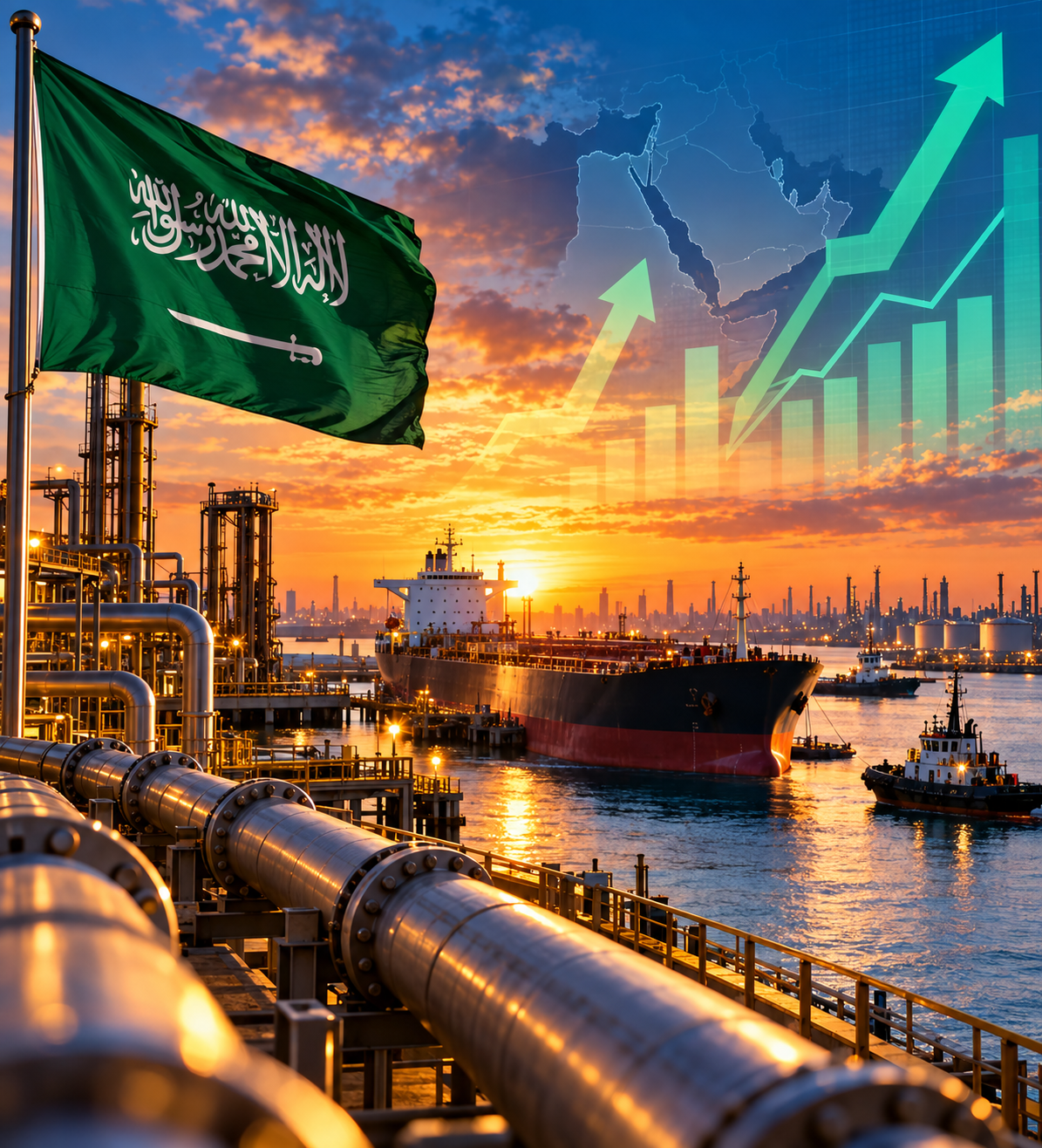
Gulf oil flows excluding Iran recovered to more than 81% of pre-war levels in September, a major improvement in physical supply that is beginning to ease some of the pressure that has dominated global energy markets during the Iran conflict.
Flows of crude, condensate and refined fuels including LPG from Saudi Arabia, the United Arab Emirates, Kuwait, Iraq, Qatar, Oman and Bahrain averaged about 19.2 million barrels per day in September. That compares with roughly 23.6 million barrels per day before the war began in February.
The recovery is considerably stronger in crude than in refined products.
Crude and condensate shipments have returned to about 91% of pre-war levels, while refined-fuel exports remain at only about 60%. That divergence helps explain why the broader energy system can remain tight even as headline crude availability improves.
Saudi Arabia has been central to the recovery. Saudi crude and condensate exports increased by roughly 4.2 million barrels per day from August to about 6.6 million barrels per day in September.
The kingdom and other Gulf producers have adapted transportation and export operations as instability has complicated movement through the region.
The improvement is now affecting prices. Brent crude fell below $100 a barrel Tuesday as traders weighed stronger Middle Eastern exports alongside the planned release of emergency G7 energy stocks. Brent was down about 1.7% at $98.62, while West Texas Intermediate fell about 2.1% to $87.60.
That does not mean the supply shock has ended.
Iranian exports have fallen to essentially zero under the U.S. blockade, while tanker movements remain vulnerable to attacks and other disruptions. Refined-product shortages are particularly important because diesel and jet-fuel availability depends not only on crude production but also on refinery capacity and safe transportation.
For markets, the September figures change the immediate balance.
The question is shifting from whether Gulf producers can restore meaningful exports to whether those higher flow rates can be sustained through renewed attacks, infrastructure disruptions and winter demand.
A durable recovery could remove part of the geopolitical premium embedded in crude prices. Another major interruption would expose how limited the remaining supply cushion still is.