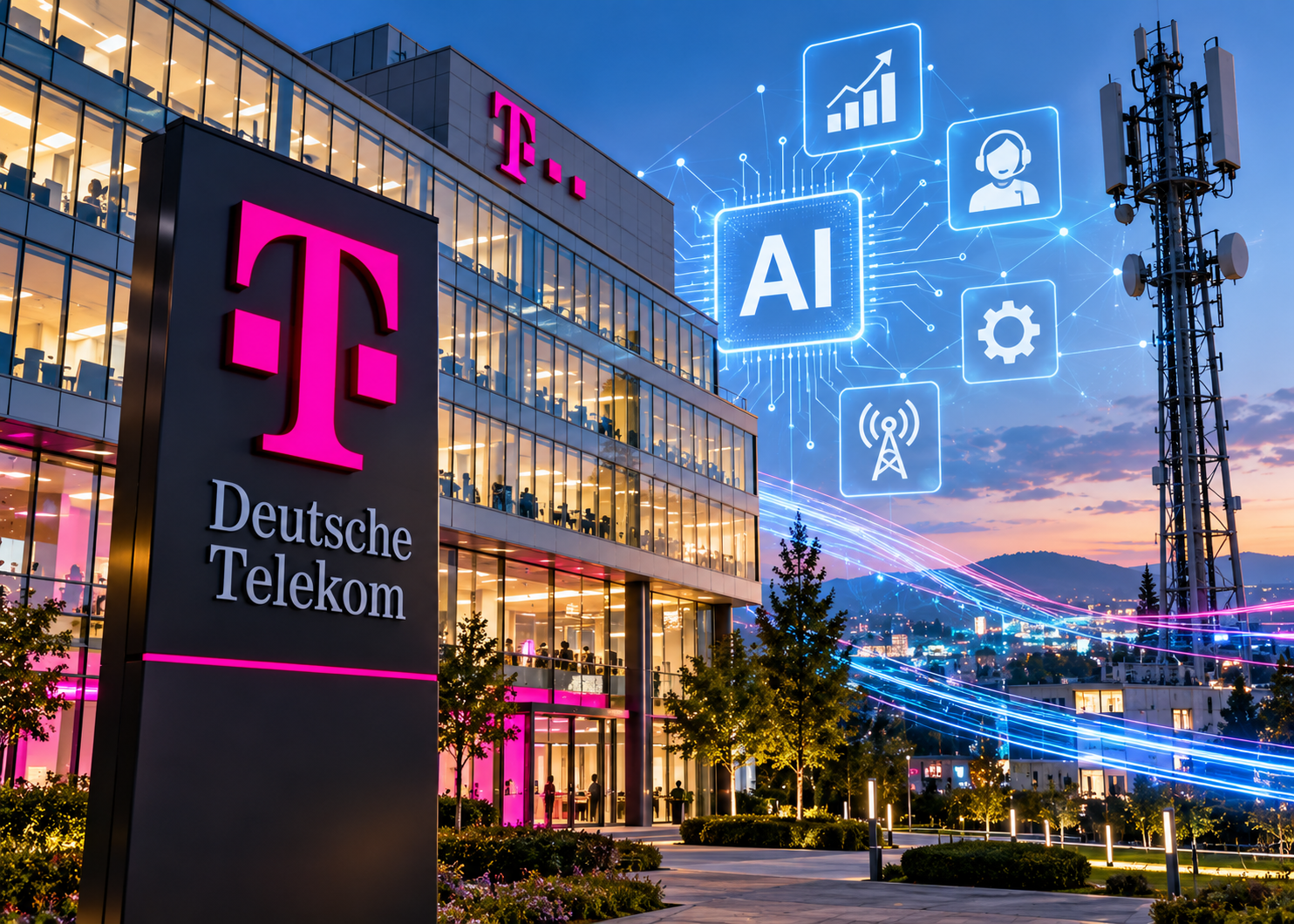
Deutsche Telekom expects artificial intelligence and automation to generate approximately €2.5 billion in indirect-cost savings by 2030 as the German telecommunications group expands the technology across its operations.
The company is using AI to identify network traffic peaks earlier, improve customer-service processes and accelerate the resolution of technical problems.
The savings target provides a concrete measure of how one of Europe’s largest telecommunications operators expects generative AI and automation to affect operating costs rather than simply create new products.
Telecommunications networks are particularly suited to automation because operators manage enormous volumes of network data, customer interactions and infrastructure maintenance.
Even relatively small efficiency improvements can therefore translate into substantial savings across a company of Deutsche Telekom’s scale.
The announcement also highlights a broader shift in the corporate AI cycle.
After several years dominated by spending on computing infrastructure and model development, investors increasingly want evidence that AI investment can produce measurable productivity gains.
Deutsche Telekom’s €2.5 billion target creates a benchmark against which that thesis can eventually be evaluated.
The key question will be how quickly the expected efficiencies appear in operating expenses and whether the savings translate into improved margins rather than being offset by continued investment in networks and technology.