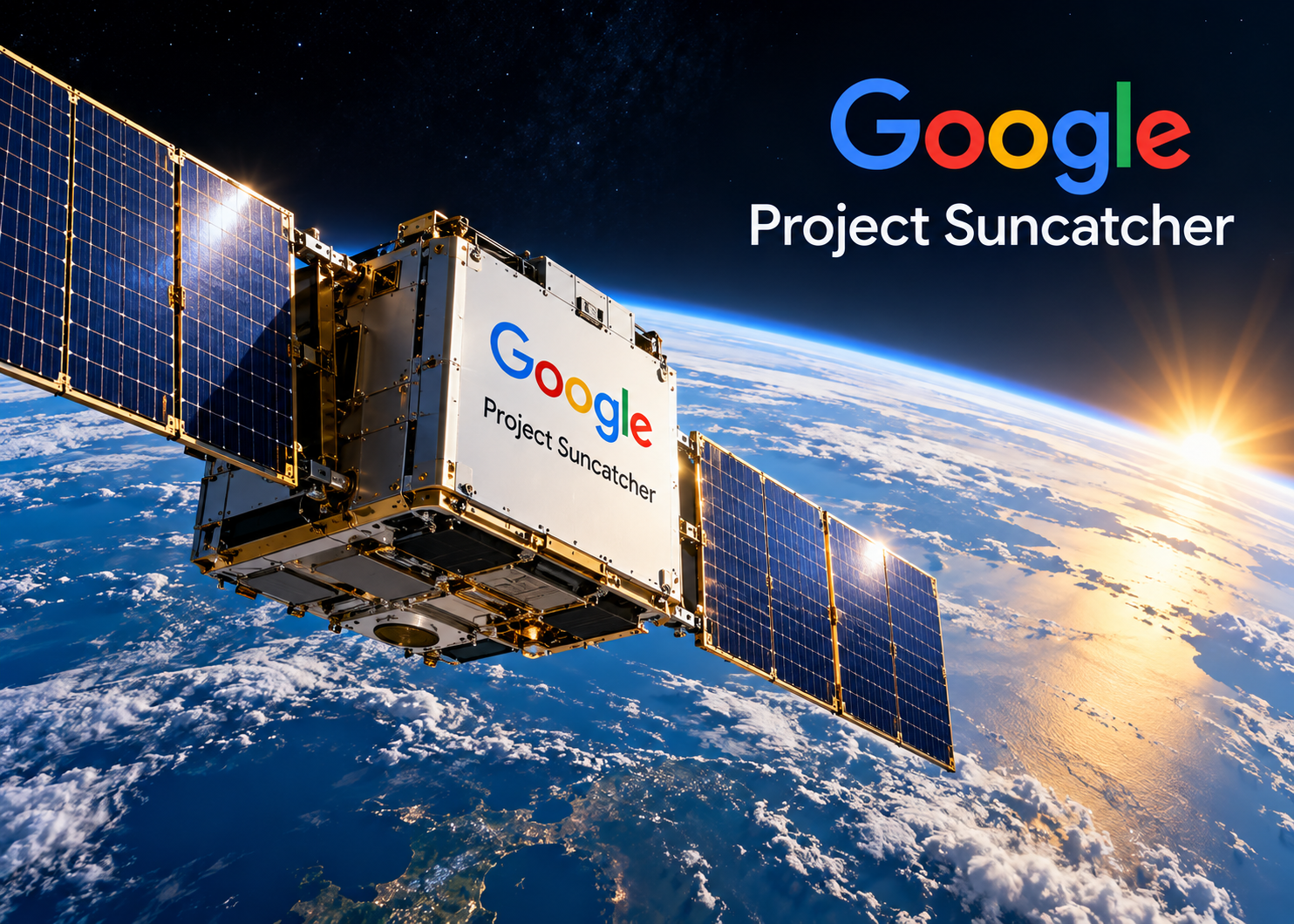
Google will launch a prototype satellite next week carrying its Tensor Processing Units in the first orbital hardware test of Project Suncatcher, the company’s research effort examining whether large-scale AI computing could eventually operate in space.
The mission will test whether Google’s AI accelerators can withstand launch forces, radiation and extreme temperatures in low Earth orbit. It will also evaluate cooling technology designed for an environment where conventional airflow cooling is unavailable.
Space-based computing could eventually offer access to near-continuous solar power, creating a possible long-term alternative to electricity-constrained terrestrial AI infrastructure.
The immediate mission, however, is considerably more limited.
Google said the flight is intended to gather real-world orbital data and identify potential hardware failure points. It is not an operational space-based data center.
The prototype is scheduled to fly on SpaceX’s Transporter-18 rideshare mission in partnership with Planet Labs. Google also plans a two-satellite experiment in 2027 aimed at testing the high-bandwidth laser links that would be needed to connect future computing clusters.
The project illustrates how the AI infrastructure race is beginning to push beyond conventional data-center architecture.
AI developers face rapidly increasing requirements for electricity, cooling, land and transmission capacity. Space-based computing remains technically and economically speculative, with launch costs, radiation exposure, thermal management and satellite manufacturing presenting substantial barriers.
The upcoming flight nevertheless moves Project Suncatcher from terrestrial testing into an actual orbital environment.