

Cedar Global Markets
Subscribe
SAVED POSTS
  • Login
No Result
View All Result
  • Home
  • Markets
  • Economy
  • Business
  • Energy
  • Technology
  • Global
    • Middle East
    • Europe
    • Asia-Pacific
    • Americas
    • Africa
  • Opinion
No Result
View All Result
  • Home
  • Markets
  • Economy
  • Business
  • Energy
  • Technology
  • Global
    • Middle East
    • Europe
    • Asia-Pacific
    • Americas
    • Africa
  • Opinion
Cedar Global Markets
US 2Y4.77%
US 10Y5.10%
US 30Y5.43%
2s10s+33bp
WTI$101.91
Brent$126.55
Fed funds3.75–4.00%
CPI4.0% YoY
Core CPI2.8% YoY
Unemployment4.20%
Cedar Global MarketsData via FRED® (St. Louis Fed). Not endorsed by the St. Louis Fed. Delayed / as published.

IMF Backs Lebanon’s Reform Momentum as Depositor Law Remains the Critical Test

in Economy, Banking, Middle East
Reading Time: 2 mins read
IMF Backs Lebanon’s Reform Momentum as Depositor Law Remains the Critical Test
byCedar Global Markets
September 18, 2026
0
Share on Facebook
Share on X

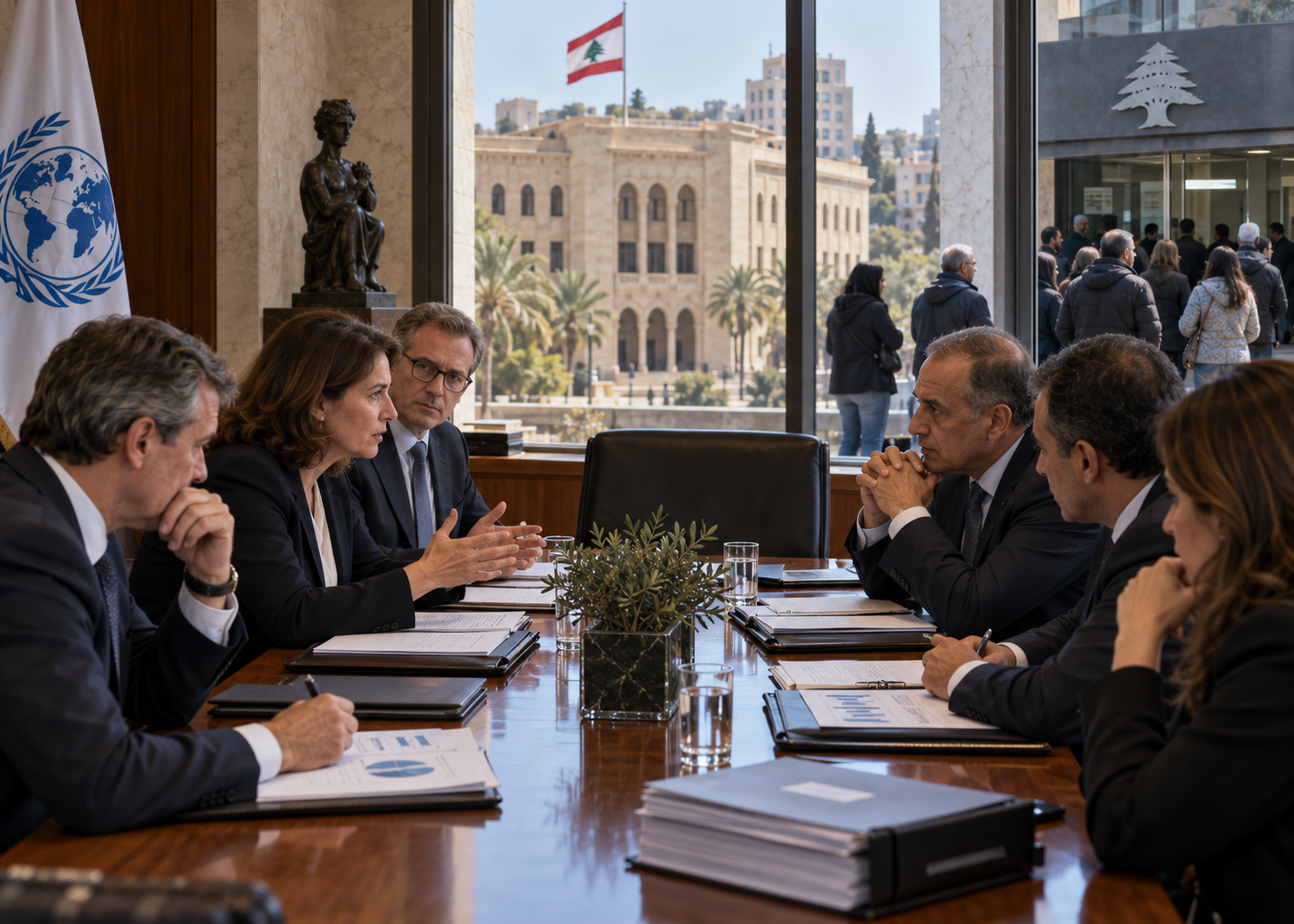
Lebanon has ended a new round of talks with the International Monetary Fund with signs of progress on financial reform, but without resolving the question that has defined the banking crisis for years: how losses will be allocated and how depositors will ultimately recover their money.

During meetings in Beirut, the IMF welcomed progress on banking reform and Lebanon’s medium-term fiscal framework. Lebanese officials and the Fund also emphasized the importance of moving toward a staff-level agreement, a key step toward a new IMF-supported program.

But the most difficult part of the reform package remains unresolved.

The IMF mission focused heavily on the proposed Financial Stabilization and Depositor Recovery Law, often referred to as the financial gap law. The legislation is intended to determine how losses across the state, Banque du Liban and commercial banks will be recognized and distributed, while setting a framework for the treatment of deposits that have been largely inaccessible since the financial collapse began in 2019.

One of the central disagreements concerns how banks should be assessed during restructuring. The IMF has pushed for stronger independent oversight while bank assets and losses are reviewed, arguing that existing owners and managers should not control a process that determines losses affecting their own institutions. Lebanese negotiators have favored a more limited approach.

That dispute matters directly to depositors.

The IMF has previously said Lebanon’s restructuring framework should respect the hierarchy of claims, meaning shareholders and junior creditors should absorb losses before depositors are forced to bear them. The Fund has also called for the maximum possible protection of depositors while restoring the banking system and maintaining public-debt sustainability.

Lebanese political leaders are also putting depositor protection at the center of the negotiations. Parliament Speaker Nabih Berri has said any law should protect depositors’ rights and their deposits in full, while President Joseph Aoun has called for solutions that are realistic and implementable given Lebanon’s exceptional financial conditions.

The immediate picture is therefore mixed.

Lebanon can point to progress on bank-restructuring legislation and fiscal planning, and negotiations with the IMF are continuing. But there is still no final IMF program and no settled depositor-recovery framework.

The next decisive step will be whether Lebanon and the Fund can bridge their remaining differences over the financial gap law, particularly the valuation of bank losses, the order in which those losses are absorbed and the protections ultimately afforded to depositors.

Related Posts

The Euro, NATO and the Quiet Battle for Global Capital

The Euro, NATO and the Quiet Battle for Global Capital

by Cedar Global Markets
October 18, 2026
0

For decades, the transatlantic relationship rested on a straightforward bargain: the United States supplied much of the military...

Egypt Signals Readiness to Support Saudi Arabia as Houthi Conflict Draws in Regional Powers

Egypt Signals Readiness to Support Saudi Arabia as Houthi Conflict Draws in Regional Powers

by Cedar Global Markets
October 18, 2026
0

Egypt has signaled that it is prepared to provide support to Saudi Arabia as Houthi attacks against the...

France Counts Economic Cost After Nationwide Protests Erupt Into Worst Unrest in Years

France Counts Economic Cost After Nationwide Protests Erupt Into Worst Unrest in Years

by Cedar Global Markets
October 18, 2026
0

France is assessing the economic and political consequences of its worst unrest in years after nationwide demonstrations over...

Latest Briefing

The Euro, NATO and the Quiet Battle for Global Capital

October 18, 2026

Egypt Signals Readiness to Support Saudi Arabia as Houthi Conflict Draws in Regional Powers

October 18, 2026

China’s Solar-Equipment Exports Fall 6.4% as Global Shipment Slump Extends Into September

October 18, 2026

France Counts Economic Cost After Nationwide Protests Erupt Into Worst Unrest in Years

October 18, 2026
Next Post
Nvidia-Backed Nscale Files for U.S. IPO as AI Infrastructure Spending Accelerates

Nvidia-Backed Nscale Files for U.S. IPO as AI Infrastructure Spending Accelerates

Cedar Global Markets

Categories
  • Africa
  • Americas
  • Asia-Pacific
  • Banking
  • Business
  • Commodities
  • Economy
  • Energy
  • Europe
  • Global
  • Markets
  • Middle East
  • Opinion
  • Policy
  • Technology
  • Trade
[mc4wp_form]

© 2026 Cedar Global Markets

Welcome Back!

Login to your account below

Forgotten Password?

Retrieve your password

Please enter your username or email address to reset your password.

Log In
No Result
View All Result
  • Home
  • Markets
  • Economy
  • Business
  • Energy
  • Technology
  • Global
    • Middle East
    • Europe
    • Asia-Pacific
    • Americas
    • Africa
  • Opinion
SAVED POSTS

© 2026 Cedar Global Markets