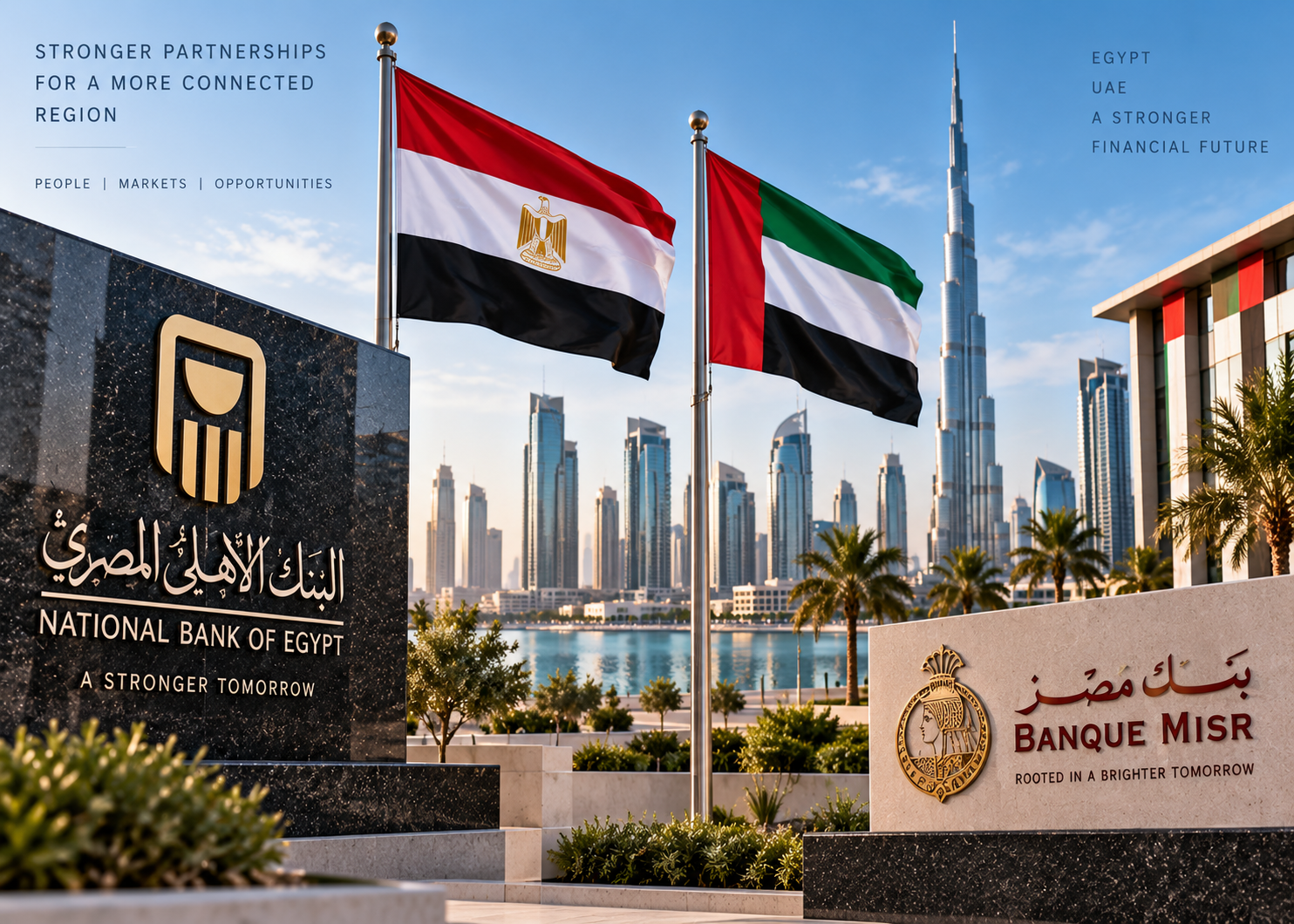
National Bank of Egypt has received preliminary approval from the Central Bank of the United Arab Emirates to acquire Banque Misr’s UAE branch network, a cross-border banking restructuring that follows heightened U.S. scrutiny of the branches over alleged links to Iranian financial activity.
The two Egyptian state-owned banks announced an agreement in principle to reorganize their UAE operations, with National Bank of Egypt, or NBE, taking over Banque Misr’s branches subject to remaining legal and regulatory requirements.
Banque Misr said the transition is intended to integrate the banks’ international operations while maintaining uninterrupted service and protecting customers during the transfer.
The UAE central bank has granted preliminary approval, but the transaction is not yet complete.
The deal follows regulatory pressure from Washington.
In August, the U.S. Treasury proposed restricting Banque Misr’s UAE branches from accessing correspondent banking services through U.S. financial institutions. Treasury described the operations as a channel through which Iran could potentially gain access to U.S. dollars.
The U.S. Financial Crimes Enforcement Network said it had identified potential Iranian-linked shadow-banking companies using accounts at Banque Misr’s UAE operations.
Those assertions are U.S. government findings and allegations. They should not be interpreted as independent findings of wrongdoing by Cedar Global Markets.
Importantly, Banque Misr and NBE have not said the acquisition was caused by the U.S. action. Their announcement characterized the transaction as a reorganization of their international banking presence.
The regulatory backdrop and timing therefore provide relevant context but do not establish the banks’ motive for the transaction.
Both lenders are owned by the Egyptian government. NBE already maintains a presence in the UAE, while Banque Misr operates a branch network there.
If completed, the transaction would consolidate more of Egypt’s state-owned banking presence in the Emirates under NBE while allowing Banque Misr’s operations to transition under UAE regulatory supervision.
For financial markets, the case highlights the importance of correspondent-banking access and sanctions compliance for financial institutions operating across the Middle East. Losing access to U.S. dollar clearing can materially constrain an international banking operation even when its domestic business remains unaffected.
The next step is completion of the UAE regulatory and procedural requirements necessary to transfer the branches.