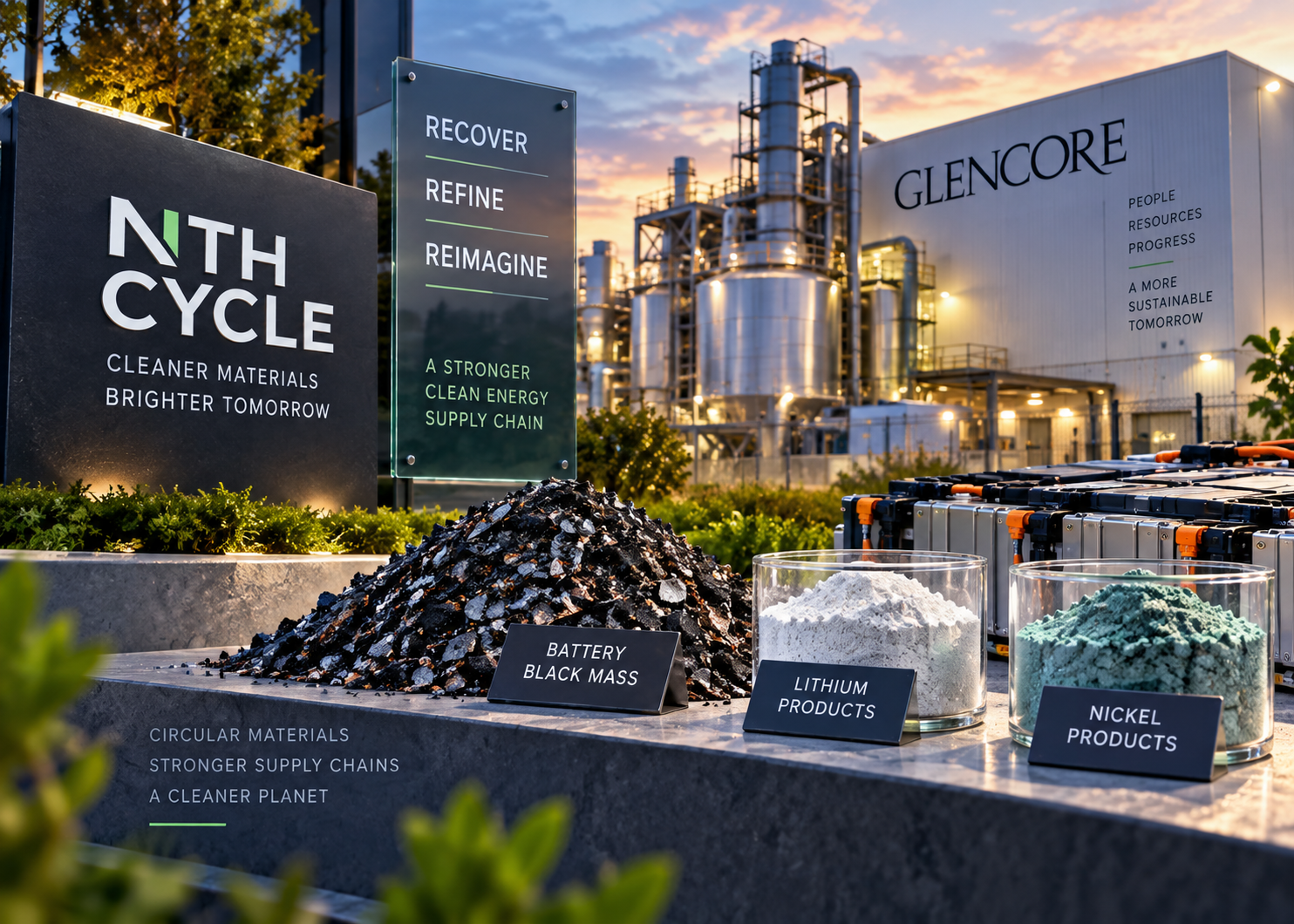
U.S. critical-minerals refiner Nth Cycle has signed a 10-year agreement worth more than $1 billion with Glencore, creating a large-scale supply chain that will turn recycled battery material into lithium and nickel products.
The agreement centers on Nth Cycle’s Project SHIELD facility in South Carolina and comes as governments and manufacturers seek domestic and allied sources of minerals used in batteries and other advanced technologies.
Under the arrangement, Glencore will supply Nth Cycle with approximately 24,000 metric tons annually of “black mass”—shredded material recovered from used batteries.
Nth Cycle will process that material using its electrochemical refining technology and return lithium carbonate and a nickel-rich mixed hydroxide product to Glencore.
The exact amount of recovered material will vary with the chemistry and mineral content of the battery feedstock. The companies calculated the projected agreement value using metals prices from the second quarter of 2026.
The transaction is notable because recycling is becoming an increasingly important component of the critical-minerals supply chain.
Rather than relying exclusively on newly mined lithium and nickel, battery recycling can recover material already circulating through the industrial economy and return it to manufacturing supply chains.
Nth Cycle is also preparing for a planned public listing later this year, making the Glencore agreement a significant commercial milestone ahead of its expected entry into public markets.
For investors, the deal illustrates another part of the global competition over critical minerals: securing supply is increasingly about refining and recycling capacity as well as ownership of mines.