Turkey is undertaking one of the biggest restructurings of its benchmark equity index in years as regulators try to stabilize a market shaken by liquidity problems at investment funds and concerns over heavily concentrated positions in thinly traded stocks.
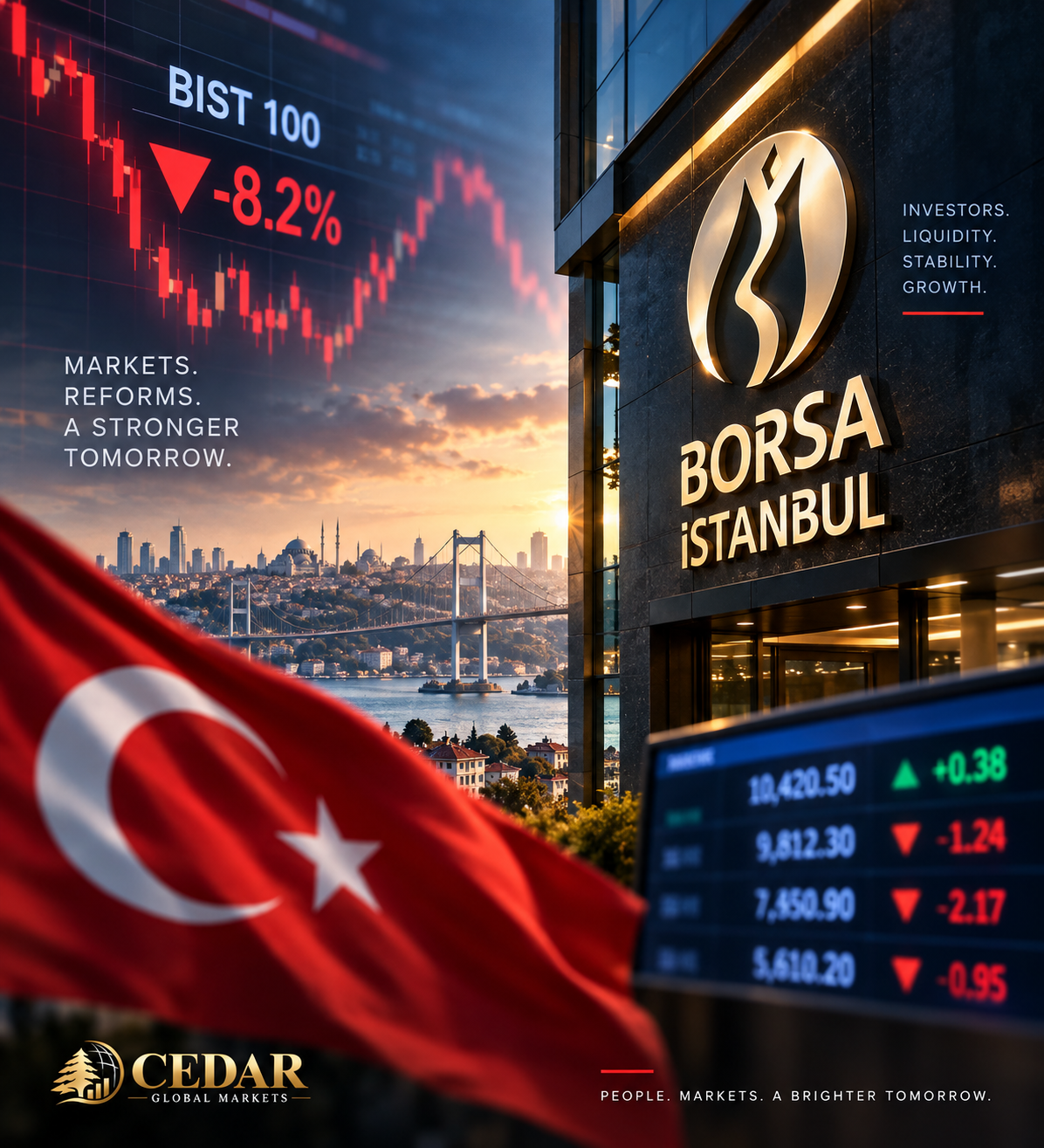
Borsa Istanbul will remove 27 companies—more than one-quarter of the BIST-100—from the benchmark beginning next month. The changes come after Turkey’s main equity index dropped more than 8% last week, its worst weekly performance since March 2025.
The turmoil originated partly inside investment funds with large positions in stocks that had limited free floats and relatively weak trading liquidity.
When redemption pressure increased, some funds struggled to meet withdrawals. Turkish regulators subsequently ordered the liquidation of 131 funds managed by seven portfolio-management companies. The affected funds held more than $18 billion in assets and represented roughly 353,000 investors.
Authorities also increased central-bank repo funding, temporarily relaxed margin-trading requirements and pursued investigations into alleged market manipulation.
The index overhaul adds another layer to that response.
Destek Finans and Katilimevim are among companies leaving the BIST-100, while Anadolu Grubu Holding and TAB Gida will return. Borsa Istanbul has also introduced additional requirements involving volatility and company equity for shares seeking eligibility for its Star Market, which is required for inclusion in the BIST-30 and BIST-100.
The episode has implications beyond individual Turkish funds.
International index providers have already raised questions about transparency, free-float calculations and market accessibility in Turkey. MSCI said earlier this year that insufficient progress could eventually prompt a review of Turkey’s market classification.
The immediate crisis has so far remained concentrated in the fund and equity markets rather than developing into a broader financial-system event.
But the episode demonstrates how concentrated ownership and limited liquidity can amplify selling when investors simultaneously seek redemptions.
For Turkey, restoring confidence now depends not only on stabilizing share prices but on demonstrating that its equity benchmarks accurately represent securities with sufficient liquidity and accessible free float.