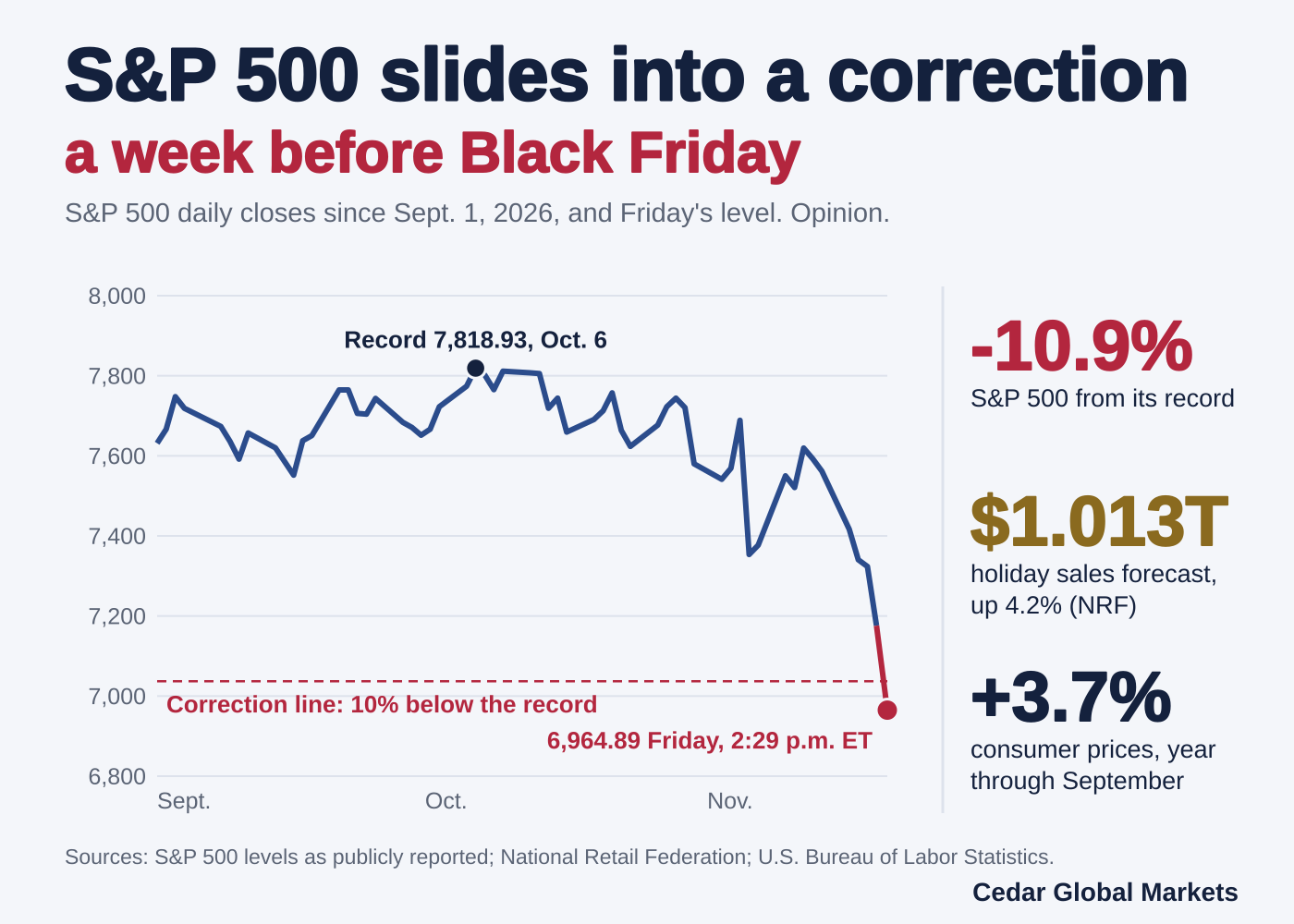
The stock market picked an awkward week to stumble. On Friday the S&P 500 was down 2.9% at 6,964.89 at 2:29 p.m. Eastern time, 10.9% below its record close of 7,818.93 on Oct. 6. A drop of 10% or more from a peak is what Wall Street calls a correction. Black Friday is next week, on Nov. 27.
Retailers had been counting on a strong season. In October, the National Retail Federation forecast that November and December sales would grow 4.2% from last year, to $1.013 trillion. But the group’s chief economist, Mark Mathews, warned that “inflation, rising gas prices and pressure on household spending will affect consumers differently across income groups.”
That is the part that matters most to most families. Consumer prices rose 3.7% in the 12 months through September, the latest full year the Labor Department has measured, and gasoline was up 37.4% from a year earlier in October. Those costs reach everyone at the checkout. A falling stock market mostly reaches the people who own a lot of stock.
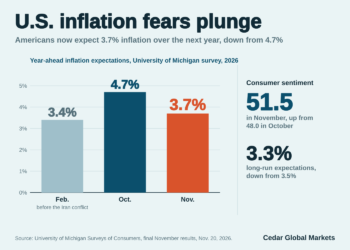
The University of Michigan’s November survey, released Friday, showed that split. Overall consumer sentiment rose to 51.5 from 48.0 in October, and Americans expect prices to rise 3.7% over the next year, down from 4.7% a month earlier. Survey director Joanne Hsu said low-wealth and, to a lesser extent, middle-wealth consumers saw some relief from falling gas prices, while those with the largest stockholdings reported a decline in personal finances, “consistent with continued AI-related agitation in stock markets.”
That matters for the holidays because higher-income households account for roughly half of consumer spending, by Moody’s Analytics estimates. If they feel poorer after a sharp drop in their portfolios, some may trim gift lists or put off big purchases. Economists call this the wealth effect, and a correction just before the busiest shopping days of the year is a real test of it.
For a family with a 401(k), a few weeks of losses is a reason to check whether savings still fit their goals and timeline, not a reason for panic. The bills due in December, from groceries to heating to gifts, are paid from paychecks, and those are under pressure from prices that are still rising well above the Federal Reserve’s 2% goal.
A strong Black Friday will not mean the economy is fine, and a weak one will not mean a recession is coming. The number to watch is quieter: whether prices for everyday things keep climbing. The next reading on consumer prices, for November, is due on Dec. 10.
…
That’s the story. … Thank you for listening to Cedar Global Markets. We’re supported by our partners, and you can learn more about the partner featured on this page. We’ll see you next time.