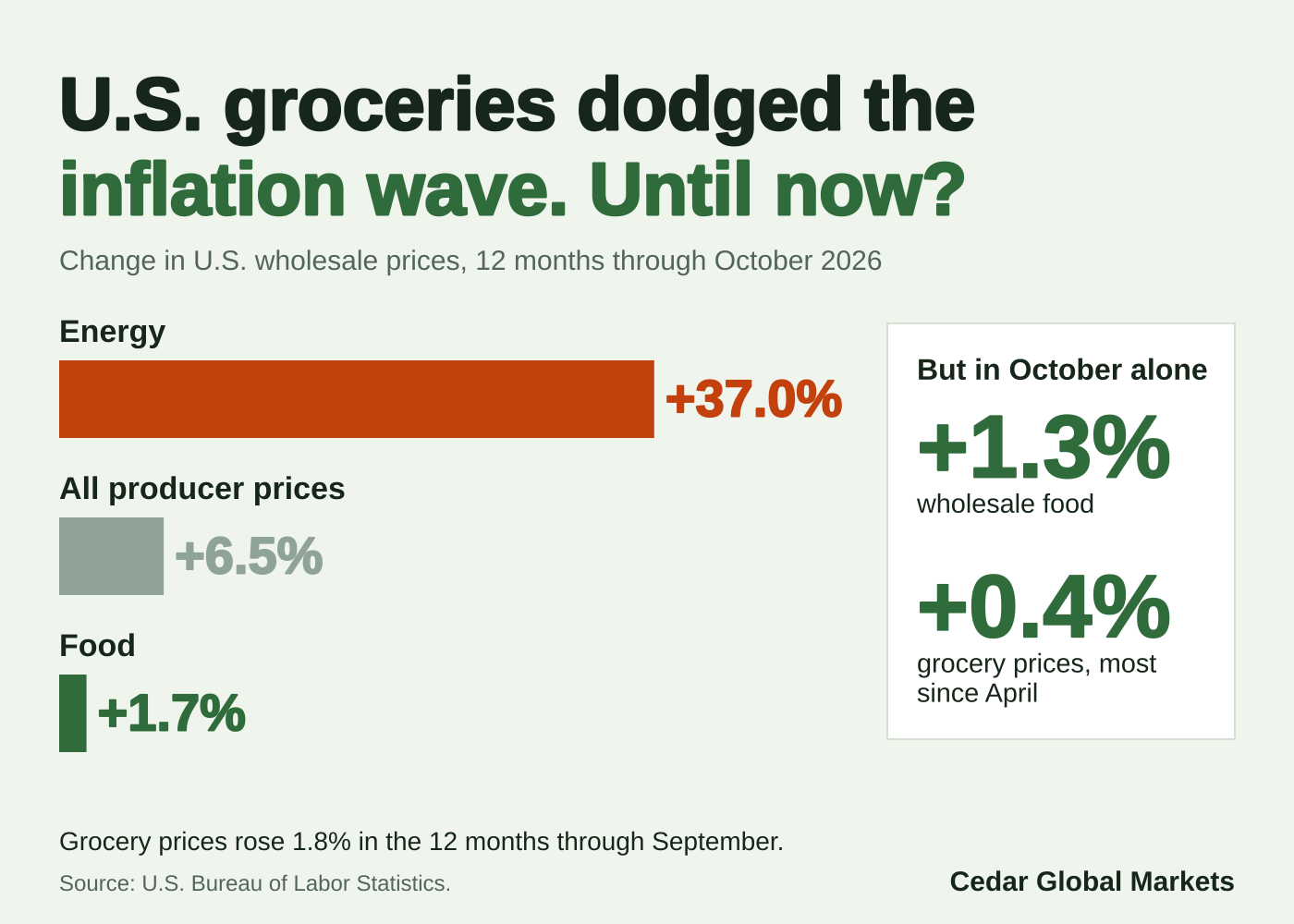
For most of this year, the grocery store has been one of the few places where inflation felt tame. Prices for food eaten at home rose 1.8% in the 12 months through September, according to the Bureau of Labor Statistics, while overall consumer prices rose 3.7%. That gap has been a quiet relief for families. The numbers released this week suggest it may not last.
On Friday, the BLS said producer prices, often called wholesale prices, rose 6.5% in the 12 months through October, the biggest annual increase since November 2022. Most of that pressure has come from energy: wholesale energy prices were up 37% from a year earlier. Wholesale food prices, by contrast, were up just 1.7%.
October changed the picture. Wholesale food prices jumped 1.3% in that single month, and the cost of trucking freight rose 3.9%. On Tuesday, the BLS reported that grocery prices rose 0.4% in October, the biggest monthly increase since April.
This is how inflation usually reaches the checkout line: slowly, and then all at once. Farms, food processors and trucking companies pay for fuel long before shoppers do, and those costs take time to work through contracts and inventories. A 37% jump in wholesale energy prices is the kind of pressure that tends to show up somewhere, and food, which is grown, processed, packaged and hauled long distances, is exposed at every step.
Do not count on the Federal Reserve to fix this soon. Traders expect the Fed to raise interest rates at its Dec. 8-9 meeting, according to CNBC. Higher rates can cool spending over time, but they do nothing about the price of diesel this week or a box of cereal already on its way to the store.
Households have more control than it may seem. Store brands usually cost less than name brands. The unit price on the shelf tag shows which package is really the better deal. Planning meals around the weekly sales, buying produce in season and freezing extra portions all stretch a food budget further, and shelf-stable staples are worth stocking up on when they go on sale.
None of this means a grocery shock is certain. One month is not a trend, and as recently as September, wholesale food prices were slightly lower than a year earlier. But after a year in which the grocery aisle was a rare refuge from inflation, October is a signal worth heeding. Families who look hard at their food budgets now will be better prepared if the calm at the checkout ends.
…
That’s the story. … Thank you for listening to Cedar Global Markets. We’re supported by our partners, and you can learn more about the partner featured on this page. We’ll see you next time.