Most Americans will not feel the oil shock much on their heating bills this winter. A smaller group will feel it a great deal.
Brent crude futures traded at about $92 a barrel on Wednesday, as attacks on tankers near the Strait of Hormuz kept traders on edge. The Energy Information Administration said Tuesday that it expects the Brent spot price to stay near $100 a barrel for the rest of the year. That price flows almost directly into the fuel that some families burn to stay warm.
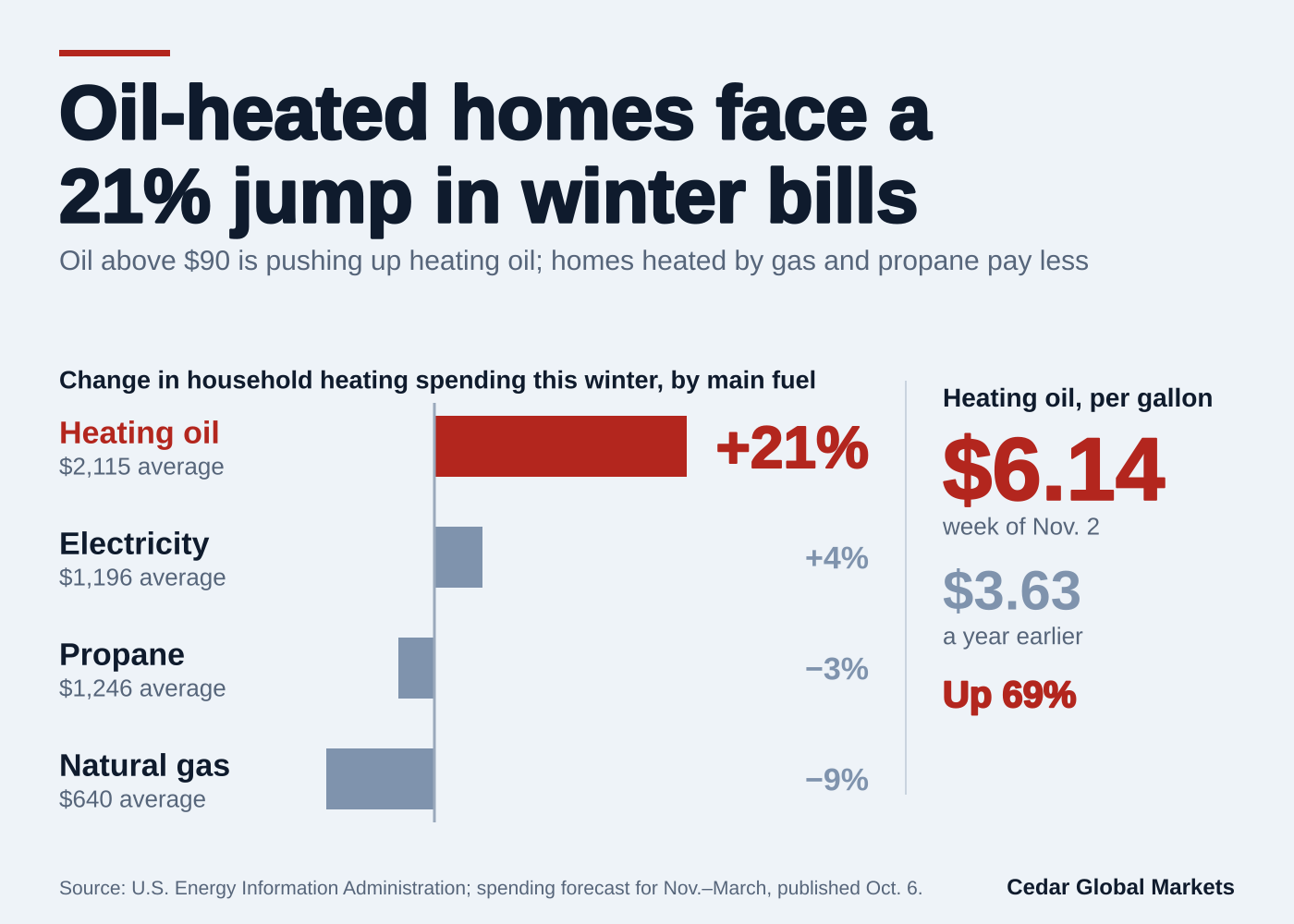
The average U.S. retail price of home heating oil was $6.14 a gallon in the week of Nov. 2, according to the EIA, up from $3.63 a year earlier, a 69% jump. At that price, buying 275 gallons, the size of a standard home tank, costs about $1,690. A year ago, the same amount cost about $1,000.
In its Winter Fuels Outlook, published Oct. 6, the EIA forecast that homes heating mainly with oil, about 3% of U.S. households, will spend about $2,115 from November through March, up 21% from last winter. That is the biggest increase for any heating fuel. More than 80% of those homes are in the Northeast.
Everyone else gets a break, at least on heat. Natural gas, the most common heating fuel, is cheaper this year, and the EIA expects gas-heated homes to spend about 9% less and propane-heated homes about 3% less. Homes that heat with electricity, more than 40% of the total, are expected to pay about 4% more.
Oil still reaches every household through the gas tank. Regular gasoline averaged just under $4 a gallon in the week of Nov. 9, according to the EIA, up from $3.06 a year earlier. AAA’s national average was $3.94 on Wednesday, lower than in October but still far above last year.
That is why federal heating aid matters more this year, not less. The Department of Health and Human Services released about $3.6 billion for the Low Income Home Energy Assistance Program on Oct. 9, 90% of the yearly amount allowed under the stopgap spending law, according to the American Public Power Association and the National Energy & Fuels Institute. The White House budget for fiscal 2027 again proposes ending the program. Congress should fund it in full before the coldest months arrive, because the families who need it most are the ones whose fuel costs jumped the most.
For households that heat with oil, the practical steps are simple: ask dealers about budget plans that spread payments out, compare prices before each fill, and check whether your state offers help. Oil near $90 is a regional problem, not a national one. For the families it reaches, that is little comfort.
…
That’s the story. … Thank you for listening to Cedar Global Markets. We’re supported by our partners, and you can learn more about the partner featured on this page. We’ll see you next time.