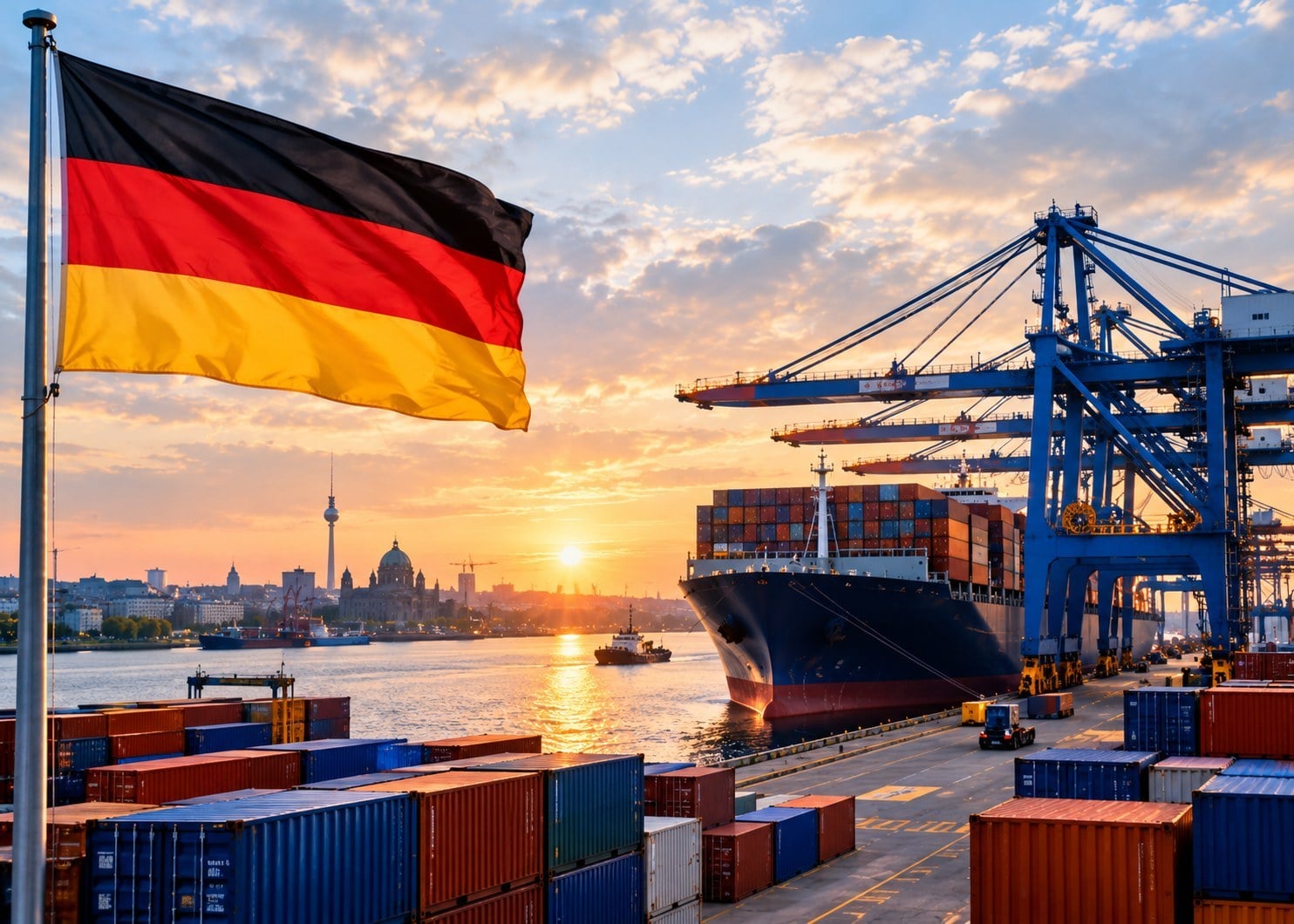
Germany’s trade deficit with Asia-Pacific is projected to reach a record of nearly €146 billion in 2026 as weakening exports to China increasingly outweigh growth in other regional markets.
Exports to 29 core Asia-Pacific economies are expected to fall 3.2% this year to €185.3 billion, while imports are forecast to rise 6.4% to €330.9 billion, according to Germany Trade & Invest.
The imbalance illustrates a structural challenge confronting Europe’s largest economy.
China accounts for roughly half of Germany’s goods trade with Asia-Pacific and is increasingly competing with German manufacturers in industries where German companies historically held strong positions, including machinery, advanced technology and automobiles.
The importance of China becomes clearer when it is removed from the regional figures.
Excluding China, German exports to Asia-Pacific would increase 2.8% this year and the regional trade deficit would narrow to just under €35 billion.
That divergence is encouraging German businesses to deepen commercial relationships elsewhere in Asia.
India and ASEAN economies are becoming increasingly important as both export markets and sourcing centers, providing potential diversification as German companies reassess their dependence on China.
The shift is particularly important for Germany because its economic model has historically depended heavily on manufacturing exports.
A persistent deterioration in trade with China could therefore affect industrial production, corporate investment and employment while increasing pressure on companies to diversify both customers and supply chains.
Investors should watch whether growth in India and Southeast Asia can offset further weakness in China and whether German manufacturers can regain competitiveness in industries where Chinese companies are rapidly expanding.