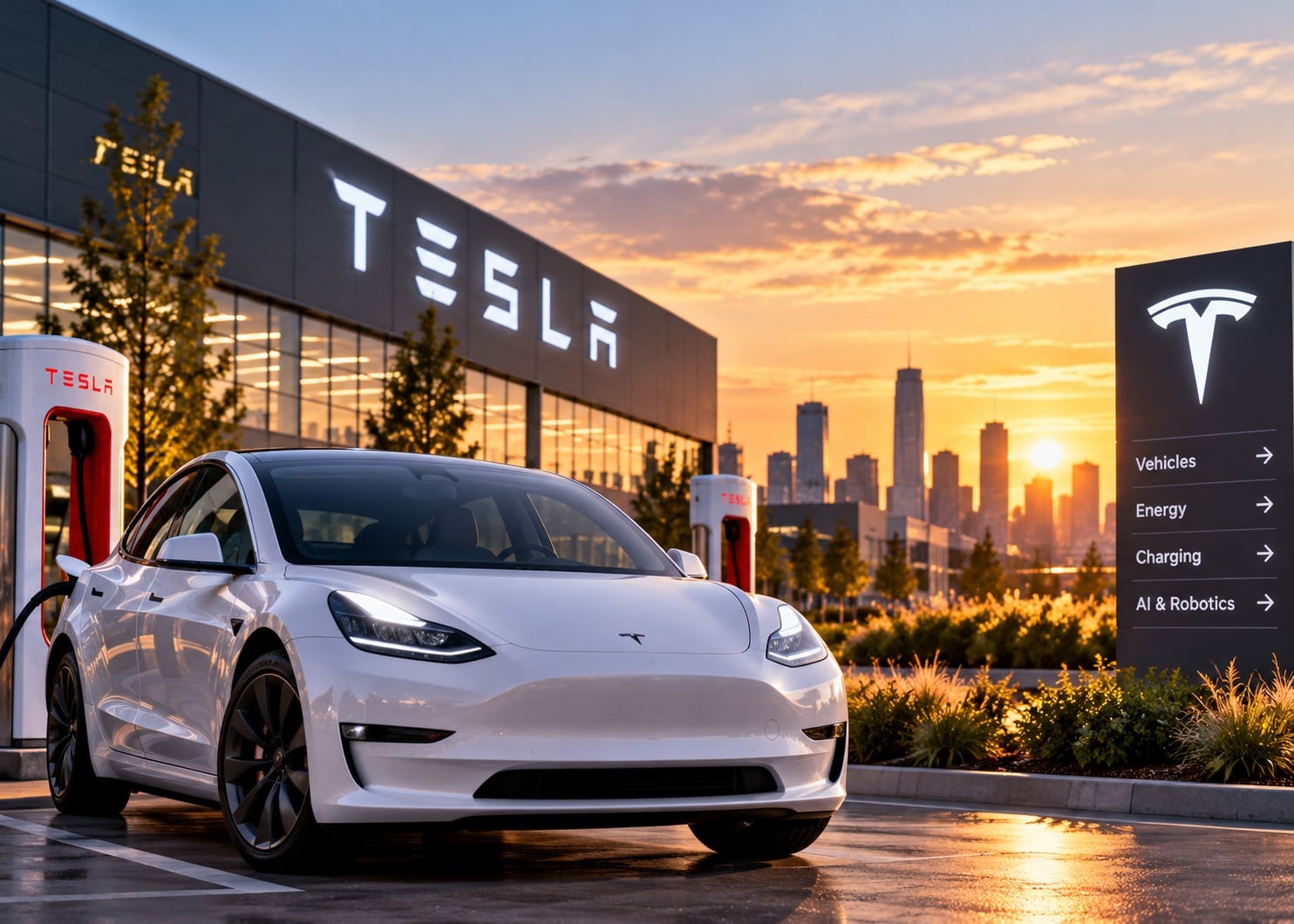
Tesla delivered a major cash-flow surprise in the third quarter, generating approximately $1.53 billion of free cash flow when Wall Street had been preparing for substantial cash consumption.
The difference was driven partly by capital expenditures that came in considerably below expectations.
Tesla spent $4.73 billion during the quarter on factories, AI computing infrastructure and other assets, down from $5.79 billion in the previous quarter.
Revenue reached $28.05 billion, while adjusted earnings came in at $0.48 per share.
The cash-flow result strengthens Tesla’s financial position at a time when the company is simultaneously investing in artificial intelligence, autonomous driving, robotics and manufacturing capacity.
But lower capital expenditure creates another question for investors.
Tesla’s valuation increasingly depends on businesses beyond conventional vehicle manufacturing, particularly autonomous driving, robotaxis and humanoid robotics. Spending less than expected protects near-term cash generation but raises questions about how quickly those programs are expanding.
The results arrive as Tesla continues its transition toward a broader technology and AI business while its traditional automotive operation faces intense global competition.
For investors, the most important development may therefore be the relationship between cash generation and investment.
Tesla demonstrated that it can preserve cash while continuing its technology expansion. The next question is whether lower spending represents greater capital efficiency or a slower rollout of the projects supporting its long-term strategy.