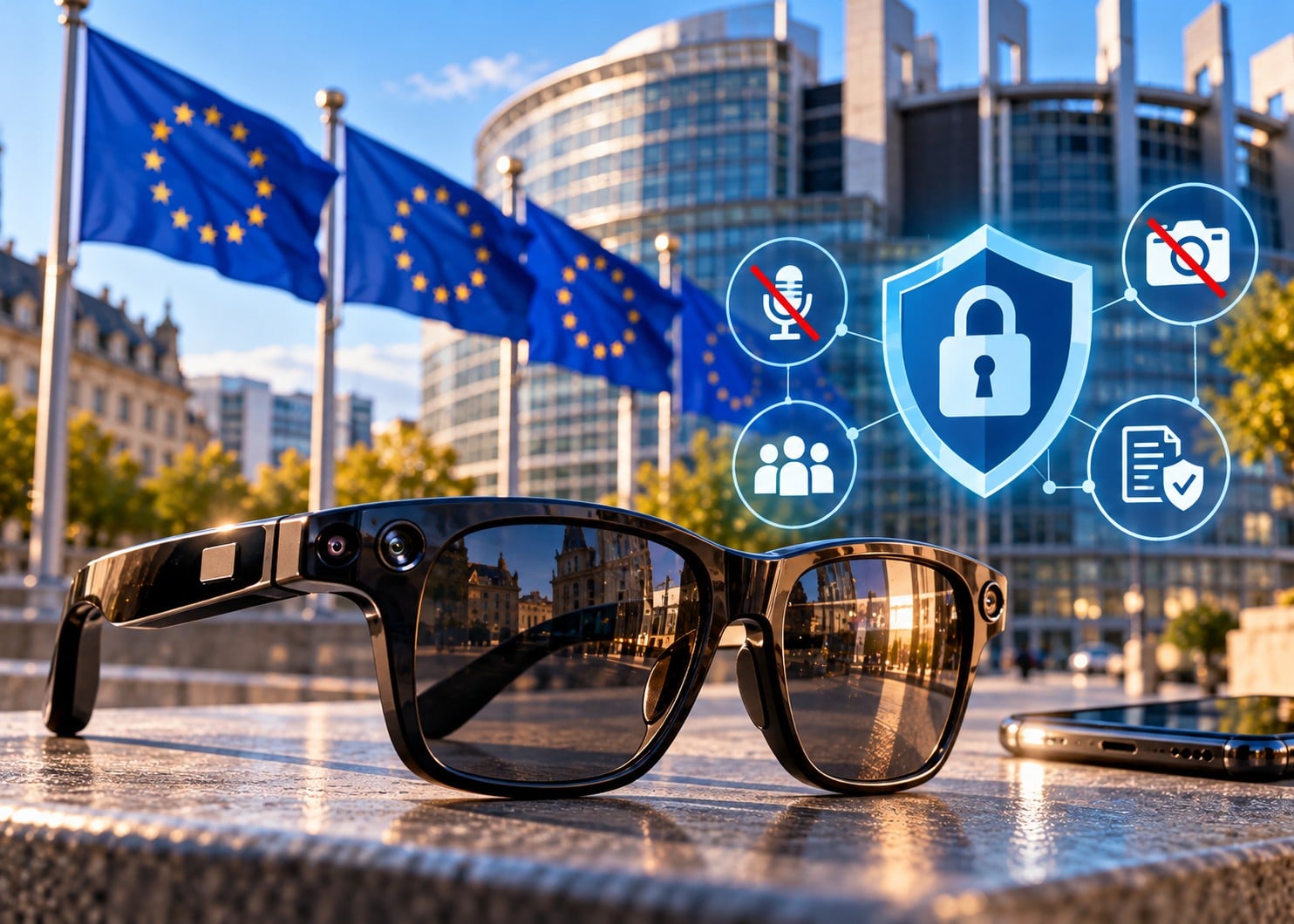
The rapid growth of AI-enabled smart glasses is beginning to collide with privacy regulation as European authorities scrutinize whether devices designed to resemble ordinary eyewear make recording too difficult for bystanders to detect.
Global shipments of AI-enabled glasses increased to 8.4 million units in 2025 from approximately 2.1 million in 2024.
Smart glasses produced through the partnership between EssilorLuxottica and Meta accounted for more than 81% of global shipments during the first half of 2026.
That commercial success is now attracting regulatory attention.
European privacy authorities are examining how smart glasses can facilitate recording of conversations and images involving people who have not consented.
Preliminary recommendations under consideration include more visible recording indicators, audible alerts, notifications to nearby devices, restrictions on livestreaming, automatic blurring of bystanders’ faces and location-based limitations in sensitive environments such as hospitals and schools.
Some individual European jurisdictions are also considering or investigating restrictions involving AI-enabled eyewear.
The regulatory debate arrives as smart glasses move from experimental hardware toward a potentially significant consumer-electronics category.
The devices combine conventional eyewear with cameras, microphones, communications and artificial-intelligence features, allowing users to take photographs, record video, make calls and use services such as live translation.
That integration is commercially attractive precisely because the glasses look relatively normal.
It is also the feature creating the regulatory challenge.
Unlike a smartphone visibly held up to record, smart glasses can capture images and conversations while attracting substantially less attention from people nearby.
A broad prohibition remains far from certain, and manufacturers could instead face additional requirements governing recording indicators, data processing and use in sensitive locations.
The investment question is therefore not simply whether demand for AI glasses continues growing.
It is whether manufacturers can preserve the convenience and AI capabilities driving adoption while satisfying regulators that people surrounding the wearer have meaningful privacy protections.