

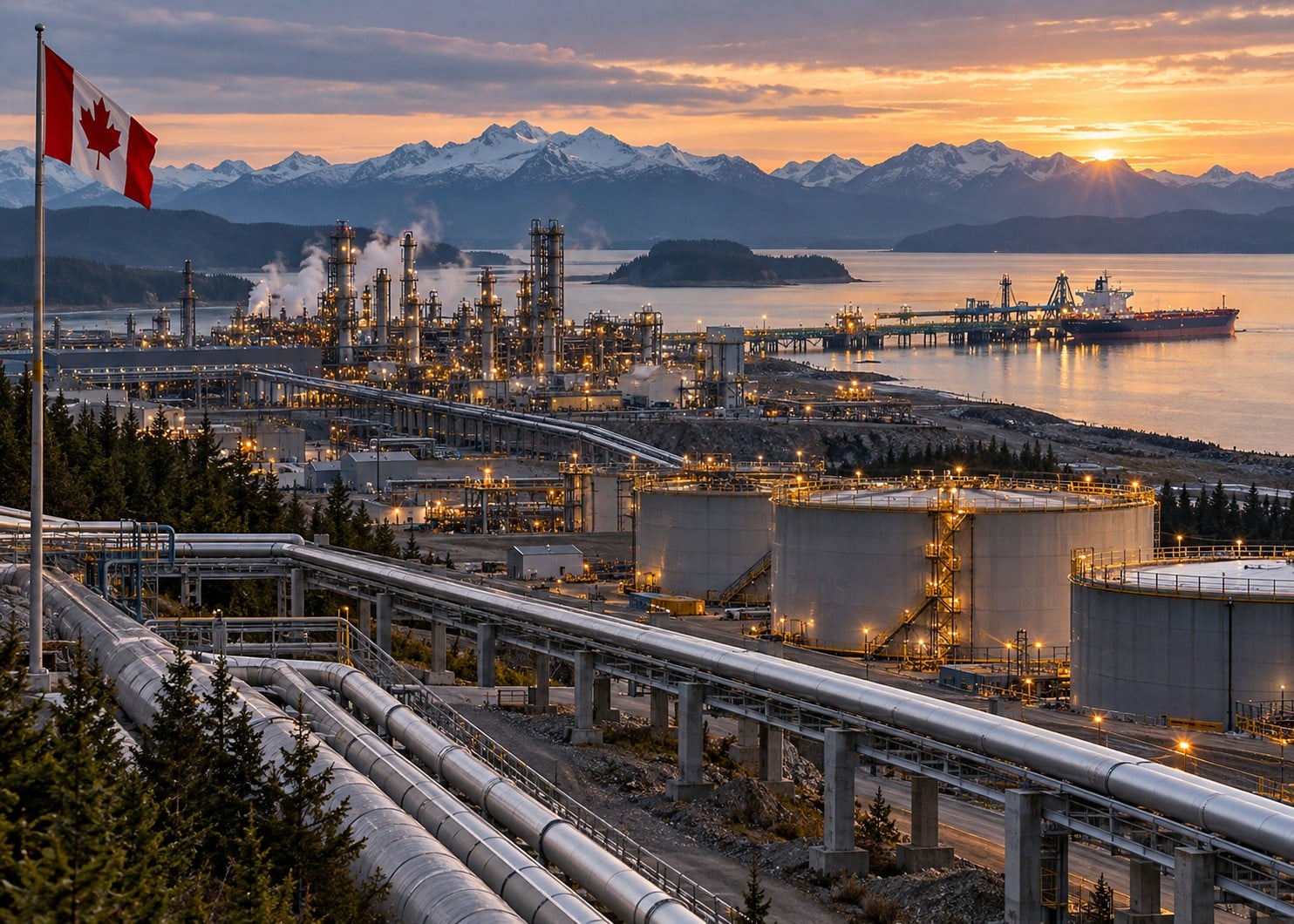
Canada’s push for a new Pacific oil pipeline could significantly expand export capacity while producing far fewer permanent jobs than previous oil-sands booms, underscoring how automation is changing the economics of energy expansion.
Prime Minister Mark Carney is backing a pipeline capable of moving roughly 1 million barrels of crude per day to Canada’s Pacific coast, giving producers greater access to Asian markets and reducing dependence on the United States.
Yet industry forecasts suggest higher output will not translate proportionally into employment.
Energy Safety Canada projects oil-sands employment will decline about 4% by 2035 even as production rises 6%, reflecting increasing automation and efficiency across extraction and maintenance operations.
The pipeline would still generate construction, supply-chain and upstream investment opportunities.
But many of those jobs would be temporary rather than a return to the large permanent workforce that characterized Fort McMurray’s previous expansion cycle.
The financial commitment would also be enormous.
No producer has yet committed the approximately C$100 billion in private investment that would be necessary to fill the proposed pipeline and construct the carbon-capture project tied to federal approval.
For energy markets, additional Canadian Pacific export capacity could increase the ability of oil-sands producers to reach Asia and reduce pricing dependence on U.S. infrastructure.
For Canada, however, the political test will be whether increasing production and exports translates into sufficiently broad economic benefits even as the industry becomes less labor-intensive.