
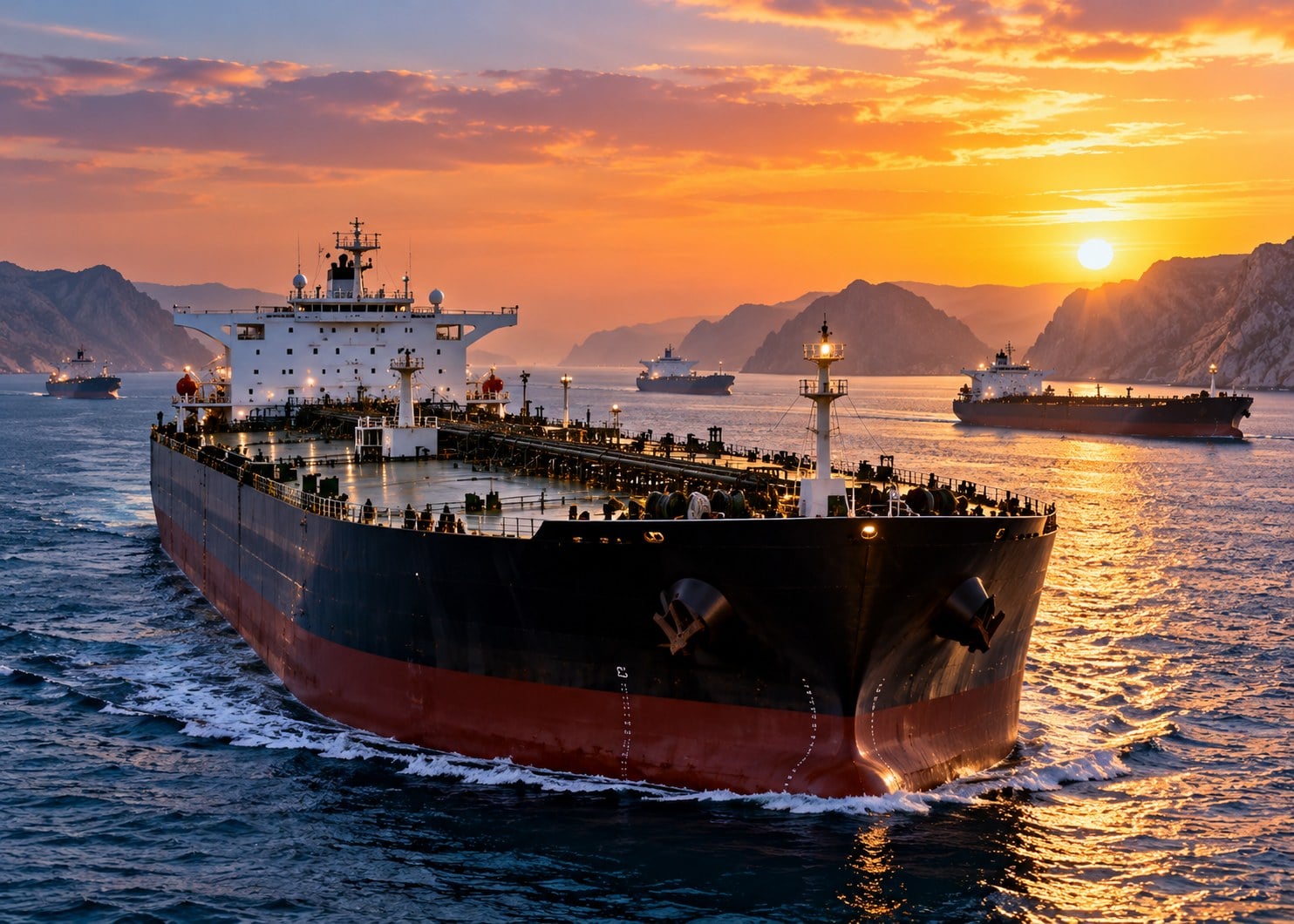
The cost of transporting crude oil aboard the world’s largest tankers retreated from record levels this week as demand eased and traders considered the possibility that the United States could loosen sanctions on some shadow-fleet vessels.
Rates for very large crude carriers moving oil from the Gulf of Oman to China fell to approximately 776 on the Worldscale index, according to Baltic Exchange data.
That compares with 841 the previous week, the highest level recorded since the route’s benchmark was introduced earlier this year.
The decline follows an extraordinary rise in tanker costs caused by the Iran war, attacks on vessels and disruptions to conventional oil-shipping routes.
Demand on the Gulf of Oman route has softened as elevated Middle East freight costs contributed to lower export volumes.
Another factor is the possibility of additional tanker supply.
The U.S. government has been considering removing sanctions from some vessels associated with the shadow fleet. If restrictions are eased, more ships could potentially return to the available transport pool.
That prospect has contributed to lower freight rates.
The retreat should not be confused with a return to normal shipping conditions.
Rates remain close to record highs, and the war has increased reliance on ship-to-ship transfers to move crude through and around the Strait of Hormuz.
Persistently high tanker costs matter beyond shipping companies.
Freight expenses ultimately affect the delivered cost of crude and refined products and can reinforce inflation pressure for businesses and consumers.
The next test is whether additional tanker availability and softer demand produce a sustained decline in freight costs or whether renewed attacks and Middle East disruption push rates back toward their recent records.