U.S. Treasuries rallied Thursday after a closely watched sale of 30-year government bonds attracted solid demand, providing an important test of investor appetite following one of the sharpest increases in long-term borrowing costs in decades.
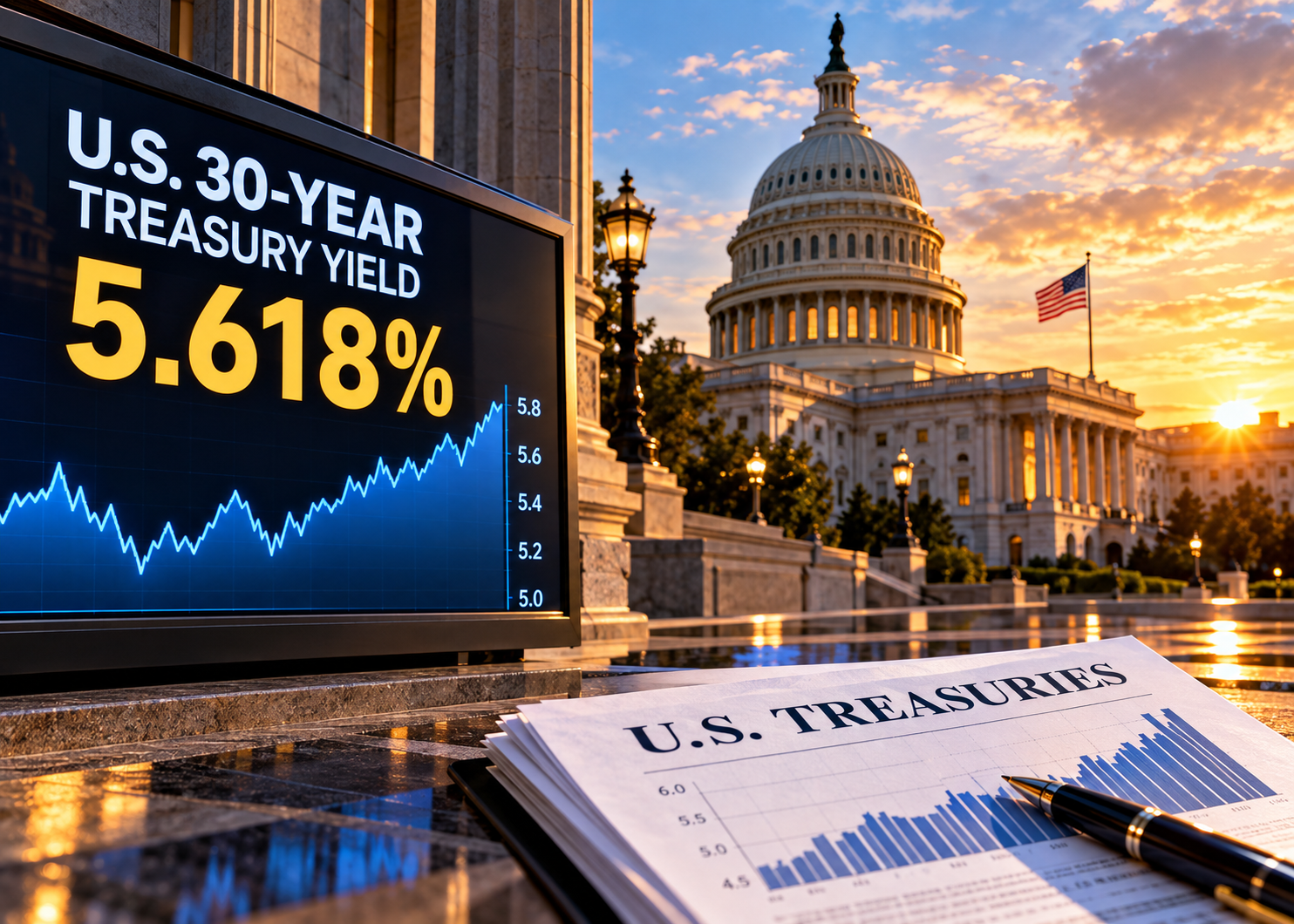
The new 30-year bonds priced at a yield of approximately 5.618%, below the level markets had expected immediately before the auction.
That matters because investors accepted the bonds without demanding an additional yield concession despite persistent concerns about inflation, federal borrowing and the enormous amount of capital being raised across public and private markets.
Treasury yields moved lower following the auction.
The benchmark 10-year yield retreated toward 5.23%, while the 30-year yield moved to approximately 5.61%.
The rally interrupted renewed pressure earlier in the session.
Treasuries had initially weakened as another increase in oil prices reinforced concern that energy inflation could keep monetary policy restrictive.
The auction therefore provided evidence that buyers remain willing to absorb long-duration U.S. government debt at current yields.
That does not resolve the larger structural questions facing the Treasury market.
Federal borrowing requirements remain substantial, inflation remains above the Federal Reserve’s target and corporate financing associated with AI infrastructure is adding to global competition for capital.
Long-term Treasury yields have consequently become an increasingly important constraint on financial markets.
Higher yields increase mortgage and corporate borrowing costs while simultaneously providing investors with a more attractive alternative to equities.
Thursday’s auction shows that demand has not disappeared even after the recent bond selloff.
The next question is whether that demand remains strong across future Treasury issuance — or whether investors eventually require still higher yields to absorb growing supplies of long-duration government debt.